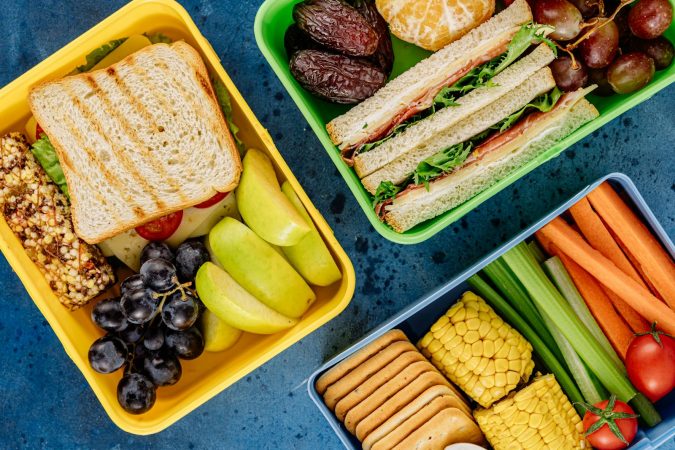
A University of Copenhagen team has developed a metric ranking foods by the liters of water needed per gram of protein — and three Danish cities are already using it to redesign school lunch menus for 87,000 students.

Add VegOut to your Google News feed. 
A team of researchers at the University of Copenhagen has developed a new metric for evaluating the environmental efficiency of common protein sources, and the numbers are stark enough that Danish school administrators have already started acting on them.
The metric — water cost per gram of protein, or WCP — measures the total liters of freshwater required to produce a single gram of bioavailable protein in a given food. Published in a May 2025 paper in Nature Food, the analysis covers 84 common protein sources and accounts for agricultural water use, processing, and regional variation. Beef tops the chart at roughly 112 liters per gram of protein. Lentils sit near the bottom at 6.3 liters.
That's a nearly 18-fold difference. And it's the kind of gap that, once visualized, is hard to ignore.
How the Ranking Works
WCP builds on the more familiar concept of a "water footprint," which has been used in environmental science for decades. The innovation here is the normalization around protein quality and bioavailability, rather than just weight or calorie content.
Lead researcher Dr. Mette Hjorth, a food systems scientist at the University of Copenhagen's Department of Food Science, explained the rationale in a press briefing: "When people compare water use between foods, they often do it per kilogram or per calorie. But those comparisons can be misleading. A kilogram of lettuce and a kilogram of chicken serve completely different nutritional functions. We wanted a metric that compared foods on the basis of what most people are actually seeking from animal products — protein."
The team used the Digestible Indispensable Amino Acid Score (DIAAS), an internationally recognized measure of protein quality developed by the UN Food and Agriculture Organization, to weight their calculations. This means high-quality plant proteins like soy and pea scored well, while incomplete proteins with lower digestibility were adjusted upward in their water cost.
Even with that adjustment, the plant-based options dominated the top of the efficiency rankings. Soybeans came in at 7.1 liters per gram of bioavailable protein. Chickpeas registered 9.8 liters. Peanuts, 7.4. Tofu, 8.2.
On the animal side, eggs performed relatively well at 29 liters per gram. Chicken landed around 34 liters. Pork hit 57. Cheese — often overlooked in sustainability conversations — came in at 68 liters per gram of protein, making it one of the least water-efficient protein sources in the study.
From Research Paper to School Cafeteria
The academic work might have stayed academic if not for Denmark's Municipal Food Strategy Initiative, a coalition of local governments that has been rethinking public procurement for school lunches since 2023. The initiative was already looking for evidence-based tools to guide menu planning when Hjorth's data landed.
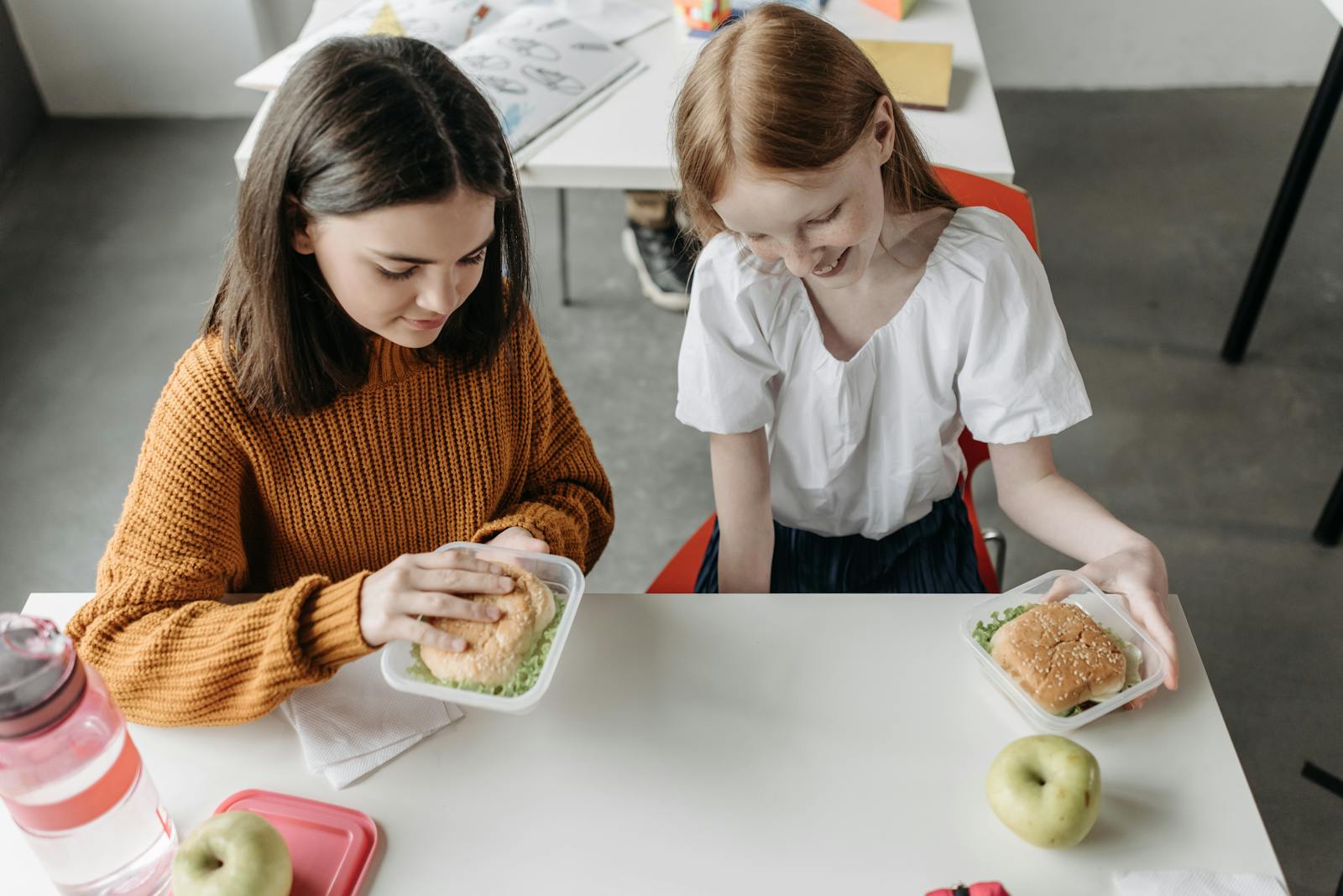
In March 2025, the municipalities of Copenhagen, Aarhus, and Odense began a pilot program that uses WCP rankings — alongside carbon footprint data and nutritional adequacy standards — to redesign school lunch menus for roughly 87,000 students.
The changes are notable without being radical. Beef appears less frequently, reduced from an average of twice weekly to once every two weeks in participating schools. Lentil and pea-based dishes have filled the gap, often blended with smaller portions of meat rather than replacing it entirely. Cheese servings have been reduced in favor of higher-protein, lower-water options like hummus and edamame.
"We are not telling children they cannot eat meat," said Søren Nørgaard, a food procurement coordinator for Copenhagen's municipal schools. "We are making choices about which meals offer the best nutrition for the lowest environmental cost. That calculation now favors plant-rich menus much more clearly than it did before."
Denmark already has a strong cultural foundation for this kind of shift. As VegOut previously explored, Danish culture prizes collective pragmatism and institutional trust, making public institutions a particularly effective lever for behavior change.

Why Water, and Why Now
The focus on water rather than carbon may seem like a sideways move, but it reflects a growing recognition among climate scientists that water scarcity will be one of the most disruptive consequences of a warming planet.
According to the World Resources Institute's Aqueduct project, 25 countries — home to one-quarter of the global population — already face "extremely high" annual water stress. That figure is projected to worsen significantly as temperatures continue to climb. As we recently reported, Earth just recorded its third-hottest year on record, and the downstream effects on freshwater availability are becoming harder to abstract away.
Agriculture accounts for roughly 70% of global freshwater withdrawals. Within that, animal agriculture is disproportionately thirsty — not just for the water animals drink, but for irrigating the vast quantities of feed crops required to produce animal protein.
"Carbon gets the headlines, but water is the crisis people will feel first," Hjorth said. "You can debate the timeline on temperature targets. You cannot debate the fact that when your aquifer runs dry, farming stops."
The WCP metric gives policymakers a tangible, food-specific number to work with. That granularity matters. Telling a school administrator to "reduce their environmental impact" is vague. Telling them that swapping 200 grams of beef mince for a 50/50 lentil-beef blend saves approximately 4,200 liters of water per 100 servings is actionable.
The Nuances Worth Noting
The research has drawn some criticism, and it's worth taking seriously.
Animal agriculture groups have pointed out that water footprint calculations often conflate "green water" (rainwater that falls on pastures and would fall regardless of whether cattle graze there) with "blue water" (water drawn from rivers, lakes, and aquifers). The distinction is legitimate. Hjorth's team attempted to address it by reporting both total and blue-water-specific WCP scores, and the plant-based advantage held in both analyses, though the gap narrowed somewhat for pastoral systems.
Others have noted that protein quality metrics like DIAAS still favor animal sources in some contexts, particularly for children's growth and development. The Danish pilot addresses this by maintaining animal protein in school menus — the program explicitly avoids going fully plant-based, instead optimizing the ratio.
There's also a question of cultural acceptability. Kids eat what they're willing to eat, and a perfectly optimized meal that ends up in the trash bin is zero-efficiency by any measure. The pilot schools have addressed this by involving students in taste-testing and menu feedback, an approach that Nørgaard says has been more successful than anticipated.
"Honestly, the children don't care very much whether the bolognese is made with beef or lentils if it tastes good," he said. "Adults project their anxieties about change onto children more than the children actually feel them."
Could This Model Travel?
Denmark's institutional infrastructure makes it an ideal testing ground. The country has centralized school meal procurement, a strong tradition of public health-oriented food policy, and a population that broadly trusts government-led initiatives. Replicating the approach in countries with decentralized school systems or lower institutional trust would require significant adaptation.
That said, the underlying data is universally applicable. The WCP metric can be calculated for any food, in any region, using local water and agricultural data. Hjorth's team has made their methodology open-access, and collaborations with researchers in the Netherlands, Portugal, and South Korea are already underway.
In the United States, where school lunch programs serve approximately 30 million children daily, even modest shifts toward water-efficient protein sources could have an outsized impact. The USDA's school meal standards were updated in 2024 to allow more flexibility for plant-based protein sources, a policy change that aligns with the direction of the WCP research even if it wasn't directly inspired by it.
The broader food industry is paying attention, too. The rise of companies like Beyond Meat and the growing "future food" sector suggests that consumer appetite for efficient protein sources is already shifting, driven by a mix of environmental concern, health interest, and simple curiosity. The WCP metric gives that shift a concrete vocabulary.
The Bigger Picture
What makes the Danish pilot particularly compelling is its refusal to frame the issue as a binary choice. The program doesn't position plant protein against animal protein in some kind of ideological cage match. It uses data to optimize a system that already exists, one lunch tray at a time.
That pragmatism is the part most likely to resonate beyond Denmark's borders. As climate pressures mount and water scarcity becomes a lived reality for more communities, the question of how we allocate our freshwater resources will become unavoidable. Having a clear, evidence-based tool for evaluating the protein efficiency of different foods gives institutions — from schools to hospitals to corporate cafeterias — a way to act on that question without waiting for the political debate to resolve itself.
Hjorth put it plainly: "We don't need everyone to change everything about how they eat. We need institutions that feed millions of people to start making slightly better choices, informed by the best data we have. That alone moves the needle more than any individual diet change could."
Eighty-seven thousand Danish schoolchildren are currently eating the results of that philosophy. The data will tell us whether the rest of the world follows.
Feature image by Antoni Shkraba Studio on Pexels