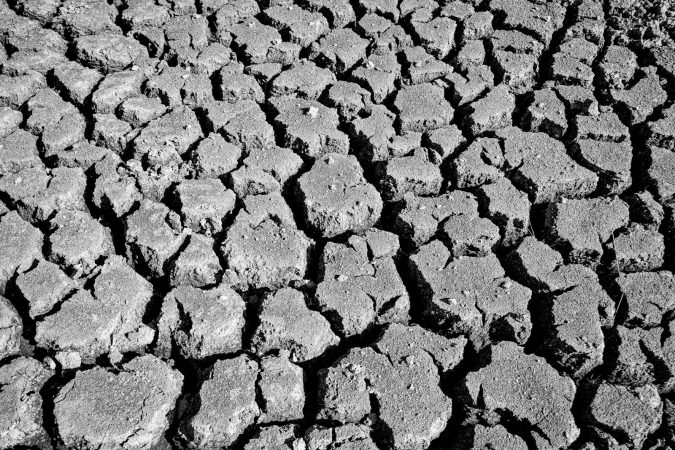
New climate-food models project caloric shortfalls by 2040 that reach well beyond traditional vulnerability zones, with the U.S., Europe, and Australia all appearing in warning scenarios once reserved for the Global South.

Add VegOut to your Google News feed. 
For decades, food security modeling has been a discipline largely focused on the Global South. Researchers would project crop failures in sub-Saharan Africa, water shortages across South Asia, and famine risks in regions already teetering on the edge. The implicit assumption in much of this work was that wealthy nations — with their subsidized agriculture, diversified supply chains, and purchasing power — would remain insulated from the worst outcomes.
That assumption is starting to crack.

A wave of new food security scenario modeling from research institutions in recent years is projecting caloric and nutritional shortfalls that extend well beyond traditional vulnerability zones. The United States, the European Union, Australia, and Canada all appear in these models with flags that would have seemed alarmist even five years ago. And the timeline researchers keep landing on — 2040 — is close enough that many of the children born this year will still be in high school when these projections begin to materialize.
What the New Models Actually Show
The research drawing the most attention comes from international consortiums of climate and agricultural scientists, including groups associated with institutions like the Potsdam Institute for Climate Impact Research (PIK), and referenced in recent reports from the UN's Food and Agriculture Organization (FAO). Their models integrate climate projections with trade flow data, soil degradation trends, water table depletion rates, and population growth — creating a more holistic picture than older single-variable models.
The core finding: under moderate warming scenarios (2–2.5°C by mid-century), global caloric production could fall significantly short of demand by 2040. That gap doesn't distribute evenly, but the surprise is how much of it lands in places we think of as food-secure.
The United States, for example, faces compounding pressures. The Ogallala Aquifer — which irrigates roughly 30% of American cropland — continues to deplete at rates that outpace recharge by orders of magnitude. Simultaneously, as VegOut recently covered, USDA projections show climate change shifting growing zones so dramatically that the Midwest could resemble Texas by 2050. Those two trends converging on the same agricultural heartland creates a scenario where America's grain belt contracts from both ends — too hot to grow what it used to, too dry to irrigate alternatives.
Europe faces its own version of this squeeze. The 2022 drought across the Rhine, Po, and Loire river basins wasn't an anomaly — it was a preview. French wheat yields dropped 7% that year, and Italian rice production in the Po Valley fell by nearly a third. Modeling from the European Commission's Joint Research Centre suggests these kinds of events could become increasingly common by the late 2030s rather than remaining extreme outliers.
Why Wealth Isn't the Shield It Used to Be
The traditional argument for wealthy-nation resilience goes something like this: even if domestic production falls, rich countries can simply outbid poorer ones on the global market. And historically, that has been true. During the 2007–2008 food price crisis, wealthy nations experienced moderate price increases at the grocery store while poorer nations experienced riots.
But the new models factor in something that earlier frameworks missed — the likelihood of simultaneous failures across multiple breadbaskets. Research in climate and agricultural science has examined the probability of concurrent crop failures in two or more of the world's top grain-producing regions and found that the risk increases substantially with each increment of warming beyond 1.5°C.
When multiple major exporters are hit at the same time, there's less food available on global markets at any price. Export bans — like the ones India imposed on rice and wheat in recent years — become more likely as governments prioritize domestic supply. The purchasing power advantage erodes quickly when there's simply less to buy.
Then there's the compounding factor of economic fragility. As we've explored in our coverage of lower-middle-class financial pressures, food price increases don't need to reach famine levels to cause real harm. A 20–30% sustained increase in grocery prices — well within modeled scenarios — would push millions of households in wealthy countries into food stress. The USDA's own data already shows that roughly 13% of American households experienced food insecurity at some point in 2023.
The Protein Question
One of the more striking dimensions of these projections involves protein. Animal agriculture functions as a caloric multiplier — in reverse. It takes roughly 6 kilograms of plant protein to produce 1 kilogram of animal protein, depending on the species and system. As total caloric production tightens, that conversion inefficiency becomes harder to sustain.
Several modeling teams have noted that scenarios involving even modest dietary shifts toward plant-based protein sources show significantly reduced shortfall projections. Analyses from climate research institutions suggest that meaningful reductions in animal product consumption across wealthy nations could close a substantial portion of projected 2040 caloric gaps — without any new agricultural technology or expanded farmland.
This isn't a hypothetical thought experiment anymore. It's showing up in the models as one of the few demand-side levers large enough to meaningfully change the outcome curves. As we've previously examined through the broader data on dietary shifts and global outcomes, the numbers consistently favor diversification away from animal-heavy food systems — from land use to water consumption to greenhouse gas emissions.
And the protein concerns that often accompany these conversations? The science on plant-based protein sources has matured considerably. Nutritional adequacy on diversified plant-based diets is well-established in the literature, which removes one of the more common objections to modeling these shifts as realistic policy options.
What's Different About This Generation of Models
Earlier food security projections tended to model climate, trade, and demographics as mostly independent variables. A drought here, a population spike there, an economic downturn somewhere else. The newer models are built around correlation and cascading failure — the recognition that these stressors don't take polite turns.
Recent editions of the Global Food Security Index, published by The Economist Intelligence Unit, have begun incorporating climate stress testing into their methodology. The results have reshuffled the rankings in ways that surprised even the researchers, with several high-income countries dropping significantly when climate-adjusted agricultural projections replaced current production baselines.
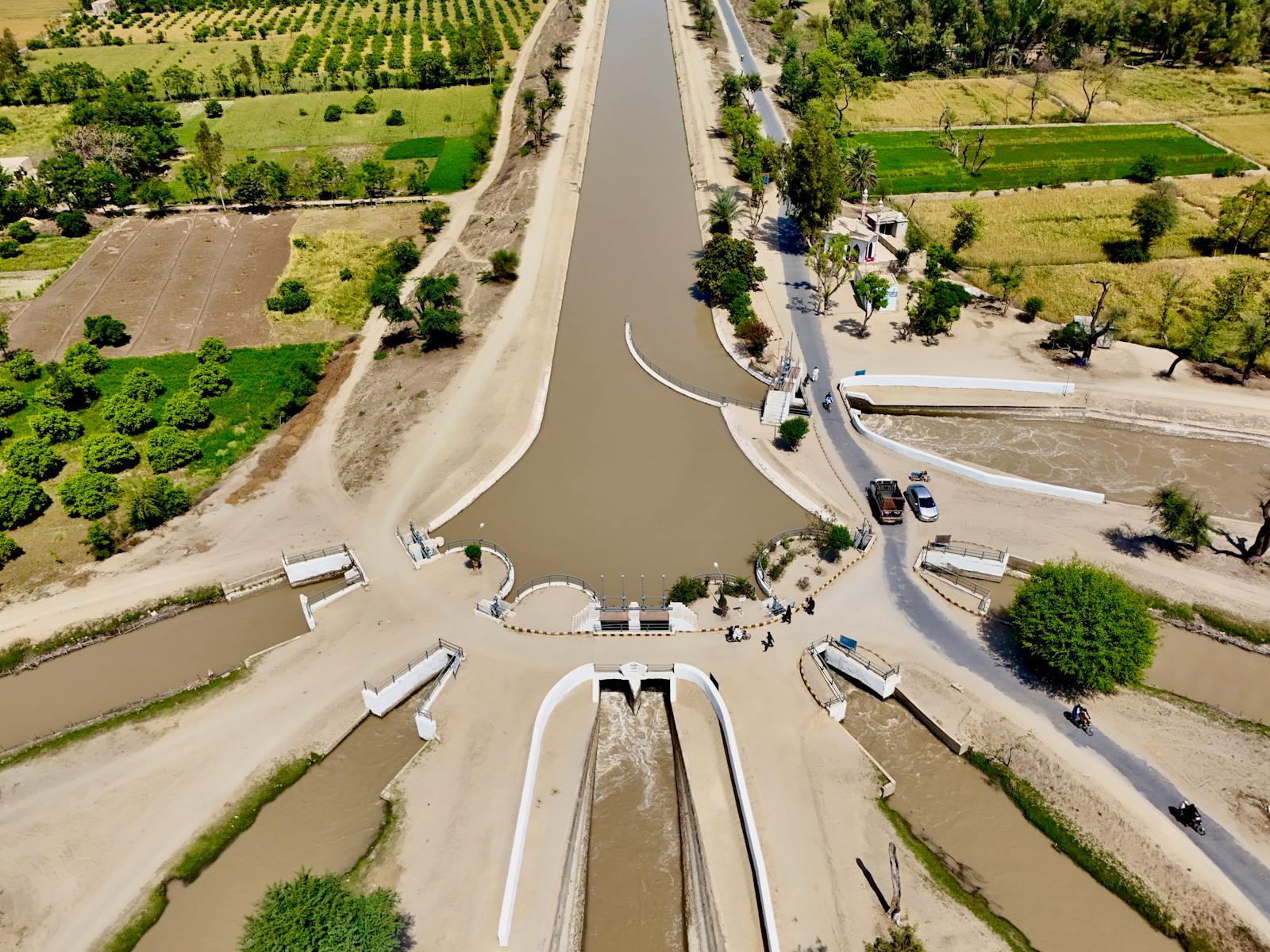
Water is a through-line in nearly every scenario. The World Resources Institute estimates that 25 countries — home to a quarter of the global population — face "extremely high" baseline water stress annually. By 2040, that list is projected to include parts of southern Europe, the American Southwest, and eastern Australia. Agriculture accounts for roughly 70% of global freshwater withdrawals, so water stress translates almost directly into food stress.
Soil degradation adds another layer. The FAO has estimated that a third of the world's topsoil is already moderately to highly degraded. Unlike water, soil doesn't recover on human-relevant timescales. Building an inch of topsoil naturally takes hundreds of years. The models that incorporate soil health alongside climate and water data consistently produce the most concerning projections.
The Land Use Variable
One of the most consequential inputs in these models is how land is used. Currently, the vast majority of agricultural land worldwide is devoted to livestock and feed crops, while producing a relatively small share of global calories and protein. According to research compiled by Our World in Data, this ratio represents enormous latent capacity — if dietary demand patterns shift, large amounts of productive land could be redirected toward crops grown directly for human consumption.
Research covered in our previous reporting on farmland use found that significant dietary shifts could free up to 75% of global agricultural land. In the context of food security modeling, that freed capacity doesn't need to come anywhere close to 75% to make a difference. Even partial reallocation changes the math substantially.
The policy implications are starting to register. Denmark's recent announcement of a climate tax on agricultural emissions, including livestock, signals that at least some wealthy-nation governments are beginning to price in these dynamics. The Netherlands' ongoing agricultural transition, though politically contentious, reflects similar calculations about long-term viability.
The 2040 Horizon
Fifteen years is an unusual timeframe in climate discussion, which tends to cluster around 2050 and 2100 benchmarks. But 2040 keeps appearing in these food models because it represents a convergence point — where population growth (projected to reach approximately 9.2 billion), warming trends, water depletion, and soil degradation all overlap with sufficient intensity to produce systemic strain.
It's also close enough that current infrastructure decisions matter. Grain storage facilities, irrigation systems, trade agreements, and agricultural subsidies all operate on multi-decade cycles. Decisions made now about what to build, what to grow, and what to incentivize will determine whether 2040 looks like a manageable challenge or a genuine crisis.
Dr. Cynthia Rosenzweig, a senior research scientist at NASA's Goddard Institute for Space Studies and a leading figure in climate-food modeling, has emphasized that the window for demand-side interventions is narrowing. Supply-side solutions — drought-resistant crops, precision agriculture, desalination — are important but move slowly. Changing what we eat can move faster.
That framing matters because it shifts the conversation from abstract sacrifice to practical problem-solving. Making individual choices more sustainable is part of the picture, but these models make clear that the scale of the challenge requires systemic shifts in food policy, agricultural investment, and dietary norms.
The Bottom Line
Food security has long been framed as someone else's problem in wealthy nations. The new generation of climate-food models is dismantling that framing with data, not ideology. The projected shortfalls aren't catastrophic in the Hollywood sense — nobody is modeling famine in Frankfurt or starvation in Seattle. What they are modeling is sustained price pressure, reduced nutritional variety, supply chain fragility, and periodic acute shortages that would strain social safety nets already showing cracks.
The responses available — diversifying food systems, reducing the caloric conversion losses inherent in animal-heavy diets, investing in soil health, and building more resilient water infrastructure — are all known quantities. None of them require technological breakthroughs. What they require is a shift in how wealthy nations think about food: as a system operating under rapidly changing constraints, not an inexhaustible given.
Fifteen years isn't very long. The researchers running these models know it. The question is whether policymakers — and the rest of us — will absorb that timeline before it absorbs us.
Feature image by Nikola Tomašić on Pexels
If You Were a Healing Herb, Which Would You Be?
Each herb holds a unique kind of magic — soothing, awakening, grounding, or clarifying.
This 9-question quiz reveals the healing plant that mirrors your energy right now and what it says about your natural rhythm.
✨ Instant results. Deeply insightful.

Adam Kelton
Adam Kelton is a writer and culinary professional with deep experience in luxury food and beverage. He began his career in fine-dining restaurants and boutique hotels, training under seasoned chefs and learning classical European technique, menu development, and service precision. He later managed small kitchen teams, coordinated wine programs, and designed seasonal tasting menus that balanced creativity with consistency.
After more than a decade in hospitality, Adam transitioned into private-chef work and food consulting. His clients have included executives, wellness retreats, and lifestyle brands looking to develop flavor-forward, plant-focused menus. He has also advised on recipe testing, product launches, and brand storytelling for food and beverage startups.
At VegOut, Adam brings this experience to his writing on personal development, entrepreneurship, relationships, and food culture. He connects lessons from the kitchen with principles of growth, discipline, and self-mastery.
Outside of work, Adam enjoys strength training, exploring food scenes around the world, and reading nonfiction about psychology, leadership, and creativity. He believes that excellence in cooking and in life comes from attention to detail, curiosity, and consistent practice.
More Articles by Adam