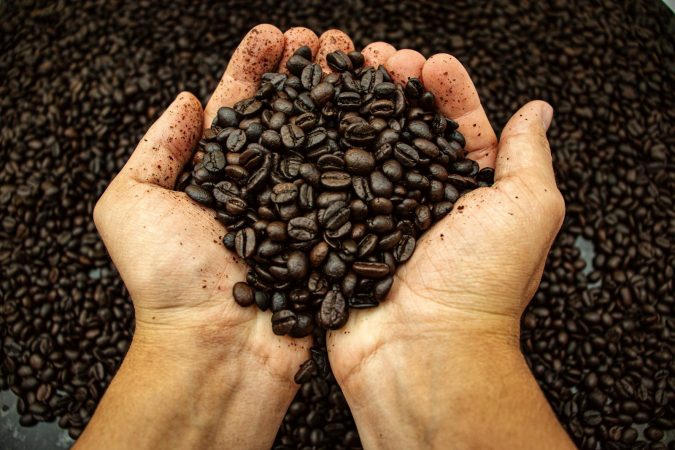
Half of the world's current coffee-growing land could become unsuitable by 2050, and the effects on price, flavor, and farmer livelihoods are already measurable. Here's what the science says about the quiet redrawing of the global coffee map.

Add VegOut to your Google News feed. 
The coffee belt — that band of equatorial territory stretching roughly between the Tropics of Cancer and Capricorn — has defined where the world's coffee grows for centuries. Brazil, Colombia, Ethiopia, Vietnam, Indonesia. These names are practically synonymous with the beverage that fuels an estimated 2.25 billion cups consumed every single day worldwide.
But the belt is shifting. Quietly, unevenly, and with consequences that are already showing up in commodity prices, farmer livelihoods, and yes, the flavor profile of whatever you brewed this morning.
The Science Behind the Shift
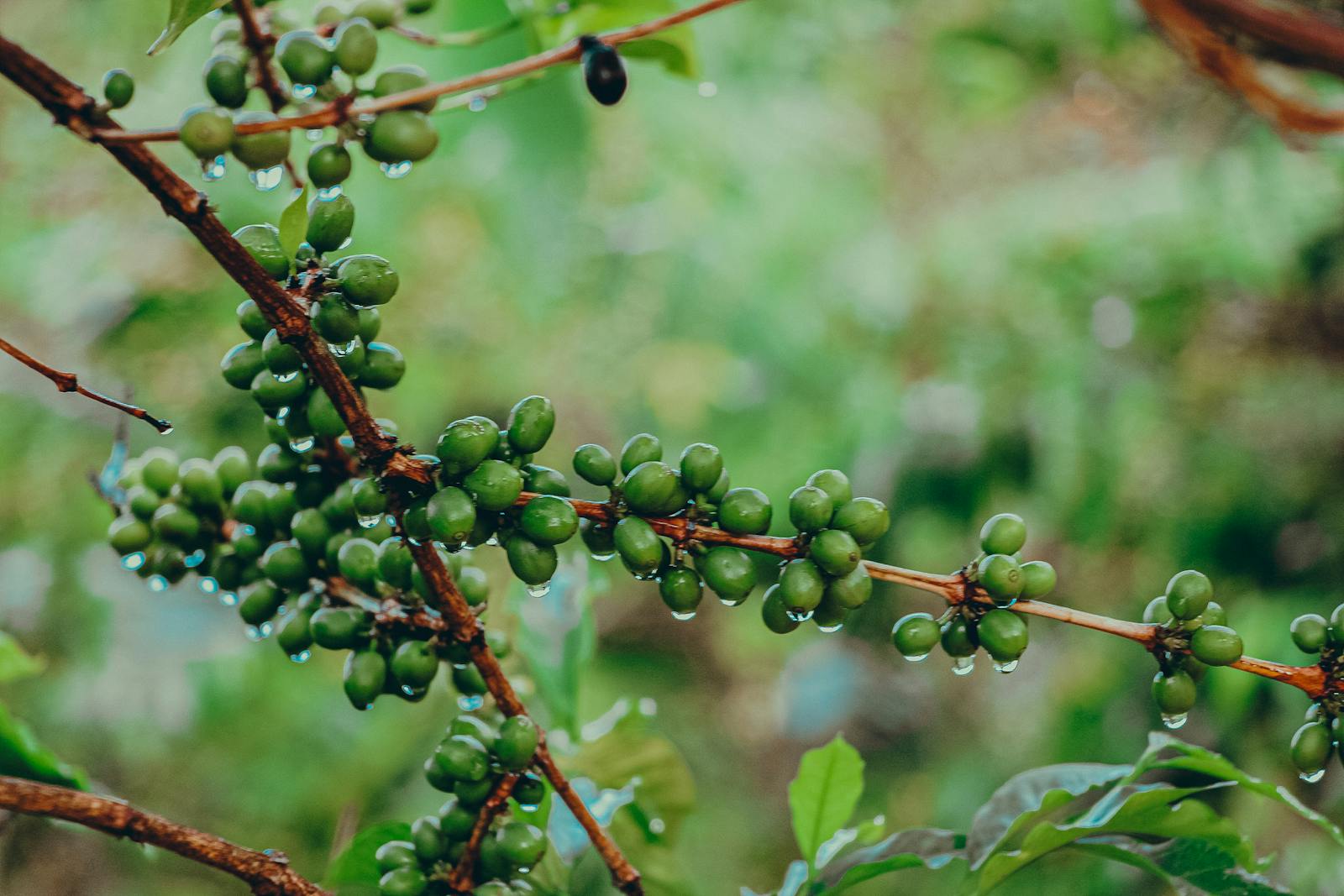
A 2022 study published in PLOS ONE projected that by 2050, roughly 50% of the land currently used to grow coffee will no longer be suitable for production. The culprit is a combination of rising temperatures, shifting rainfall patterns, and increased frequency of extreme weather events — all hallmarks of accelerating climate change.
Coffee, particularly the Arabica variety that accounts for about 60% of global production, is notoriously finicky. It thrives in a narrow temperature window of roughly 18–22°C (64–72°F), requires consistent but not excessive rainfall, and depends on predictable seasonal cycles to flower and fruit properly. Even small deviations can reduce yields, alter flavor, and make plants more vulnerable to disease.
A separate analysis from researchers at the Royal Botanic Gardens, Kew, found that wild Arabica coffee could be classified as an endangered species under IUCN Red List criteria when climate projections are factored in. That assessment, published in Science Advances, modeled multiple warming scenarios and found that 60% of wild coffee species face extinction risk.
The Robusta variety — used predominantly in instant coffee and espresso blends — handles heat better but has its own thresholds. A 2021 paper in Global Change Biology found that Robusta's climate resilience had been significantly overestimated in earlier models. Higher temperatures stress Robusta plants too, particularly when combined with drought conditions that are becoming more common across Southeast Asia.
Where It's Already Happening
This is not a 2050 problem. Farmers in major coffee-producing regions are dealing with it now.
In Colombia, the country's national coffee federation (Federación Nacional de Cafeteros) has documented a steady upward migration of coffee cultivation over the past two decades. Farms that once thrived at 1,200 meters above sea level are moving to 1,600 meters and higher, chasing the temperatures their plants need. The trade-off: higher-altitude land is often steeper, more erosion-prone, and encroaches on fragile cloud forest ecosystems.
Brazil, the world's largest coffee producer, experienced devastating frosts in July 2021 — the worst in over two decades — followed by prolonged drought. The combined damage drove Arabica futures to their highest levels in nearly a decade and sent shockwaves through global supply chains. Retail prices climbed in the months that followed and have remained elevated.
In Ethiopia, widely regarded as the birthplace of coffee, research from the Addis Ababa-based Environment and Coffee Forest Forum has highlighted how warming temperatures and erratic rainfall are contracting the suitable growing zones in the country's southwestern highlands. Some models suggest Ethiopia could lose up to 60% of its current coffee-growing area by the end of the century under a high-emissions scenario.
Vietnam, the world's second-largest producer and the dominant source of Robusta beans, has seen yields become increasingly unpredictable in the Central Highlands, where most of its coffee is concentrated. Extended dry seasons and shifts in the monsoon pattern are forcing farmers to irrigate more heavily, drawing down aquifers that are not replenishing at historical rates.
New Frontiers on the Map
As traditional growing regions face pressure, new ones are emerging. China's Yunnan province has expanded its coffee acreage significantly over the past fifteen years, with Arabica production now reaching international specialty markets. Nepal, Myanmar, and parts of East Africa previously considered marginal for coffee are seeing increased investment and experimentation.
Perhaps most surprisingly, researchers have begun studying the viability of coffee cultivation in parts of the United States. A small but growing number of farms in Southern California and even parts of the Gulf Coast are producing limited quantities. The USDA has funded pilot research into climate-adapted coffee varietals that could expand these efforts.
There's also movement at higher latitudes on the other side of the globe. Parts of southern China, northern Thailand, and even regions of Australia are being evaluated as potential future coffee territories.
The emergence of new growing regions introduces complex questions about quality, biodiversity, and land use. Coffee cultivation expanding into previously forested areas would create the same deforestation pressures that have plagued commodity agriculture for decades. The how matters as much as the where.
What This Means for Your Cup — and Your Wallet
Supply instability translates directly to price volatility. The International Coffee Organization reported that the composite indicator price for coffee reached multi-year highs in 2023 and early 2024. Specialty roasters have been absorbing some of those increases, but consumers are seeing the effects at the register.
As VegOut previously explored in a piece on bills that keep rising after retirement, food and beverage costs are among the expenses that creep upward in ways people rarely anticipate. Coffee is a textbook example. It feels like a small daily purchase, but price increases compound quickly for a product that most households buy weekly.
Beyond price, there's flavor. Climate stress on coffee plants doesn't just reduce how much coffee is produced — it changes what the coffee tastes like. Higher temperatures can accelerate cherry ripening, which compresses the development of complex sugars and organic acids that give specialty coffee its nuanced flavor profiles. The result, according to multiple quality assessments from the Specialty Coffee Association, is a gradual flattening of the flavor spectrum. Coffees from regions that were once celebrated for bright acidity and floral notes are producing beans that taste duller, simpler.
For the specialty market, which has been one of the bright spots in global agriculture for smallholder farmers, this represents a double threat: lower yields and lower quality simultaneously.
The Adaptation Effort
The coffee industry is not standing still. World Coffee Research, a nonprofit collaborative funded by the global coffee industry, has been working on breeding programs to develop varieties that can tolerate higher temperatures and resist diseases like coffee leaf rust, which thrives in warmer conditions.
Their multi-year International Multi-location Variety Trial has tested dozens of coffee varieties across more than 30 countries, generating what researchers describe as the most comprehensive dataset on variety performance under diverse climate conditions ever assembled. Early results suggest that some hybrid varieties can maintain quality at temperatures that would devastate traditional cultivars.
Agroforestry — growing coffee under a canopy of shade trees — is another strategy gaining momentum. Research published in BioScience has shown that shade-grown systems can buffer coffee plants against temperature extremes, improve soil health, and support biodiversity. The challenge is that shade-grown coffee produces lower yields per hectare, which creates economic pressure on farmers already operating on thin margins.
The tension between short-term economic reality and long-term climate adaptation is one of the defining challenges of this moment. A farmer in Honduras or Uganda facing immediate financial pressure has limited bandwidth to invest in experimental varieties or transform their production system, even when the science clearly points toward the need to do so.
A Broader Pattern Worth Watching
Coffee is a canary in the coal mine for global food systems more broadly. The same dynamics reshaping coffee — temperature sensitivity, geographic displacement, supply volatility, quality degradation — are playing out with cocoa, wine grapes, certain spices, and staple grains.
The pattern connects to a wider set of shifts in how food reaches consumers. As we covered in our reporting on school cafeterias adding plant-based options, institutional food systems are already adapting to new realities around sourcing, sustainability, and cost. Coffee supply chains face parallel pressure to diversify and build resilience.
Younger consumers appear increasingly attuned to these dynamics. VegOut's coverage of Gen Z's influence on the food industry has shown how this demographic seeks out transparency around sourcing and environmental impact. The specialty coffee movement's emphasis on direct trade and origin storytelling aligns with that impulse, but climate disruption threatens to undermine the very supply chains those values depend on.
What Conscious Consumers Can Actually Do
The individual consumer lever here is modest but real. Buying from roasters who invest in direct trade relationships puts a marginally larger share of revenue in the hands of farmers who are on the front lines of adaptation. Supporting shade-grown and organic certifications incentivizes production methods that build climate resilience.
Being willing to pay a bit more for coffee is, frankly, part of the equation. The global average farmgate price for coffee has historically been below the cost of sustainable production for many smallholder farmers. Every efficiency-driven race to the cheapest possible cup makes the supply chain more brittle.
Diversifying your own palate helps too. Trying coffees from emerging origins — Yunnan, Nepal, the Democratic Republic of Congo — creates market signals that support geographic diversification of the coffee supply. And exploring creative plant-based recipes that incorporate coffee as an ingredient is one way to appreciate the complexity of what's in your cup.
The coffee map is being redrawn in real time. The regions that defined the industry for generations are under profound stress, and new territories are only beginning to emerge. What happens next depends on a combination of agricultural science, economic incentive, and the choices made by billions of daily coffee drinkers who may not realize how connected their morning ritual is to a warming planet.
That first sip tomorrow morning? It carries more geography, more biology, and more climate consequence than most of us have ever considered.
Feature image by CAPITAL9GOLD on Pexels