Facing a 15-year megadrought that threatens its massive fruit export industry, Chile is piloting high-altitude seaweed farms along its coast — building a protein-rich, zero-freshwater food safety net for its entire population.

Add VegOut to your Google News feed. 
Chile's government has begun piloting high-altitude seaweed cultivation along its northern coastline as a contingency food source for its population of roughly 19 million, according to reports. The initiative, which leverages cold, nutrient-rich waters found at elevation-fed coastal upwelling zones, is designed to build a domestic food safety net in the event that rising temperatures and prolonged drought devastate the country's fruit export industry — a sector that currently accounts for a significant share of Chile's agricultural GDP.
The reasoning behind the program is sobering. Chile is among the world's top exporters of blueberries, cherries, grapes, and a major player in the global avocado market. But a prolonged megadrought has already forced farmers in central Chile to abandon orchards and sell water rights. Climate models project that average temperatures in the country's key agricultural valleys could rise by 1.5 to 2.5°C by mid-century, potentially shrinking viable growing regions and significantly cutting yields of temperature-sensitive crops. If those projections hold, Chile faces a scenario where its most profitable food sector contracts sharply, leaving both export revenue and domestic food access vulnerable. As VegOut recently covered with the global coffee map being redrawn by climate change, these kinds of agricultural disruptions are becoming a pattern, not an anomaly.
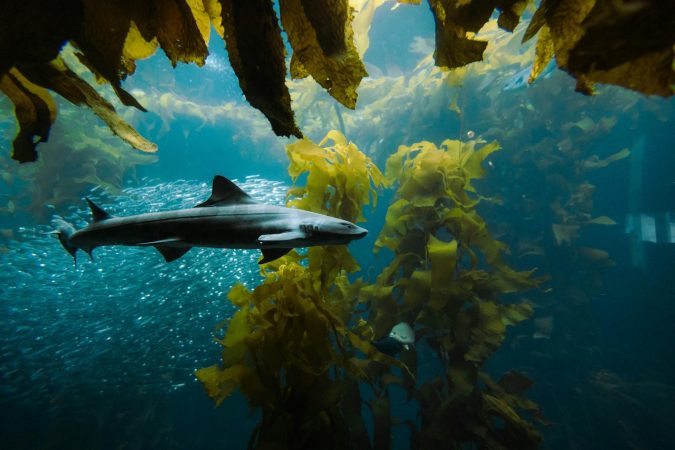
Seaweed offers a compelling hedge. Species like Macrocystis pyrifera (giant kelp) and Durvillaea antarctica (cochayuyo, already a staple in Chilean cuisine) are protein-dense, mineral-rich, and require zero freshwater, arable land, or synthetic fertilizer to grow. Chile's coastline stretches more than 6,400 kilometers, and the cold Humboldt Current that runs along it creates ideal conditions for macroalgae production. The pilot farms are being established in zones where coastal upwelling — driven partly by high-altitude Andean runoff patterns — brings deep, cold, nutrient-laden water to the surface.
The nutritional profile is what makes the project more than a symbolic gesture. Dried seaweed can contain between 10 and 47 percent protein by weight depending on the species, along with iodine, iron, calcium, and omega-3 fatty acids. Research suggests that integrating seaweed into regular diets could meaningfully address micronutrient deficiencies in populations that rely heavily on starchy staples. Chile's program specifically aims to develop affordable, shelf-stable seaweed products — flours, dried snacks, and protein supplements — that could be distributed through existing public food assistance channels if fruit export revenues decline. The approach echoes thinking we've seen elsewhere: climate scientists ranking foods by water cost per gram of protein are arriving at similar conclusions about where future calories should come from.
Chile's move also reflects a broader strategic shift among food-exporting nations that are quietly acknowledging a hard truth: the agricultural systems that generate export wealth and the systems that feed domestic populations may soon diverge under climate pressure. Rather than waiting for crisis, Chile is building redundancy into its food system using a resource it already has in abundance — its ocean.
Whether high-altitude seaweed farms can realistically feed 19 million people remains an open question. But as a food security strategy, the logic is hard to argue with: grow what thrives in the conditions you actually have, rather than fighting to preserve the conditions you're losing.
Feature image by isaac mijangos on Pexels
If You Were a Healing Herb, Which Would You Be?
Each herb holds a unique kind of magic — soothing, awakening, grounding, or clarifying.
This 9-question quiz reveals the healing plant that mirrors your energy right now and what it says about your natural rhythm.
✨ Instant results. Deeply insightful.

Adam Kelton
Adam Kelton is a writer and culinary professional with deep experience in luxury food and beverage. He began his career in fine-dining restaurants and boutique hotels, training under seasoned chefs and learning classical European technique, menu development, and service precision. He later managed small kitchen teams, coordinated wine programs, and designed seasonal tasting menus that balanced creativity with consistency.
After more than a decade in hospitality, Adam transitioned into private-chef work and food consulting. His clients have included executives, wellness retreats, and lifestyle brands looking to develop flavor-forward, plant-focused menus. He has also advised on recipe testing, product launches, and brand storytelling for food and beverage startups.
At VegOut, Adam brings this experience to his writing on personal development, entrepreneurship, relationships, and food culture. He connects lessons from the kitchen with principles of growth, discipline, and self-mastery.
Outside of work, Adam enjoys strength training, exploring food scenes around the world, and reading nonfiction about psychology, leadership, and creativity. He believes that excellence in cooking and in life comes from attention to detail, curiosity, and consistent practice.
More Articles by Adam