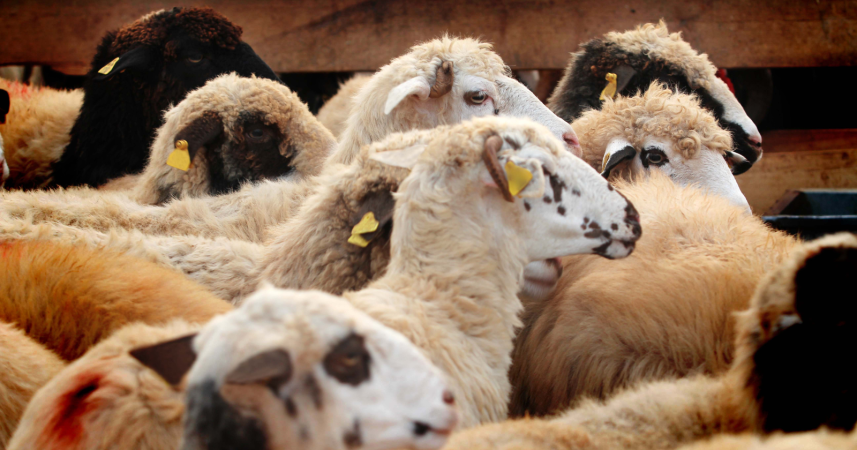
Federal law designed to prevent animal suffering excludes 98% of slaughtered animals and faces chronic enforcement failures

Add VegOut to your Google News feed. 
The Humane Methods of Slaughter Act, the primary federal law governing how animals are killed for food in the United States, contains a gap that leaves billions of animals without basic protections. According to the USDA National Agricultural Library, the 1958 law excludes all poultry from its requirements, meaning the approximately 9 billion chickens slaughtered annually in the U.S. have no federal mandate for humane treatment at the moment of death.
The law requires that covered livestock, including cattle, pigs, and sheep, be rendered unconscious before slaughter. But chickens, turkeys, and ducks, which account for roughly 98% of all land animals killed for food in America, fall outside these protections entirely.
What the law actually requires
For the animals it does cover, the Humane Methods of Slaughter Act mandates that livestock be made "insensible to pain by a single blow or gunshot or an electrical, chemical or other means that is rapid and effective" before being killed. The USDA's Food Safety and Inspection Service (FSIS) is responsible for monitoring compliance at federally inspected slaughter facilities.
In practice, enforcement data reveals persistent problems. According to an analysis by MEAT+POULTRY published in June 2025, there were 63 humane handling enforcement actions in 2024. Of those, 89% involved stunning failures, with animals requiring between two and five attempts to be rendered unconscious.
The poultry exemption
The exclusion of birds from federal humane slaughter protections represents the law's most significant gap. As reported by Modern Farmer, the USDA has repeatedly declined to extend coverage to poultry, despite petitions from animal welfare organizations. The agency maintains that birds are covered under the separate Poultry Products Inspection Act, but that law contains no specific requirements for humane slaughter.
The practical result, according to animal welfare advocates, is that chickens can legally be shackled, hung upside down, and have their throats cut while fully conscious. The USDA's position is that poultry must be "handled using good commercial practices," a standard critics argue provides no meaningful protection.
Enforcement gaps and underreporting
Even for protected species, the enforcement record raises questions. The Animal Welfare Institute reports that the USDA has declined to initiate criminal prosecutions for inhumane slaughter against any of the more than 800 licensed federal plants since at least 2007. The agency has also refused to refer cases to local law enforcement for potential prosecution under state animal cruelty laws.
Records analyzed by AWI documented violations including animals stunned multiple times without being rendered unconscious, animals shackled or cut while still conscious, and excessive use of electric prods. In one documented case at a pork facility in Iowa, personnel recorded nearly 250 instances of excessive force over approximately two years, affecting tens of thousands of animals.
Line speed concerns
The pace of modern slaughter operations creates additional pressure on humane handling. According to Johns Hopkins Center for a Livable Future, pig slaughterhouses process animals at rates of approximately 1,106 per hour, with the USDA in March 2025 announcing plans to allow even faster speeds. Poultry plants operating under modernized inspection systems can process up to 175 birds per minute.
Critics argue that faster line speeds make it more difficult to ensure animals are properly stunned and to catch failures before conscious animals proceed through the slaughter process. A federal meat inspector quoted in court documents stated that at her modernized plant, inspectors have approximately two seconds per pig to identify problems.
Consumer perception disconnect
Research suggests a significant gap between what consumers expect and what actually occurs. According to a study cited in the Journal of Animal Science, only 25% of consumers surveyed believed that U.S. meat comes from humanely treated animals. Yet 30% of shoppers reported looking for animal welfare claims when purchasing meat, suggesting demand for practices the current system may not consistently deliver.
The scale is substantial. USDA data shows that in 2024, approximately 31.8 million cattle and over 130 million hogs were slaughtered commercially in the United States, in addition to billions of chickens and turkeys.
What's next
Animal welfare organizations continue pushing for legislative changes that would extend humane slaughter requirements to poultry and strengthen enforcement for all species. Meanwhile, the USDA is moving forward with plans to make faster line speeds permanent at pork and poultry plants, a decision industry groups support but worker and animal welfare advocates oppose.
The debate highlights ongoing tension between production efficiency and animal welfare, with the meaning of "humane slaughter" remaining contested territory between regulators, industry, and consumers who may have different expectations of what the term implies.
If You Were a Healing Herb, Which Would You Be?
Each herb holds a unique kind of magic — soothing, awakening, grounding, or clarifying.
This 9-question quiz reveals the healing plant that mirrors your energy right now and what it says about your natural rhythm.
✨ Instant results. Deeply insightful.

Jordan Cooper
Jordan Cooper is a pop-culture writer and vegan-snack reviewer with roots in music blogging. Known for approachable, insightful prose, Jordan connects modern trends—from K-pop choreography to kombucha fermentation—with thoughtful food commentary. In his downtime, he enjoys photography, experimenting with fermentation recipes, and discovering new indie music playlists.
More Articles by Jordan