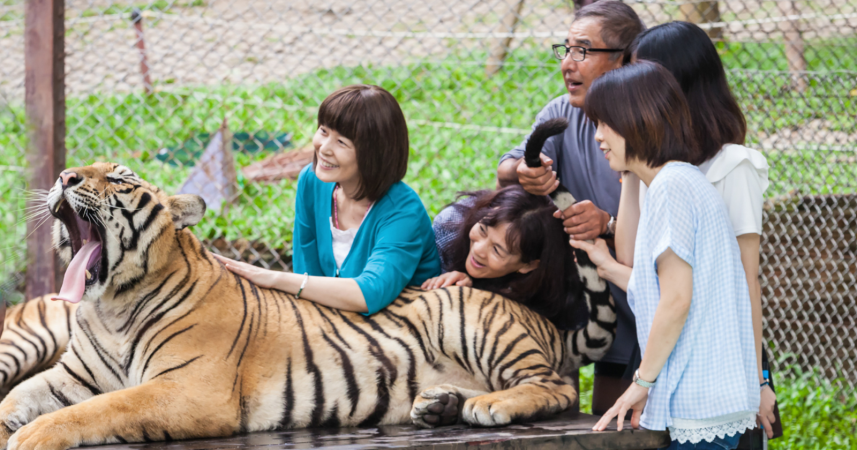
Investigators reveal cubs are separated from mothers at two weeks old, starved as punishment, and sedated daily so tourists can take photos
A chilling video that went viral in May 2025 showing a tiger pouncing on a tourist during a photo session has reignited global outrage over Thailand's tiger selfie industry, where investigators say big cats endure lives of sedation, starvation, and abuse so travelers can snap the perfect Instagram shot.
The incident occurred on May 26 at Tiger Topia in Chonburi Province, formerly known as the notorious Sri Racha Tiger Zoo. An Indian tourist participating in a "tiger walking" experience reached out to embrace the animal he'd been posing with. Within seconds, the tiger turned and lunged, leaving the man hospitalized with leg injuries. The entire attack lasted just five to six seconds.
Thai authorities immediately ordered the park to permanently cancel its tiger walking activities, according to Big Cat Rescue. But animal welfare organizations say this response barely scratches the surface of a much darker problem.
Inside the tiger selfie industry
Investigations by World Animal Protection have documented conditions at seventeen major tiger entertainment venues across Thailand. The findings paint a disturbing picture of systematic abuse hidden behind tourist-friendly facades.
Tiger cubs are routinely separated from their mothers just two to three weeks after birth, according to the organization's research. These infants are then presented to tourists and handled by hundreds of people daily, causing significant stress and injury.
Staff members disclosed that starvation is used as punishment when tigers "make mistakes." One employee at the former Sri Racha Tiger Zoo told investigators the facility limited food "when they are naughty," according to documentation cited by animal welfare researchers.
Half of all tigers observed during investigations were kept in cages measuring less than 20 square meters per animal. In the wild, tigers roam 16 to 32 kilometers in a single night.
The sedation question
Animal welfare experts say sedation is common at facilities offering tiger photo opportunities. PETA Asia senior campaigner Nirali Shah told Vice News that tigers used for photos "are regularly drugged because zoos cannot tame them."
"Wild animals like tigers shun human contact, and if this animal hadn't been so drugged, it's very likely he would have attacked the tourist," Shah explained, referring to a separate incident where a woman was photographed holding a sedated tiger's testicles at a Thai zoo.
Minnesota Zoo veterinarian Rachel Thompson, who works with tigers in accredited facilities, told Smithsonian Magazine that long-term sedative abuse leads to changes in breeding behavior, eating problems, and shortened lifespans. "Imagine drugging an animal day after day," she said. "They can't live long lives and they probably have all sorts of side effects."
A history of abuse at Sri Racha
Tiger Topia operates on the same site as the former Sri Racha Tiger Zoo, which closed temporarily in 2021 during the pandemic before reopening under the new name. The original facility had been cited for decades of violations.
The Animal Welfare Institute reported in 2004 that the zoo forced tigers to leap through rings of fire, walk across tightropes, and parade on their hind legs. Investigators documented tigers being struck with steel poles by trainers and evidence suggesting animals were being bred for the illegal wildlife trade.
A 2023 investigation by Lady Freethinker documented tigers with facial scars being whipped repeatedly with sharp sticks and chained so tightly they could barely move. Researchers also observed visitors shooting pellets at targets inside tiger enclosures.
The bigger picture
Thailand's captive tiger population has grown even as wild populations plummet. World Animal Protection found 207 more tigers subjected to tourism entertainment than five years prior, while fewer than 150 tigers remain in the wild in Thailand.
There are now more tigers in private hands in the United States alone than exist in the wild globally, according to conservation experts. An estimated 5,000 tigers live in American backyards and roadside zoos, compared to roughly 3,900 in their natural habitats worldwide.
The 2022 Big Cat Public Safety Act banned private ownership and cub petting in the United States. Since its passage, no children have been mauled by captive big cats in the country, according to Big Cat Rescue.
What's next
Following the May attack, Thai authorities mandated increased safety measures at Tiger Topia, including more handlers, clearer signage, and electric batons for staff. Critics say these measures miss the point entirely.
"The real solution is not better control. It's no contact at all," Big Cat Rescue stated in its response to the incident.
World Animal Protection continues urging travelers to avoid any wildlife venue offering direct human-animal interaction. The organization has successfully pressured over 250 travel companies to stop selling tickets to exploitative wildlife attractions.
For tourists seeking tiger experiences, conservation groups recommend visiting national parks where wild populations still exist, or accredited sanctuaries where animals live without tourist contact. The Wildlife Friends Foundation Thailand, which rescued nine tigers from Phuket Zoo in 2022 in the country's largest NGO tiger rescue, offers one such alternative.
"If you can get up close, hug, or have a selfie with a tiger," World Animal Protection advises, "it's cruel, and don't go."
If You Were a Healing Herb, Which Would You Be?
Each herb holds a unique kind of magic — soothing, awakening, grounding, or clarifying.
This 9-question quiz reveals the healing plant that mirrors your energy right now and what it says about your natural rhythm.
✨ Instant results. Deeply insightful.

Jordan Cooper
Jordan Cooper is a pop-culture writer and vegan-snack reviewer with roots in music blogging. Known for approachable, insightful prose, Jordan connects modern trends—from K-pop choreography to kombucha fermentation—with thoughtful food commentary. In his downtime, he enjoys photography, experimenting with fermentation recipes, and discovering new indie music playlists.
More Articles by Jordan