Despite ending breeding and theatrical shows, SeaWorld refuses to retire its remaining 17 orcas to seaside sanctuaries

Add VegOut to your Google News feed. 
More than a decade after the documentary Blackfish exposed the realities of orca captivity, SeaWorld's remaining killer whales continue to live in the same tanks that sparked international criticism. While the company has made notable policy changes since the film's 2013 release, animal welfare organizations argue that the fundamental conditions driving the controversy remain unchanged.
What changed after Blackfish
The documentary's impact on SeaWorld was swift and severe. Within a year of Blackfish airing on CNN, the company's stock price fell by 33%, and attendance dropped by one million visitors, according to research published in 2021. In 2016, SeaWorld announced it would end its orca breeding program, making its current generation of killer whales the last to live in its parks.
The company also phased out theatrical "Shamu" shows in favor of what it describes as "educational encounters" focused on conservation messaging. Trainers no longer swim with the orcas, a practice discontinued after Dawn Brancheau's death in 2010 and reinforced by subsequent OSHA regulations.
What hasn't changed
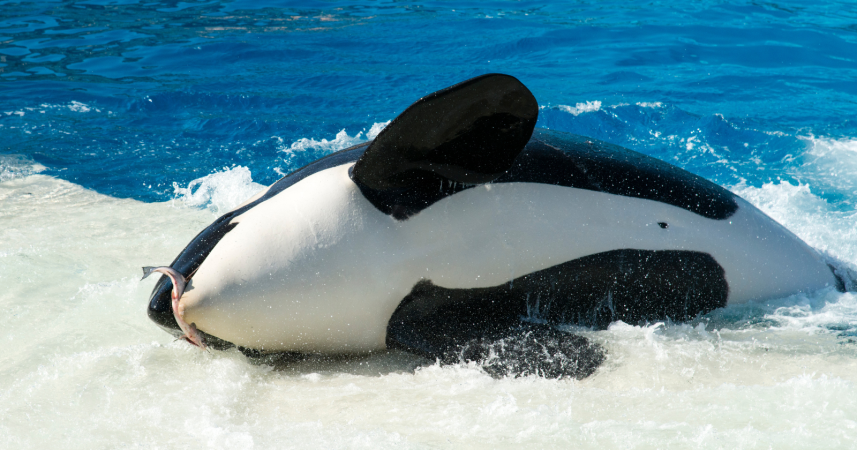
Despite these shifts, the orcas remain in the same tanks they've always occupied. SeaWorld currently holds 17 orcas across its three U.S. parks in San Diego, Orlando, and San Antonio, according to Whale and Dolphin Conservation's 2025 data. At least 45 orcas have died at SeaWorld facilities since the parks opened.
The tanks remain a fraction of the space orcas would cover in the wild, where they can swim up to 100 miles per day. SeaWorld's tanks are approximately 350 feet long and 35 feet deep, while wild orcas dive to depths exceeding 1,000 feet.
Animal welfare advocates point to persistent physical indicators of distress in captive orcas. Dorsal fin collapse affects 80 to 90% of captive males, compared to less than 1% in wild populations, according to marine mammal research. Captive orcas also display stereotypic behaviors, including repetitive swimming patterns and chewing on tank walls, which experts say indicate psychological suffering.
Recent incidents reignite debate
The concerns have intensified following recent events at SeaWorld parks. In September 2024, a trainer at SeaWorld Orlando was injured during a training exercise with a killer whale. The U.S. Department of Labor cited the park in March 2025 for failing to protect the trainer from bite, strike, and drowning hazards, proposing a $16,550 fine, as reported by FOX 35 Orlando.
In June 2025, SeaWorld San Antonio announced the death of Kamea, a young orca who had battled illness. The park described it as "an incredibly difficult time" in a public statement.
Meanwhile, protests continue. On December 13, 2025, activists dressed as Santa Claus gathered outside SeaWorld Orlando demanding the release of Corky, the oldest captive orca in the world. Captured in 1969, Corky has spent 56 years in captivity.
The sanctuary debate
SeaWorld has consistently refused to consider retiring its orcas to seaside sanctuaries, calling such facilities "high risk." Company officials have argued that their orcas, many of whom were born in captivity, would face dangers from ocean toxins, viruses, and weather conditions. The company maintains that its orcas receive top veterinary care and points to its rescue programs, which have aided more than 41,000 animals.
Animal welfare organizations dispute this position. The International Marine Mammal Project points to the successful rehabilitation and return of Keiko, the orca from Free Willy, who lived for five years in ocean waters after decades in captivity.
"Every one of the remaining captive orcas held at SeaWorld would live better and healthier lives away from concrete tanks and in natural seawater sanctuaries," said David Phillips, director of the International Marine Mammal Project, according to the organization's statement.
Several seaside sanctuaries are now in development around the world. The Whale Sanctuary Project has announced plans to build a facility for rescued orcas and belugas off the coast of Nova Scotia.
What's next
Federal legislation could force the issue. The SWIMS Act (Strengthening Welfare in Marine Settings), introduced in Congress in early 2024, would phase out captivity for orcas, beluga whales, pilot whales, and false killer whales. The bill remains under consideration.
In the meantime, SeaWorld continues to reposition itself as a thrill-focused theme park, emphasizing roller coasters and seasonal events over animal shows. But as long as orcas remain in its tanks, the company appears unable to fully escape the shadow of Blackfish.
Half of SeaWorld's remaining orcas are under 21 years old. Without policy changes, the "last generation" of captive orcas could remain in concrete tanks for decades to come.