How Disney's plant-based transformation reveals where American food culture is heading...
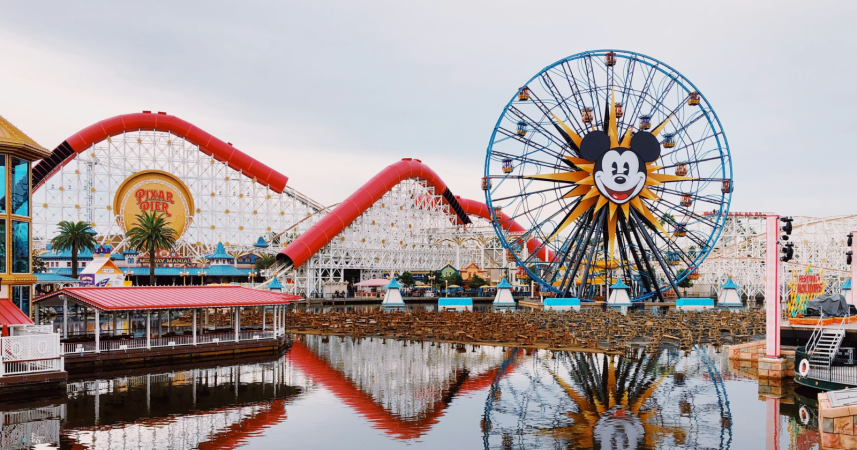
I'm standing in line at Docking Bay 7, the Star Wars-themed cantina in Disneyland's Galaxy's Edge, watching a father in a Boba Fett helmet enthusiastically order something called a "Felucian Kefta Garden Spread." His kids want the same thing. Nobody mentions it's vegan. Nobody needs to.
Five years ago, finding plant-based food at Disneyland meant survival mode: french fries, sad salads, maybe a veggie burger if you were lucky. Today, that story feels like ancient history, from some other timeline where veganism required constant explanation and apology. Now I'm watching this suburban dad from Orange County inhale Impossible meatballs while his daughter shares her plant-based blue milk, and neither of them seems to realize they're part of a cultural shift so complete that Mickey Mouse himself has gone green.
The numbers tell one story: Disney now offers hundreds of plant-based dishes across its properties (I tried them all—here's what's actually worth ordering). The app has a dedicated plant-based filter. Every restaurant—from the $65-per-plate Blue Bayou to the churro cart on Main Street—has vegan options marked with little green leaves. But the real story isn't in the data. It's in what nobody's talking about: how the Happiest Place on Earth quietly became a laboratory for America's food future without anyone really noticing.
The algorithm knew before we did
Three months ago, my TikTok started showing me Disney food content. Not the usual turkey legs and Mickey pretzels, but specifically vegan Disney content. Videos of twenty-somethings ranking plant-based options with the intensity usually reserved for Marvel movie theories. A grandmother reviewing the jackfruit carnitas at Rancho del Zocalo. Someone's entire account dedicated to finding hidden vegan gems in the parks.
The internet had identified something I hadn't consciously realized: I was planning a Disney trip, I was vegan, and apparently, so were 39% of Gen Z who identify as flexitarian or actively reducing meat consumption. TikTok knew I'd need this information before I knew I needed it.
But here's what struck me as I dove deeper into this Disney-vegan rabbit hole: nobody was treating it as activism. These weren't PETA members staging protests near Splash Mountain. They were just people who wanted to ride Space Mountain and eat something that didn't come from an animal, and they were genuinely excited that Disney had figured this out.
"It's fascinating how Disney became this unexpected leader," says Jennifer Bartashus, a food industry analyst at Bloomberg Intelligence. "They're not marketing to vegans specifically—they're marketing to everyone who might occasionally choose a plant-based option. That's a much bigger market."
When Mickey learned to read the room
Last week, I spent three days at Disneyland with my partner (vegetarian), my brother (carnivore), and his girlfriend (gluten-free). In 2015, this would have been a dietary algebra problem. In 2025, we ate together everywhere without a single compromise.
At Tiana's Palace, the new restaurant that replaced French Market, we all ordered different things from the same menu. My brother got traditional gumbo with andouille sausage. I got the Seven Greens version—collards, mustard greens, okra swimming in spiced broth over heirloom rice. They tasted completely different but equally intentional. Neither was trying to be the other. The menu, according to Disney, was designed to reflect "how New Orleans actually eats now, not some fantasy of what it ate in 1920."
That phrase stuck with me: how a place actually eats now. Because that's what Disney has always been better at than anyone gives them credit for—reflecting not who we think we are, but who we're becoming. They went trans-fat free in 2008, removed soda from kids' meals in 2012, and started labeling allergy-friendly options in 2015. Each change seemed small at the time. Together, they mapped a transformation.
The premium pickle paradox
Of course, this being Disney, there's a capitalist fairy tale wrapped inside the plant-based one. The Ronto-less Wrap—Galaxy's Edge's vegan star, an Impossible sausage wrapped with kimchi slaw and gochujang—costs around $13 (prices vary by season). In Los Angeles, I can get a similar wrap for $8. The plant-based Mickey waffle runs about $15. Even the famous Disneyland pickle costs $4.49 for what is, essentially, a pickle in a bag.
Disney has figured out what Whole Foods discovered after its Amazon acquisition: people will pay premium prices for plant-based options if you make them feel premium, not punitive. The markup isn't for taking away the meat—it's for adding the experience of eating something that aligns with your values while watching the Electrical Parade.
But there's something else happening with these prices that nobody wants to admit: they're normalizing the true cost of food. That $8 wrap you get in LA? It's only possible because of agricultural subsidies that make meat artificially cheap. Disney's prices, inflated as they are, accidentally reflect something closer to what food costs when you can't hide the externalities in government support and factory farming.
The woman with the turkey leg
On my second day, I'm sitting outside Pirates of the Caribbean eating jackfruit nachos when I notice her: a woman, maybe sixty, wearing a "Disney Adult" t-shirt (self-aware irony has reached the boomer generation), taking photos of a massive turkey leg. It's the most Disney food imaginable—a caveman-sized piece of meat that exists nowhere else in American cuisine.
She takes three bites, wraps it up, throws it away.
I've now watched this happen four times in two days. People buy the turkey leg for the photo, the idea of it, the performance of theme park excess. But they don't finish it. Meanwhile, every plant-based item I've seen ordered gets demolished. The pattern is unmistakable: we're still performing our old food culture while actually living in a new one.
"I get the turkey leg every year for the picture," a cast member named David tells me during a quiet moment at the Bengal Barbecue stand. "But honestly? The vegetable skewers outsell it three to one now. People just don't post about vegetables."
The kids who don't know it's weird
The most telling moment comes at Alien Pizza Planet in Tomorrowland. A kid, maybe eight, orders the Impossible Bolognese. His mom asks if he wants the "regular" version. He looks confused. "This is regular," he says. "The other one has cow in it."
This is the generation that will never know plant milk as "alternative." For them, oat milk is just milk, one option among many. They're growing up in a world where the Impossible Whopper is just a Whopper, where their school cafeterias have Meatless Mondays, where their favorite YouTube gamers casually mention being vegan between Fortnite streams.
Disney knows this. They're not marketing to vegans—they're marketing to the future, where dietary restrictions are less about restriction and more about preference, where "plant-based" is stripped of its political baggage and becomes just another way to eat, like choosing between Coke and Pepsi.
Even Universal Studios and Six Flags are scrambling to catch up, adding plant-based options to their menus. But Disney got there first, and more importantly, they made it feel inevitable rather than revolutionary.
The french fry revelation
Here's something I learned that broke my brain a little: Disneyland's french fries have reportedly been vegan since the beginning—not because Walt Disney was some secret animal rights activist, but because they use a proprietary oil blend that happens to be plant-based. The same is true for the Mickey pretzels (always vegan) and most of the popcorn (just oil and salt).
The Dole Whip, that iconic pineapple soft-serve, went dairy-free when it was reformulated in 2013, though most guests never noticed the change. Disney's most iconic foods were or became accidentally vegan before "vegan" was even a mainstream word. They didn't announce the change. We just started caring about what was in them.
There's a study from Cornell's Food Lab showing that people enjoy food more when it aligns with their values. But what happens when the food came first and the values caught up? It's like discovering your childhood comfort food was unexpectedly ethical all along. The cognitive dissonance resolves into something like relief.
The quiet revolutions
It's 10 PM, and I'm in line for one last Dole Whip. Throughout the day, I've talked to dozens of cast members about the plant-based transformation. The consensus is clear: this shift is different from other food trends.
"Cronuts, pickle corn dogs, those Instagram foods—they spike and disappear," says Marcus, a security supervisor who's worked here fifteen years. "But this plant stuff just keeps growing. Nobody posts about finding vegan food here anymore. They just post the food."
He's right. The change already happened, and it was so quiet we missed it. Plant-based eating grew 300% faster than overall food sales last year, but nobody's writing manifestos about it. It just happened. Like how everyone suddenly had smartphones, or how CBD went from illegal to in every corner store, or how remote work went from "impossible" to "obvious."
Of course, not everyone's celebrating. I overhear a couple complaining that "everything's going vegan" while eating regular hamburgers that are still available literally everywhere. The perception of change often outpaces the reality. But that perception itself is telling—when people think plant-based options are taking over, even when they're not, the cultural shift is complete.
The environmental ghost in the machine
What Disney doesn't advertise—but what makes this transformation even more significant—is the environmental impact. A single plant-based meal saves approximately 2.5 pounds of CO2 emissions compared to a meat-based one. Multiply that by millions of annual visitors, and Disney's plant-based push becomes one of the largest corporate environmental initiatives that nobody talks about.
They're not doing it for the planet, necessarily. They're doing it because their guests want it, because it's profitable, because it's easier to manage allergies and dietary restrictions with plant-based options. The environmental benefit is just a convenient side effect of capitalism accidentally aligning with climate action.
The thing about revolutions
The most successful revolutions are the ones that don't feel like revolutions. They feel like inevitability. Like something that was always going to happen, we just needed the infrastructure to catch up.
Disney—that monolithic, often problematic entertainment empire—built that infrastructure while we weren't looking. They turned plant-based eating from a statement into a default, from activism into algorithm, from political to profitable. And they did it in the most American way possible: by making it convenient, branded, and slightly overpriced.
I finish my Dole Whip (pineapple-mango swirl, because the future is about options) and walk down Main Street USA. The shops are closing, cast members are sweeping up popcorn, and somewhere in New Orleans Square, that family with the turkey leg photo is probably eating plant-based beignets without realizing they're making a choice that would have been radical just five years ago.
This is how culture changes: not with manifestos or protests, but with theme parks quietly adding green leaves to their menus. With dads in Boba Fett helmets eating Impossible meatballs. With kids who think cow milk is the alternative.
The Happiest Place on Earth went vegan, and nobody noticed because it didn't have to be a thing. It just had to be Tuesday. And maybe that's the most radical transformation of all: when the change becomes so normal that it stops being revolutionary.
Walking out through the gates, I check my phone. TikTok has already adjusted. Now it's showing me vegan recipes I can make at home, plant-based restaurants near me, a documentary about mushroom leather. The machine knows I've been converted, not to veganism—I was already there—but to something bigger: the belief that the future might actually arrive without a fight.
Tomorrow, thousands of people will walk into Disneyland. Some will be vegan, most won't. All of them will eat plant-based food. Most won't think about it. And that's the whole point.
The Magic Kingdom knows something we're just starting to figure out: the future doesn't announce itself. It just shows up on the menu, marked with a little green leaf, waiting to become normal.
If you're planning your own plant-based Disney adventure, I've compiled the ultimate vegan guide to Disneyland with every option ranked—because the future might be inevitable, but you still need to know which Galaxy's Edge wrap to order.
If You Were a Healing Herb, Which Would You Be?
Each herb holds a unique kind of magic — soothing, awakening, grounding, or clarifying.
This 9-question quiz reveals the healing plant that mirrors your energy right now and what it says about your natural rhythm.
✨ Instant results. Deeply insightful.

Jordan Cooper
Jordan Cooper is a pop-culture writer and vegan-snack reviewer with roots in music blogging. Known for approachable, insightful prose, Jordan connects modern trends—from K-pop choreography to kombucha fermentation—with thoughtful food commentary. In his downtime, he enjoys photography, experimenting with fermentation recipes, and discovering new indie music playlists.
More Articles by Jordan