Singapore banned vapes to protect public health. Instead, they created a black market where surgical anesthetics sell for three times the price of nicotine.

Add VegOut to your Google News feed. 
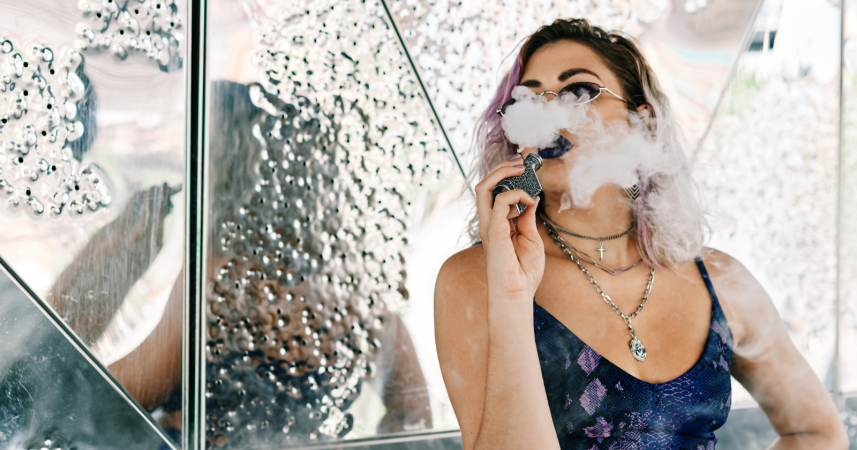
At 12:47 pM on March 13, 2025, a young woman exhaled vapor on Singapore's MRT, her head lolling as the train pulled into the station. The Instagram video, shot vertically by a passenger pretending to scroll his phone, would rack up 127,000 views in 48 hours. She couldn't have been older than 23, swaying in her seat while other passengers perfected that practiced urban blindness—eyes anywhere but on her.
Within days, Health Sciences Authority officers raided her Tampines flat. What they found should terrify anyone who thinks prohibition protects people: vape pods laced with etomidate, a surgical anesthetic that sells for three times the price of nicotine pods on Telegram. The woman's drowsy sway wasn't defiance—it was etomidate intoxication, a anesthetic high that can trigger seizures, respiratory failure, death.
Here's the number that should haunt policymakers: When authorities randomly tested seized vapes this year, one in three contained etomidate. Not nicotine. Surgical anesthetic.
The bitter irony cuts deep. Public Health England found vaping to be 95% less harmful than smoking. In the UK, smokers who switch to regulated vaping products report improved breathing, better cardiovascular health, successful long-term smoking cessation. Zero etomidate deaths. Because when products are legal, regulated, and tested, consumers get nicotine, not anesthetics.
But in trying to eliminate vaping, Singapore created something far deadlier than what they banned.
A regular nicotine vape pod costs $15 on Singapore's black market. An etomidate pod? $45. That 300% markup exists because prohibition doesn't eliminate demand—it monetizes danger. Criminal syndicates operating out of Malaysia have pivoted from trafficking traditional drugs to manufacturing "K-pods"—vapes laced with ketamine, methamphetamine, synthetic cannabinoids, and yes, etomidate.
The economics are brutal in their simplicity: higher risk equals higher profit. When everything is illegal, why not sell the most addictive, dangerous version?
The government's response arrived in the form of twenty-four bright red amnesty bins scattered across the island where users can supposedly surrender devices without penalty. The bins stand empty, monuments to misunderstanding. They embody our most persistent delusion about human behavior: that people change through fear, surrender, and solitary resolve.
Singapore's red bins ask for public surrender in a surveillance state where people get fined for posting vaping photos on social media. They demand trust from citizens who've watched others get arrested after being identified through viral videos. The woman from the train? Tracked down through facial recognition. Her mistake wasn't vaping—it was vaping while visible.
In online forums, users share warnings like wartime intelligence: "HSA raided Geylang warehouse last week." "New batch from JB tested positive for etomidate." "Trust only these three Telegram channels." The community polices itself because the state's prohibition makes official quality control impossible.
Since January 2024, Singapore has caught 17,900 people for vaping offenses—a 44% surge in just the first quarter of 2025. The numbers tell a story of policy failure dressed up as enforcement success. Each arrest, each raid, each seized device represents not victory but the metastasis of an underground market no one controls.
The Jurong warehouse raids paint the real picture. In January 2025, authorities seized 8,700 vaping devices from a single Kaki Bukit industrial unit. Testing revealed a pharmaceutical lottery: some nicotine, some etomidate, some cocktails of research chemicals no one fully understands. The teenager buying through Telegram has no idea which version he's getting. Russian roulette, $45 a spin.
I think about a Singaporean friend who quit smoking last year. Not through the bins, not through fear of prosecution, but through a UK-regulated vape he smuggled back from London. He knew exactly what was in it because the box listed the ingredients, the nicotine strength, the manufacturer's details. Basic consumer protection that Singapore's black market can't provide.
"I'd rather break the law with something safe than follow the law and die," he told me over encrypted chat. "At least I know it's not etomidate."
This is how prohibition inverts harm reduction: it makes the safe choice illegal and the dangerous choice profitable.
Contrast this with Japan, where cigarette sales halved in seven years after heated tobacco products were legalized. No etomidate. No black market. No teenagers having seizures on trains. The sales data is staggering: from 182 billion cigarettes in 2015 to 88 billion by 2023, while heated tobacco sales rose to 72 billion units. People switched because they could—legally, safely, with products they trusted.
Or Sweden, where only 5% of men smoke—the lowest in Europe—because they switched to snus, a regulated oral tobacco product. Birth cohort data over four decades shows young Swedes increasingly choosing snus over cigarettes, not because the government forced them but because they had a legal, safer option.
Or New Zealand, where the Ministry of Health actively helps smokers switch to vaping. In 2023, 11.9% of adults vaped compared to 8.3% who smoked—vaping has overtaken smoking because the government treats it as harm reduction, not moral failure.
None of these countries have etomidate crises. None have amnesty bins. What they have is something Singapore's prohibition can't provide: the ability for people to make informed choices about their health.
Research consistently shows successful behavior change requires social support and community reinforcement. But Singapore's approach atomizes users, drives them underground, strips them of the very connections that enable transformation. You can't build a new identity in the shadows. You can't join a cessation support group for an illegal activity. You can't gradually transition from smoker to vaper to non-user when every step is criminal.
The young are bearing the worst of it. Cases of etomidate intoxication among teenagers jumped from 5 in 2024 to 28 in just the first half of 2025. That's not a drug problem—that's a policy problem. These aren't hardened addicts seeking stronger highs. They're kids who wanted to vape like their peers in London or Tokyo but ended up with surgical anesthetic because that's what prohibition markets provide.
Last month, another video surfaced—teenagers at East Coast Park, passing around what looked like a regular vape. One collapsed. Etomidate, the comments speculated. "Check your pods," users warned each other. "Trust only certain Telegram channels." The fear was palpable, but so was the resignation. This is what normal looks like now.
Health Minister Ong Ye Kung announced plans to classify etomidate as a Class C drug, adding another layer of prohibition to address the problems caused by prohibition. When your only tool is a hammer, everything looks like a nail—even when the nail is a public health crisis you created.
The bins perform concern while the real crisis deepens. They're asking the wrong question—not "How do we eliminate vaping?" but "How do we prevent vaping from becoming deadly?"
Every week brings new TikToks from Singapore's shadow economy. Teenagers filming themselves with K-pods, thinking they're rebels when they're really victims. The defiance gets likes, shares, digital validation. The etomidate gets you unconscious on a train, featured in a government raid, transformed from person to statistic.
In the encrypted channels where Singapore's vaping underground thrives, dealers advertise "undetectable" formulations with the pride of innovation. New chemical structures designed to evade the latest tests. Cat and mouse, except the mouse might kill you. The illegality isn't a bug—it's a feature that justifies the markup.
Meanwhile, the rest of the developed world moves forward. Sweden approaches its goal of 5% smoking prevalence, achieved not through prohibition but through pragmatism. Japan watches cigarette sales continue their dramatic decline as users switch to heated tobacco. These aren't theoretical models—they're proven successes Singapore chooses to ignore.
The woman from the train hasn't posted since her arrest. Her silence speaks louder than any government warning. She became what the system made her: a cautionary tale about using etomidate she never knew she was using, buying products she couldn't verify, trusting dealers who saw her as profit.
This is what Singapore's bright red bins miss: behavior change happens through replacement, not removal. Through community, not isolation. Through trust, not fear. The running club that welcomes smokers becoming runners. The online forum where ex-smokers share vaping cessation stories. The regulated market where you know what you're buying won't kill you.
I know a woman who quit smoking through a Tuesday night running group at East Coast Park. First she could barely make it a kilometer without wheezing. The group cheered anyway. By month three, she was keeping pace with runners who'd been at it for years. She didn't "quit smoking" so much as "become a runner." The cigarettes simply stopped fitting into this new version of herself.
That's how people actually change—through addition, not subtraction. Through new identities that make old behaviors obsolete. But you can't become a "responsible vaper transitioning to cessation" when vaping itself is criminal. You can't join a support group for an illegal activity. You can't celebrate small victories when every puff risks prosecution.
Singapore's prohibition created a machine that turns nicotine users into anesthetic victims, teenagers into criminals, and health policy into theater. The machine doesn't need the bins to be full. It needs them to be empty—proof that fear trumps support, that control matters more than outcomes, that the appearance of action substitutes for actual harm reduction.
The bins will remain empty because they're solving the wrong problem. They ask "Where can people surrender?" when they should ask "What can people become?" They demand confession when they should offer transformation. They criminalize the very communities that enable change.
In trying to create a vape-free Singapore, authorities created something worse: a Singapore where vaping might kill you, where teenagers inhale anesthetics, where a public health crisis deepens while empty bins stand guard over a policy too proud to admit failure.
This failure has spawned an arms race. Telegram dealers update their catalogs with chemistry that would terrify any pharmacologist. Malaysian syndicates develop new formulations to stay ahead of detection. Teenagers roll dice with their lungs, not knowing if today's pod contains nicotine or anesthetic.
And those red bins? They stand like tombstones for evidence-based policy, monuments to what happens when ideology meets reality and ideology wins. Empty vessels for a empty approach, asking for surrender from people who've already been abandoned by the very system claiming to protect them.
Change doesn't happen in bright red bins. It happens in the shadows Singapore created, in Telegram chats and warehouse raids, in hospital beds where teenagers learn too late that their vape contained something deadlier than nicotine. It happens when we stop trying to eliminate behaviors and start asking why they exist, what they provide, how they might transform.
The woman from the train found consequences instead of support, surveillance instead of safety. Somewhere tonight, another teenager is taking the same risk, buying the same lottery ticket, trusting the same broken system that turns harm reduction into harm multiplication.
The machine runs on. The bins stay empty. The casualties mount. And Singapore keeps doubling down on a war it's already lost, fought with weapons that wound the very people it claims to protect.
This is Prohibition 2.0, and we already know how this story ends. The only question is how many more will pay the price before someone admits the obvious: when you ban safer alternatives, you don't eliminate risk.
You maximize it. Just ask the teenagers in Singapore's hospitals.
If You Were a Healing Herb, Which Would You Be?
Each herb holds a unique kind of magic — soothing, awakening, grounding, or clarifying.
This 9-question quiz reveals the healing plant that mirrors your energy right now and what it says about your natural rhythm.
✨ Instant results. Deeply insightful.

Jordan Cooper
Jordan Cooper is a pop-culture writer and vegan-snack reviewer with roots in music blogging. Known for approachable, insightful prose, Jordan connects modern trends—from K-pop choreography to kombucha fermentation—with thoughtful food commentary. In his downtime, he enjoys photography, experimenting with fermentation recipes, and discovering new indie music playlists.
More Articles by Jordan