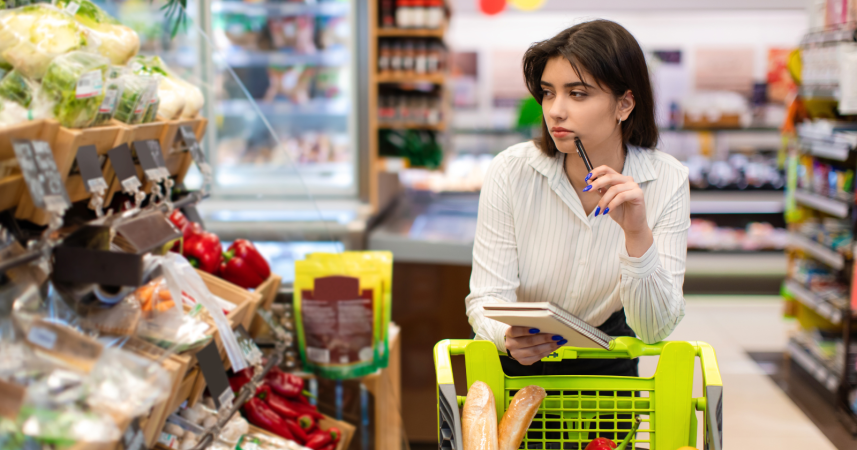
In the economy’s recovery narrative, the grocery aisle remains stubbornly stuck.

Add VegOut to your Google News feed. 
Americans watching their household budgets received mixed signals this month when the Bureau of Labor Statistics reported that overall inflation held steady at 2.7% in December.
While that figure matched November's rate and suggested price pressures were stabilizing, a closer look at the data reveals a troubling disconnect: grocery bills continue climbing at a pace that outstrips broader economic trends.
Food prices jumped 0.7% in December alone, marking the largest single-month increase in over three years. For perspective, that surge more than doubled the 0.3% rise in overall consumer prices during the same period. Over the full year, food costs climbed 3.1%, a notable acceleration from November's 2.6% annual increase and significantly higher than the rates recorded in 2024 or 2023.
The disparity between stable headline inflation and accelerating food costs reflects a fundamental misunderstanding many consumers have about how inflation works.
When economists announce that inflation is slowing, they mean prices are rising less quickly than before. What they do not mean is that prices are falling or even remaining flat. For shoppers accustomed to decades of relatively predictable grocery costs, this distinction matters little when checkout totals continue setting new records.
The sticky nature of food inflation
Food prices have proven particularly resistant to the broader cooling of inflation that began in 2023. While overall consumer price increases moderated throughout 2024, grocery costs maintained their elevated trajectory, a phenomenon economists describe as "sticky" inflation. The U.S. Department of Agriculture projects food prices will rise 3.0% in 2025, faster than the historical 20-year average.
Several structural factors explain why grocery inflation resists downward pressure even as other sectors stabilize.
Labor costs throughout the food supply chain have increased substantially since the pandemic began, particularly for retail grocery workers whose wages have risen roughly 15 percentage points more than those in food manufacturing or the broader workforce. These workers now earn an average of $21.60 per hour, still $13 below the private sector average but representing a significant shift in operational costs for retailers.
Transportation and logistics expenses remain elevated as well. Every item on supermarket shelves carries embedded costs from diesel fuel, refrigerated trucking, and warehouse operations. These "last-mile" logistics expenses peaked during the supply chain crisis of 2021-2022 but have failed to retreat to pre-pandemic levels. Even when wholesale commodity prices decline, structural overhead prevents retailers from passing savings to consumers in any meaningful way.
Weather-related disruptions add another layer of volatility. Droughts, floods, and unseasonable temperatures increasingly impact crop yields and livestock production. Recent examples include Southwest droughts damaging lettuce and onion harvests, excessive Midwest rainfall delaying corn planting, and California water restrictions reducing avocado production. These localized shocks ripple through national supply chains, affecting prices for months or years after the initial disruption.
The cumulative burden on households
Perhaps the most psychologically challenging aspect of persistent food inflation is its cumulative effect. Since February 2020, grocery prices have climbed 29% according to Bureau of Labor Statistics data. This means a household that spent $100 on groceries in early 2020 now pays $129 for the same basket of goods.
The impact varies widely by category. Beef and veal prices have surged 16.4% over the past year. Coffee prices jumped more than 20% during the same period, driven by weather challenges in major producing countries like Brazil and Vietnam, compounded by tariff pressures. Even as egg prices have declined from their spring 2025 peak due to easing avian flu outbreaks, they remain elevated compared to historical norms.
These increases hit particularly hard because food represents a non-discretionary expense. Unlike vacations or entertainment, families cannot simply defer grocery purchases when prices rise. The inelastic nature of food demand means households must absorb cost increases regardless of their financial circumstances, leading to difficult tradeoffs in other spending categories.
Consumer behavior reflects this stress. Shoppers have responded by making more frequent but smaller shopping trips, aggressively using coupons, switching to private-label products, and cooking more meals from scratch rather than purchasing prepared foods.
Looking ahead
Economists offer cautious optimism about food prices moderating in 2026, though few predict a return to pre-pandemic cost levels. The era of cheap groceries appears definitively over, replaced by a new normal shaped by higher labor costs, climate instability, and ongoing supply chain adjustments.
Several factors could drive prices higher. Immigration enforcement targeting agricultural workers creates potential labor shortages in food production and processing. Tariff policies continue adding costs to imported staples like bananas, coffee, and various ingredients used in packaged foods. Global conflicts and geopolitical tensions threaten disruptions to commodity flows and transportation networks.
On the more encouraging side, some structural improvements may help stabilize costs. Housing-related inflation, which carries substantial weight in overall price indices, shows signs of moderating as apartment vacancy rates increase and rental markets soften. Energy costs have become less volatile, removing one source of unpredictability from food production and transportation expenses. Competition among retailers for price-conscious consumers may limit how much of their increased costs they can pass along.
For families navigating these challenges, understanding the forces behind rising food costs offers limited comfort but some practical insight. The distinction between slowing inflation and falling prices matters when planning household budgets. Strategies like meal planning, comparing unit prices rather than package prices, and selecting seasonal produce can help manage grocery expenses, though none fully insulate shoppers from the fundamental reality that food costs substantially more than it did just a few years ago.
As policymakers debate responses to consumer affordability concerns, the grocery aisle has emerged as ground zero for economic anxiety. Whether December's inflation data signals genuine stabilization or merely a temporary pause remains to be seen. What seems certain is that Americans will continue feeling the pinch at checkout counters for the foreseeable future, regardless of what headline inflation numbers suggest.
What’s Your Plant-Powered Archetype?
Ever wonder what your everyday habits say about your deeper purpose—and how they ripple out to impact the planet?
This 90-second quiz reveals the plant-powered role you’re here to play, and the tiny shift that makes it even more powerful.
12 fun questions. Instant results. Surprisingly accurate.