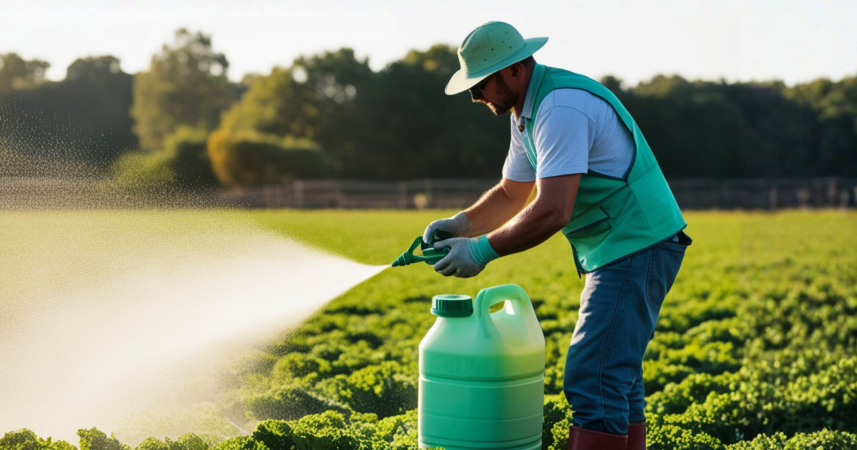
Paraquat is banned in 32 countries. In the U.S., its use has doubled.

Add VegOut to your Google News feed. 
Farmers across America are developing Parkinson's disease at rates that should alarm anyone who eats food.
The connection between agricultural work and this degenerative neurological condition has been documented for decades, but the scope of the problem keeps getting worse.
Nearly 90,000 people are diagnosed with Parkinson's in the United States each year, a 50% increase from previous estimates. And people who make their living working the land face substantially higher risk than the rest of us.
The culprit isn't a mystery. It's in the fields, drifting through the air, seeping into groundwater, coating the surfaces farmers touch every day.
Pesticides and herbicides, the chemicals that keep crops profitable and supermarket shelves stocked, are systematically damaging the brains of the people who grow our food.
The numbers don't lie about occupational risk
Farming as an occupation increases your risk of developing Parkinson's disease by nearly three times compared to people in other professions. That's not a small uptick. That's a massive occupational hazard hiding in plain sight.
The data gets more specific and more disturbing the deeper you look. A 2024 study examining Medicare records from 21.5 million people found that exposure to certain pesticides and herbicides increased Parkinson's risk by 25% to 36%. The researchers identified 14 different pesticides associated with the disease in the Rocky Mountain and Great Plains region alone.
Three chemicals showed the strongest relationships: the herbicides simazine and atrazine, and the insecticide lindane. People living in counties with the highest exposure to simazine were 36% more likely to develop Parkinson's than those in counties with the lowest exposure. For atrazine, the increased risk was 31%. For lindane, 25%.
In the counties with the highest atrazine exposure, 475 new Parkinson's cases developed per 100,000 people compared to 398 cases in the lowest-exposure counties. That's 77 additional people per 100,000 who developed a progressive, incurable neurological disease because of where they lived and what chemicals were being applied to nearby fields.
The relationship holds even when researchers control for other factors that could affect Parkinson's risk, like air pollution. The pesticides are doing this. Not as the only factor, but as a significant, measurable, preventable contributor to disease.
It's not just the people doing the spraying
You might think this is solely a problem for farmers who directly handle chemicals. It's not.
People who simply live in rural agricultural areas have elevated rates of Parkinson's disease as well.
They're exposed when pesticides drift into residential communities. They're exposed when chemicals contaminate groundwater that feeds private wells, which aren't subject to the same regulations as public water systems.
Some pesticides are worse than others
Paraquat deserves special attention. This herbicide has been linked so strongly to Parkinson's that 32 countries have banned its use, including China.
The United Kingdom prohibits it domestically but continues to manufacture and export it to the rest of the world, a moral atrocity that deserves more outrage than it receives.
A 2009 study found that exposure to paraquat within 500 meters of your home increased Parkinson's risk by 75%. Later, another study showed that people who used paraquat, primarily farmers, were 2.5 times more likely to have Parkinson's than those who didn't.
Despite these findings, paraquat use in the United States has doubled over the past decade. It's primarily applied to corn, soybeans, wheat, cotton, and grapes. Farmers in the U.S. continue using it because it kills weeds that even Roundup can't touch, and because it remains legal despite the evidence.
Rotenone, another pesticide with documented links to Parkinson's, stays on the market. So do numerous others that haven't been adequately studied for neurological effects.
The mechanisms are starting to become clear
Scientists understand more now about how these chemicals damage the brain. Many pesticides are neurotoxic by design. They kill insects by disrupting their nervous systems. The human nervous system isn't fundamentally different enough to escape harm, especially with repeated exposure over years or decades.
Specific pesticides interfere with mitochondrial function, the energy-producing structures in cells. Others trigger oxidative stress, flooding the brain with reactive molecules that damage neurons. Some promote the accumulation of alpha-synuclein, the protein that clumps in the brains of Parkinson's patients and kills dopamine-producing cells.
The damage isn't always immediately apparent. Parkinson's develops slowly, symptoms emerging only after substantial neurological damage has already occurred. By the time tremors start, when movements become stiff, when balance fails, a significant portion of dopamine-producing neurons are already dead. The pesticide exposure that contributed to that neurodegeneration might have happened decades earlier.
Protection exists but isn't equally accessible
Wearing protective equipment can reduce risk. Chemical-resistant gloves, for instance, provide some protection against certain pesticides. But not all. And protective gear only helps if farmers have access to it, can afford it, know they need it, and actually use it consistently in the heat and physical demands of agricultural work.
The reality is that many farmers, especially those working smaller operations or in developing countries, don't have access to adequate protective equipment. Even when they do, the equipment is uncomfortable, expensive, and easy to skip when you're rushing to finish spraying before weather changes or a growing season progresses.
Farm workers, who often face even more precarious conditions than farm owners, have less access to protective equipment and less power to refuse dangerous work. They face the highest exposures and the least protection. The pesticide-Parkinson's connection isn't just a health crisis. It's a labor rights crisis and an environmental justice issue.
The costs we're not counting
The combined direct and indirect costs of Parkinson's disease in the United States were calculated at $52 billion annually in 2020. Adjusted for inflation, that figure is estimated to have reached nearly $61.5 billion per year by 2025. Medications alone cost an average of $2,500 annually per patient. Therapeutic surgery can cost up to $100,000 per person.
Those are the financial costs. They don't capture the human toll. Parkinson's is a progressive disease that strips people of control over their own bodies. It affects movement, balance, speech, and eventually cognitive function.
It's exhausting, isolating, and there's no cure. People live with it for years or decades, their condition slowly worsening despite treatment.
When we calculate the cost of food production, we count land, water, seeds, equipment, and labor. We don't count the farmers who develop Parkinson's because of the chemicals required to make industrial agriculture profitable. We don't count their families. We don't count the communities downwind from fields where pesticides are applied, or the people drinking well water contaminated with agricultural runoff.
Those costs are real. They're just externalized, pushed onto farmers and rural communities instead of being borne by the chemical manufacturers or reflected in food prices.
Why this keeps happening
The pesticides linked to Parkinson's remain on the market because banning them would disrupt agriculture as it's currently practiced. Farmers rely on these chemicals because the economic model of modern farming demands maximum yield at minimum cost. Weeds and pests reduce yields. Pesticides solve that problem. The fact that they also cause neurological damage in the people using them is treated as an acceptable trade-off.
Chemical manufacturers have fought regulation for decades, funding studies that question the links between their products and disease, lobbying against restrictions, and exporting banned substances to countries with weaker regulations.
The same playbook used by tobacco companies and fossil fuel interests: manufacture doubt, emphasize economic costs of regulation, and keep the product on the market as long as possible while people get sick.
Meanwhile, hundreds of pesticides remain unstudied for their effects on human neurological health. We know some cause Parkinson's. We strongly suspect others do. But we haven't systematically evaluated the chemicals we're allowing to be sprayed on millions of acres of farmland, so we can't say with certainty which ones are safe and which aren't.
That uncertainty benefits manufacturers. It doesn't benefit farmers or anyone else who might be exposed.
What should happen but probably won't
The obvious move is banning the pesticides with the strongest links to Parkinson's disease. Paraquat, at minimum, should be prohibited immediately. Other chemicals with documented neurological effects should be phased out and replaced with safer alternatives where they exist.
For pesticides that haven't been adequately studied, the burden should shift. Rather than allowing use until harm is proven beyond doubt, chemicals should be required to demonstrate safety before being approved for widespread agricultural application. The current approach, using farmers as unwitting test subjects, is backwards and indefensible.
But none of that is likely to happen without sustained pressure. The agricultural chemical industry is powerful, politically connected, and highly motivated to maintain the status quo. Farmers themselves are often caught in the middle, needing effective pest control to make their operations viable but paying the price in their own health.
Real change would require rethinking how we practice agriculture, what we prioritize in food production, and who bears the costs when those priorities cause harm. It would require acknowledging that cheap food isn't cheap when farmers are developing Parkinson's disease because of the chemicals required to produce it. And it would require acting on that acknowledgment even when it's economically or politically inconvenient.
The tremors that started in America's fields aren't going to stop on their own. The question is whether we'll do anything about them before another generation of farmers loses control of their hands, their balance, and their lives.