A Hello Kitty show-restaurant on a tiny Japanese island turned cartoon-perfect vegan plates into global clickbait—and a surprising case study in plant-based mainstreaming.
The first time a Hello Kitty bento winked at me from my feed, I assumed it was edible fan art — some painstaking home kyaraben project, not a dish you could actually order.
Then my DMs filled with friends road-tripping to Japan’s Hello Kitty Show Box on Awaji Island, where full lunch shows and afternoon café seatings plate plant-based meals sculpted into shockingly accurate Kitty faces bows, and seasonal vignettes.
The resort’s own overview highlights “adorable, wholesome and health-conscious plant-based ingredients” shaped into themed dishes served alongside live music, dance numbers, and meet-and-greets with Kitty-chan herself.
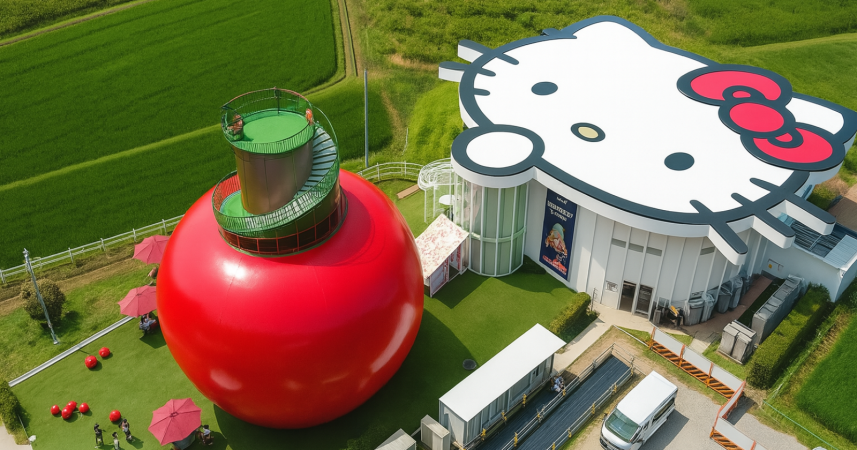
Early visitor reports on HappyCow raved that the entire menu launched 100% vegan — bento boxes, dessert buffets, the works—and that the building is literally laid out in the shape of Hello Kitty’s head when seen from above, reinforcing the “eat inside the character” fantasy that fuels so many posts.
Coverage from grape Japan back in 2020 captured the moment the venue first grabbed global attention: an “Autumn Sweets Party” tiered dessert service, fully vegan and engineered for “ultimate Instagrammability,” complete with seasonal pumpkins and bat-shaped cookies.
Those early visuals seeded a share storm that still resurfaces every Halloween—and they’re a big reason plant-based travelers now slot Awaji into Kansai itineraries.
Is it still vegan? What changed—and how to order confidently
Because food memories last forever on the internet, a lot of older posts still describe Hello Kitty Show Box as entirely vegan. Important update: community sleuthing on HappyCow logged that limited meat options were added in June 2025.
The listing now tags the venue as “serves meat, vegan options available,” signaling a shift from pure vegan to mixed menu.
Don’t panic — the signature character plates and dessert spreads can still be ordered plant-based. You just need to select the vegan course when booking or alert the staff on arrival.
The official English-language booking info continues to foreground vegan dining packages (look for menu language around “vegan Hello Kitty dishes” in the lunch show description), and the resort’s broader site reiterates that plant-based selections remain a marquee draw during both lunch and café service blocks.
Drilling into the reservation portal shows multiple ticket types—lunch show, café time, seasonal packages — and repeats that you “order your favorite food menu in the restaurant for an additional fee,” with vegan cuisine highlighted in the venue message.
That’s your cue to specify vegan when the staff confirms orders. I recommend screenshotting the reservation note and showing it at seating, especially if language barriers crop up.
Why kawaii + plants = viral gold
Kawaii plating weaponizes delight.
At Hello Kitty Show Box, chefs compress rice, color purees, pipe sauces, and laser-cut nori to map Kitty’s iconic bow, whiskers, and seasonal costumes—visual grammar that reads instantly in any language when it hits social feeds. Resort copy leans hard into “captivating” and “pure joy,” inviting guests to photograph before they fork.
Historical coverage from grape Japan explicitly linked the restaurant’s elaborate vegan sweets towers to “ultimate Instagrammability,” noting that the venue had “gained attention” across media thanks to aerial drone shots showing the building’s Kitty-shaped footprint surrounded by fields.
That aerial reveal became a staple of shareable reels: cut from plate close-up to drone fly-over; boom—viral.
Social analytics dashboards tracking the restaurant’s official Instagram handle show thousands of followers engaging with hashtags like #hellokittyshowbox and #淡路島西海岸 (Awaji West Coast), underscoring that the draw is as much a visual memento as a meal.
If your editor asks whether “people will click,” the data says yes: the feed ranks competitively among Japanese attraction accounts despite Awaji’s rural location.
Planning your visit: timing, tickets, transit, and vegan picks
Hello Kitty Show Box runs structured seatings:
- An 11:00–13:30 lunch show window (last entry ~12:00) that includes a film short, live jazz-band performance starring Kitty, and a photo greeting;
- Afternoon café shows (two blocks spanning roughly 14:00–17:00) with lighter sweets, drinks, and a themed mini-performance.
Those time slots appear across the official overview and booking pages; plan transit so you don’t miss the curtain—late arrivals may be treated as cancellations.
Advance reservations are strongly encouraged.
The TableCheck portal details multiple packages (adult, child, combo tickets with the adjacent Apple House attraction) and flags that food orders are additional to the base show ticket unless bundled — double-check what’s included so you’re not surprised at the table.
Screenshots help if you book through a third-party platform or if staff needs to verify your record (a common hiccup noted in traveler reviews).
Speaking of reviews: recent guest roundups highlight that the venue is “very Instagram friendly,” that seating is limited, and that vegan dessert/tea sets are worth the trek from Osaka—useful clues when deciding between lunch (heavier savory course) and café (sweets).
Many travelers book via tour aggregators or package passes to bundle transport across Awaji’s scattered attractions; factor that in if you’re car-free.
Beyond Awaji: the character-food wave sweeping cities
Hello Kitty food culture is having a moment far beyond Japan.
In London, Primark locations rolled out a Hello Kitty Café collab earlier this year — with donut pops, shakes, and character-printed wafers prompting fans to queue for themed snacks and selfies. Not everything on that menu is vegan, but the crowds prove the draw: people show up for edible characters, then ask about dietary swaps.
That pattern creates leverage for plant-based add-ons in future pop-ups.
Stateside, Houston’s Lucky Box Cafe hosted a Labubu pop-up — a kawaii-horror character from Chinese toy giant Pop Mart—decking the space in dangling dolls, costume stations, and colorful drinks shaped to match the critter.
Again, menu items weren’t positioned as vegan. Yet lines formed for the photo-op, illustrating how visual fandom drives traffic first, food preferences second. For plant-based advocates, that’s a teachable moment: offer vegan character options and capture the hype.
Zoom out and you’ll notice the environment is primed: a recent Grist deep dive reports that Japan — long perceived as tough terrain for vegans — is seeing an upswing in plant-based restaurants tied to tourism, climate goals, and animal-welfare awareness.
When mainstream attractions like Hello Kitty Show Box foreground vegan sets, they ride that tailwind and help normalize ordering plants in spaces previously dominated by meat and fish.
Hidden costs, sustainability wins, and what the movement can learn
The kawaii character format isn’t just a marketing gimmick — it can serve stealth sustainability.
Awaji’s resort messaging points to “health-conscious plant-based ingredients,” a nod to lower resource footprints compared with animal-heavy theme dining.
If a family of four chooses the vegan course, you’ve swapped out multiple animal-protein portions for grains, legumes, and produce—a small but scalable shift when thousands of visitors cycle through seasonal shows.
Yet there’s nuance: HappyCow’s June 2025 update confirming the introduction of meat items reminds us that commercial venues juggle diverse guest expectations.
For advocates, the play is to keep demand strong for the vegan sets—book them, post them, and tag the venue—so plant-based plates remain core rather than novelty.
Reservations data show tiered packages and limited seating: food waste risk is lower when pre-orders are tied to show tickets (the TableCheck model), which can actually improve sustainability metrics versus buffet-style theme parks.
Consider flagging “vegan course” in advance; predictable counts help kitchens source efficiently.
Wider impact: from fandom to food systems
When pop culture IP meets dietary change, visibility accelerates adoption.
Grist chronicles how tourism and climate messaging are nudging Japanese operators to test more plant-based menus —Hello Kitty’s global fandom delivers a built-in megaphone.
If a child’s first memory of a “special restaurant” includes a fully plant-based Kitty-shaped lunch that tasted great, that shifts the default story about what celebratory food is.
London’s Primark tie-ins and U.S. character pop-ups show that even non-vegan venues lean into cute plating to drive foot traffic; once crowds are primed for novelty, offering a vegan version is low friction and high goodwill.
Editors: track this—brand managers love dual wins (viral content + inclusive menu).
My take: why this matters for plant-based eaters (and storytellers)
I’ve long argued that the plant-based revolution needs more joy shots—images that sell delight rather than sacrifice.
Hello Kitty Show Box nailed the formula: recognizable IP, riotous color, tight service choreography, and a menu that (still!) lets you keep it vegan without feeling like the difficult diner.
Seeing the venue expand beyond its original all-vegan stance stings a little, but it’s also a reality check: inclusivity means mixed groups book in bigger numbers.
The path forward isn’t purity policing; it’s making the vegan choice so playful, tasty, and photogenic that omnivores order it anyway.
That’s the quiet revolution hiding under all those bows and whiskers—and it’s a template other fandom restaurants can copy.
If you go: quick hit checklist
- Book early. Lunch show seats sell out—reserve and mark “vegan” in the notes or call ahead; the reservation portal spells out package types and entry cutoffs.
- Budget transit time. Awaji sits off Honshu. Plan car, bus, or tour transport so you’re onsite before the last entry (about noon for lunch). Official guidance lists access from Awaji IC and free parking if you drive.
- Confirm the menu mix. Menus evolve. HappyCow logged meat additions June 2025 — double-check current vegan offerings, especially if you have allergens.
- Pack your camera. The restaurant’s Kitty-head footprint and plated desserts are engineered for photos—expect to shoot before you eat; that’s half the fun.