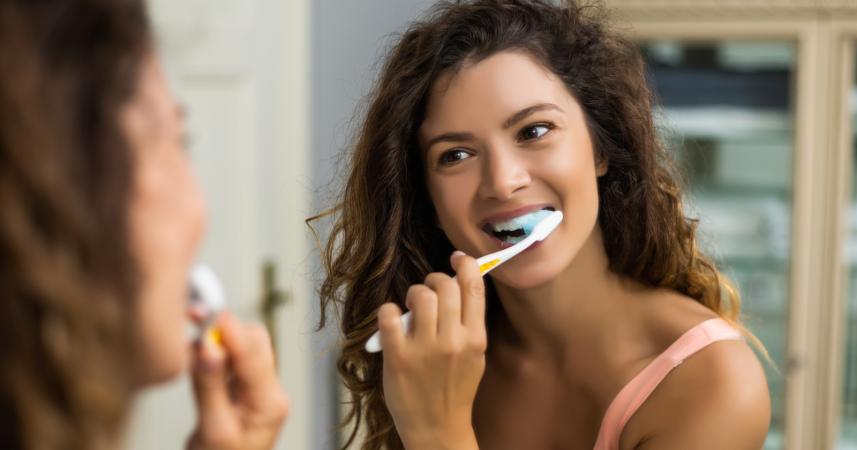
No, brushing twice daily doesn’t make you “164% more likely” to retire rich—but it does correlate with better health and fewer work-sapping dental crises, which can help your finances over time.
You’ve probably seen the headline-y sound bite: “Brush twice a day and you’re 164% more likely to retire rich.”
It’s catchy. It’s also not supported by any credible study I could find.
After chasing the stat through dental journals, government surveys, wealth datasets, and a stack of expert reports, there’s no peer-reviewed evidence that quantifies a “+164%” retirement-wealth advantage from brushing alone.
What the research does show is simpler (and still powerful): good oral hygiene correlates with better cardiometabolic health and fewer work-limiting dental problems—factors that can indirectly shape a person’s lifetime earnings and savings capacity.
But “164% richer” is internet math, not science.
What the science actually says about brushing and health
Large observational studies link frequent toothbrushing with lower risks of cardiovascular and metabolic disease—think heart failure, atrial fibrillation, diabetes risk markers—likely via inflammation pathways tied to gum disease.
These are associations, not proof of causation, but the direction of travel is consistent: people who brush more regularly tend to have better cardiometabolic profiles over time.
That’s a health story, not a get-rich-quick story.
The money angle is real—just not the way the meme claims
Economists and dental-public-health researchers have started quantifying how oral health affects work and wealth.
One U.S. analysis (2011–2018) examined oral-health-related productivity loss and household wealth among working-age adults; poorer oral health tracked with more missed work and lower wealth, even after adjusting for confounders.
The takeaway: untreated dental problems can drain income and savings through time off, reduced employability, and medical costs.
That’s a plausible indirect pathway from daily care → fewer problems → steadier work → better finances. It is not a precise “+164%” boost.
Hygiene basics still matter (and most people don’t nail them)
Public-health data in England shows nearly a quarter of adults don’t clean their teeth at least twice daily, despite longstanding guidance to do so.
Dental organizations keep repeating the nighttime brush message because saliva protection dips while you sleep, making plaque more destructive overnight.
In other words: twice-daily brushing is table stakes for preventing decay and gum disease. Table stakes aren’t clicky—but they compound over decades.
How the myth probably started
Financial writers (and some dentists) love the metaphor that small habits compound like interest. It’s a good teaching device—and it likely got misread as a literal statistic somewhere between a keynote slide and a TikTok caption.
There are plenty of quotes about compounding — there are not peer-reviewed papers claiming a 164% wealth premium for brushing.
When you see a number that round and that dramatic with no citation, treat it like a dubious stock tip
Personal note: what a week without brushing cost me
As a reporter, I once spent a week shadowing overnight shifts.
My routine fell apart — I skipped evening brushes, then woke with bleeding gums and a jaw ache that made on-camera standups miserable. I bled time on urgent care and painkillers and blew two interviews.
No spreadsheet can quantify the opportunity cost of feeling awful—but my calendar could.
That week is my permanent reminder that oral pain is a productivity killer long before it becomes a line item in medical bills. (When researchers talk about “oral-health-related productivity loss,” this is the lived version.)
So what’s fair—and useful—to say?
-
Accurate: Brushing at least twice a day (with fluoride), daily interdental cleaning, and regular checkups are linked to better oral health. And better oral health is associated with fewer chronic-disease risks and less productivity loss—factors that can help your finances over time.
-
Inaccurate: “Brushing makes you 164% more likely to retire wealthy.” There is no reputable source for that statistic. If you see it, ask for the citation—and expect silence.
The wider impact: why this isn’t just about your toothbrush
At a population level, improving oral health is a health-equity and economic-productivity play.
Public-health agencies point out that access to fluoride, preventive care, and basic hygiene lowers disease burden—and that burden lands hardest on lower-income groups who can least afford time off.
Better brushing won’t close income gaps by itself; coverage, prevention, and education do the heavy lifting. But household-level habits are the part you control between policy cycles.
Bottom line: Brush because it protects your heart, your gums, and your workday—not because a meme promised a 164% richer retirement.
The wealth effect here is indirect, real in direction but unquantified in magnitude: fewer dental crises, fewer sick days, steadier compounding of whatever savings plan you already have. Clean teeth won’t make you rich. They can help keep you healthy enough to do the rest.
If You Were a Healing Herb, Which Would You Be?
Each herb holds a unique kind of magic — soothing, awakening, grounding, or clarifying.
This 9-question quiz reveals the healing plant that mirrors your energy right now and what it says about your natural rhythm.
✨ Instant results. Deeply insightful.

Jordan Cooper
Jordan Cooper is a pop-culture writer and vegan-snack reviewer with roots in music blogging. Known for approachable, insightful prose, Jordan connects modern trends—from K-pop choreography to kombucha fermentation—with thoughtful food commentary. In his downtime, he enjoys photography, experimenting with fermentation recipes, and discovering new indie music playlists.
More Articles by Jordan