Two guys pushing 50, one undefeated record, and the only rematch in boxing history where the venue could outperform the fighters

Add VegOut to your Google News feed. 
I'll be honest. When the notification hit my phone that Mayweather and Pacquiao were fighting again, my first reaction was to roll my eyes. Two guys pushing 50, lacing up the gloves one more time for what most people assumed was a glorified retirement fund top-up.
Then I started digging into the details. And I changed my mind.
This isn't 2015. The fighters are different. The platform is different. The stakes, weirdly, might be higher. Here are eight reasons this rematch could hit harder than the original ever did.
1) The shoulder question finally gets answered
This is the elephant that's been sitting in the room for over a decade. After the 2015 fight, Pacquiao revealed he'd been fighting with a torn rotator cuff in his right shoulder. His trainer Freddie Roach confirmed the injury happened during training camp. Pacquiao's team even considered postponing the fight.
The numbers told the story. Pacquiao threw just 429 punches that night, roughly 50% lower than his career average and his lowest total ever in a professional fight. He barely used his signature right hook. He was denied an anti-inflammatory shot by the Nevada Athletic Commission just hours before the bell because his camp hadn't disclosed the injury early enough.
Fans were furious. Lawsuits were filed. And the question that has haunted boxing ever since became: what happens if Pacquiao shows up healthy?
Eleven years later, we might actually get the answer.
2) It's a real fight, not an exhibition
This matters more than people realize. In recent years, both fighters have been involved in exhibition bouts that blurred the line between sport and spectacle. Mayweather fought Logan Paul and John Gotti III. Pacquiao has an exhibition against Ruslan Provodnikov scheduled for April.
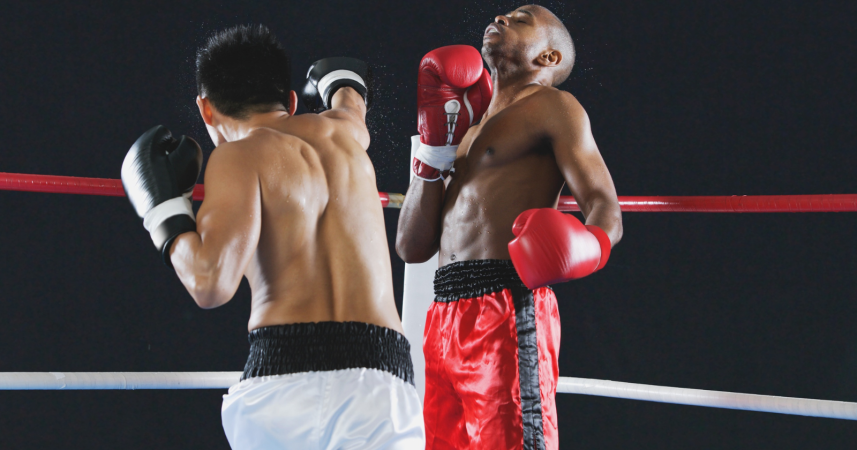
But this? This is a sanctioned professional bout. It goes on the record. Which means Mayweather's pristine 50-0 is genuinely on the line.
Think about that for a second. The most protected record in modern boxing, the one Mayweather built his entire brand around, could end with a loss to the one man who has always had an asterisk next to their first meeting. That's not an exhibition. That's real risk. And Mayweather doesn't take risks unless the calculus makes sense to him, which tells you something about how confident he is. Or how much he needs this fight.
3) The money model has completely flipped
In 2015, watching Mayweather vs. Pacquiao cost you $99.95 on pay-per-view. The fight generated 4.6 million buys and over $600 million in total revenue. It was the biggest financial event in boxing history.
This time, the fight streams on Netflix. No extra charge. If you already have a subscription, you're in. That's access to over 325 million subscribers worldwide.
I've mentioned this before, but the psychology of removing financial barriers completely changes how people engage with an event. When you've paid $100, you need the fight to justify that investment. When it's "free" with your existing subscription, the emotional math shifts. You watch with curiosity instead of expectation. You enjoy the spectacle without the resentment.
The 2015 fight was technically brilliant but left millions feeling cheated because they'd paid a premium for what felt like a chess match. Netflix removes that pressure entirely.
4) The Sphere changes what a fight can be
The first fight happened at the MGM Grand Garden Arena. Legendary venue. Classic setting. But ultimately, a traditional boxing arena.
The rematch takes place at the Sphere, a $2.3 billion venue in Las Vegas with the most advanced audiovisual technology on the planet. It hosted UFC 306 in 2024, but this will be the first professional boxing match ever held there.
Netflix has confirmed the production will use the Sphere's immersive screen technology to create something that's never been done in boxing before. For the 18,600 people in attendance, this won't just be a fight. It'll be a sensory experience. For the hundreds of millions streaming at home, the production values will be cinematic.
I'm someone who thinks a lot about how environment shapes experience. I notice it when I'm walking around Venice Beach with my camera. The same subject looks completely different depending on the light, the angle, the setting. The Sphere gives this fight a visual and emotional context that didn't exist in 2015. That changes the memory people walk away with, regardless of what happens in the ring.
5) Pacquiao has been more active, and it shows
Here's a detail that gets overlooked in the "two old guys" narrative. Pacquiao has actually been fighting. His most recent professional bout was a majority draw against Mario Barrios, the then-WBC welterweight champion, in July 2025. Multiple observers felt Pacquiao deserved the decision. At 47, he went toe-to-toe with an active, 31-year-old world champion and held his own.
Mayweather, on the other hand, hasn't had a professional fight since beating Conor McGregor in 2017. His recent ring activity has been limited to exhibition matches against opponents who posed no real threat.
Sky Sports pundit Andy Scott put it well when he noted that while Mayweather has been active on the exhibition circuit against massive favorites, Pacquiao's recent form against a current champion could give him a genuine edge. The gap between them might not be what people assume.
6) Both fighters have something personal to prove
The trash talk so far has been revealing. Pacquiao's statement was loaded: he wants Mayweather to "live with the one loss on his professional record and always remember who gave it to him." That's not promotional fluff. That's a man who believes the first result was wrong and has been carrying it for over a decade.
Mayweather's response was pure Mayweather: "I already fought and beat Manny once. This time will be the same result."
But beneath the bravado, the motivations are more complicated. Joe Rogan pointed out on his podcast that Mayweather's finances may be a driving factor, noting various lawsuits and spending habits that make a massive payday necessary. Former champion Ishe Smith was blunter, suggesting on social media that nobody comes back at nearly 50 because they love the sport.
Whether you see that as cynical or honest, it adds a layer of desperation to Mayweather's corner that wasn't there in 2015 when he was the undisputed king. Desperation makes fighters dangerous. It also makes them vulnerable.
7) The cultural moment is different
In 2015, boxing still operated in its traditional bubble. Pay-per-view was the distribution model. The hype machine was built on press conferences and HBO specials. The audience was mostly existing boxing fans willing to pay a premium.
The landscape now is unrecognizable. Netflix's Jake Paul vs. Mike Tyson event pulled 108 million global viewers. Combat sports have become mainstream entertainment content, driven by YouTube crossovers, social media feuds, and streaming platform investments.
Mayweather vs. Pacquiao 2 drops into a world where the casual audience is massive and already paying attention. The Filipino market alone, where Pacquiao is a national icon and former senator, could drive unprecedented engagement. Netflix practically acknowledged this, knowing the fight guarantees subscriber growth in the Philippines and across Southeast Asia.
This isn't just a boxing match anymore. It's a global content event. And that means it reaches people who never saw the first fight, people who only know these names from highlight reels and cultural references. For them, there's no baggage from 2015. There's only the story of two legends meeting one last time.
8) Legacy is on the line in a way money can't buy
I read a lot of books about decision-making and motivation, and one pattern comes up over and over: the decisions people make at the end of their careers reveal what they actually care about. Money is part of it, always. But legacy is the thing that keeps people awake at night.
Mayweather retires with a loss and the narrative of his career changes overnight. The defensive genius becomes the guy who came back one too many times. Pacquiao wins and he rewrites history, turning a controversial loss into a redemption arc for the ages. Pacquiao loses and nothing really changes for him. He was already the underdog. But Mayweather losing? That's seismic.
Roy Jones Jr., himself a pound-for-pound legend, summed up the paradox when he told DAZN he's not excited because the fight came too late the first time and it's "definitely too late" now. But he also wouldn't hate on either man for making the money.
That tension, between "this shouldn't happen" and "I'm absolutely going to watch it," is exactly what makes this fight fascinating. It's not about whether two men in their late forties can replicate their primes. It's about whether the story they're writing together has one more chapter worth reading.
The bottom line
Look, I get the skepticism. Two aging fighters. A fight that probably should have happened in 2010. A venue and platform that seem designed to prioritize spectacle over sport.
But that's exactly what makes this interesting. The first fight was the most expensive, most hyped, most commercially successful boxing match in history, and it left most people feeling empty. This time, the barriers are lower, the setting is extraordinary, the unresolved questions are real, and both men have something to prove that goes beyond the paycheck.
September 19 at the Sphere. I'll be watching. And if you're being honest with yourself, so will you.
If You Were a Healing Herb, Which Would You Be?
Each herb holds a unique kind of magic — soothing, awakening, grounding, or clarifying.
This 9-question quiz reveals the healing plant that mirrors your energy right now and what it says about your natural rhythm.
✨ Instant results. Deeply insightful.

Jordan Cooper
Jordan Cooper is a pop-culture writer and vegan-snack reviewer with roots in music blogging. Known for approachable, insightful prose, Jordan connects modern trends—from K-pop choreography to kombucha fermentation—with thoughtful food commentary. In his downtime, he enjoys photography, experimenting with fermentation recipes, and discovering new indie music playlists.
More Articles by Jordan