Every “yes” can be a “no” to sleep, focus, or the project only you can do.
I used to assume productivity meant packing more into the day—more tabs, more tasks, more hustle.
But every time I trimmed, I got further.
This isn’t a manifesto for laziness. It’s a strategy for getting your best work (and life) back. Here’s how doing less can actually move you forward faster.
Start with subtraction
A designer friend reminded me of this line from Antoine de Saint-Exupéry: “Perfection is achieved, not when there is nothing more to add, but when there is nothing left to take away.”
That’s the spirit here. Before you optimize, subtract. What are the meetings, metrics, and mindless rituals that no longer earn their keep?
I run a quick audit called “Keep, Cut, Shrink.”
-
Keep what clearly moves the needle.
-
Cut what doesn’t.
-
Shrink what’s useful but bloated (like a 60-minute call that becomes 20 with a clear agenda).
One round of subtraction is often worth months of “working smarter.”
Define one obvious win per day
When I wake up, I ask, “If only one thing gets done today, what would make the day a win?” That becomes my Obvious Win.
It’s deceptively simple. When you pick one thing, you stop pretending you can do twelve. Your brain relaxes. You actually finish.
This isn’t about lowering standards. It’s about sequencing them. Big weeks are just a string of single, obvious wins.
Write the proposal. Ship the landing page. Batch-cook the lentil soup for the week because future-you will be grateful.
I’ve mentioned this before but it’s worth repeating: clarity reduces resistance.
Say “no” like it’s a skill (because it is)
“The difference between successful people and really successful people is that really successful people say no to almost everything.” That’s the Warren Buffett line I keep taped to my monitor (source).
Every “yes” is a quiet “no” to something else—sleep, thinking time, the project only you can do. So I use three simple rules:
-
Default to no. If it’s not a clear yes, it’s a no.
-
Offer boundaries. “Happy to give feedback—can you send two specific questions?”
-
Make it seasonal. I say yes in sprints. Outside those windows, I’m offline from extras.
You’re not being difficult; you’re defending the work (and life) you care about.
Protect blank space on your calendar
White space isn’t wasted space. It’s where your brain does non-linear, useful things—like connecting ideas you didn’t know were related.
I schedule blank blocks the same way I’d schedule a meeting. No stealth-emails. No “just a quick call.” I treat those hours like a sacred trailhead: show up, follow curiosity, no agenda.
As a photographer on the side, my best shots come when I leave a margin for wandering. Same with writing.
The pieces that resonate most usually started in an open block where I was willing to stare out the window, jot half-sentences, and delete liberally.
Replace constant effort with decisive sprints
All-day grind is overrated. Focused sprints are where the magic happens. I work in 45-minute bursts, three to four times a day, with full breaks in between. That’s it.
A sprint cadence forces choice. You can’t do everything in 45 minutes, so you pick the leverage move. Then you recover—walk, stretch, make a smoothie—so the next sprint is sharp.
On days I use this pattern, I finish earlier, sleep better, and I’m less tempted to fake-work at 9 p.m. because I got the real thing done at 10 a.m.
Make fewer, bigger decisions
Decision fatigue is a stealth tax on your attention. The more trivial choices you make, the less power you have for the ones that matter.
So I pre-decide categories where variety doesn’t add much value:
-
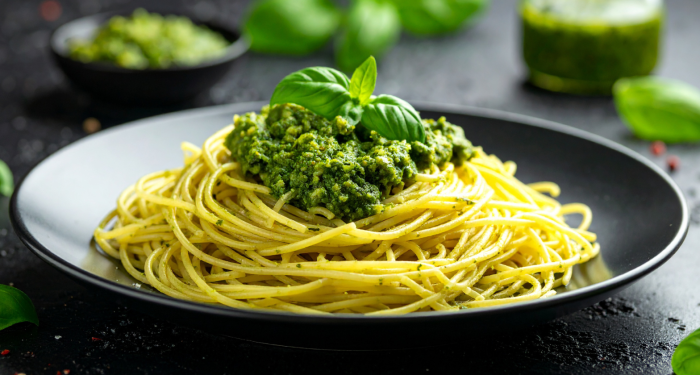
Meals. I rotate through a short list: tofu scramble, grain bowl, chickpea pasta, hearty salads. If I want “new,” I try a different sauce, not a new method.
-
Workwear. Fewer, repeatable outfits. I’m not auditioning; I’m creating.
-
Tools. One note app. One task list. One calendar. Switching costs are real.
Fewer decisions = more decision-making power where it counts.
Do less at once (single-thread your attention)
Multitasking is just rapid task-switching, and every switch burns fuel. You feel busy because your brain is spinning, not because anything important is moving.
I block themes for each day: a writing day, a meetings day, an admin day. Inside a block, I single-thread.
If I’m outlining an article, I’m not also answering DMs. If I’m on a call, Slack is closed. That “one tab at a time” rule changed everything.
The paradox: when you single-thread, you finish faster and make fewer mistakes—so you do more across the week by doing less per hour.
Let go of the 100% standard
Here’s a spicy take: the last 20% of polish often serves your ego more than your reader, your client, or your team.
I ship at 80% when the extra 20 won’t change outcomes.
That might mean publishing the post before the banner image is perfect, sending the proposal without one more metaphor, or choosing the clean, simple layout over the fancy one.
Greg McKeown put it well: “If you don’t prioritize your life, someone else will.” Prioritizing means deciding what deserves 100%—and letting the rest be good enough.
Build tiny, high-yield routines
Doing less doesn’t mean doing nothing. It means doing the potent few.
My daily backbone is short and boring:
-
Ten-minute review. What did I ship yesterday? What’s my Obvious Win today?
-
Move a little. Push-ups, a brisk walk, or a quick yoga flow. Energy begets energy.
-
Wind-down ritual. Lights dimmed, phone in the kitchen, something paper before bed.
When a routine is tiny, you repeat it. When you repeat it, it compounds. That’s the whole game.
Shrink your projects until they move
Big projects stall because they’re too big to move. So I break everything into “one-sitting” steps: outline the intro, draft section one, pull three studies, edit for verbs.
I also choose the smallest version that still counts.
Want to start a newsletter? Send one email to ten friends with a reflection and a link.
Want to switch to more plant-forward eating? Cook one new vegan meal each week and put it on repeat.
Consistency beats complexity.
Momentum is a psychological engine. Give it less weight to push, and it kicks on faster.
Design your environment to auto-limit
Willpower is fickle; environments are stubborn. I set up gentle friction that makes the wrong thing harder and the right thing easier:
-
Email quarantine. Inbox only opens during two windows. Otherwise, I physically sign out.
-
Phone off the desk. It lives across the room. Lazy me won’t get up just to scroll.
-
Prepped ingredients. Sunday batch-prep veggies and grains. If dinner is half-done, I don’t default to processed options.
These tiny design choices reduce the number of times I have to battle myself. Less battling = more creating.
Keep a “done” list (and look at it)
To feel productive, you need to see progress. I keep a “done” list that captures shipped work and invisible maintenance: fixed the bug, took a mental health walk, scheduled the dentist, helped a friend.
At the end of the week, scanning it becomes a mini-reward loop.
If you only track what’s left, you’ll always feel behind. The “done” list is the antidote. It tells your nervous system, “We’re okay. Keep going.”
Choose depth over dopamine
A lot of “more” is just chasing micro-rewards: a new notification, a new comment, a new tab.
Depth—thinking, crafting, learning—doesn’t spike you like that. It’s steadier and better.
So I cap the cheap dopamine: social apps off my home screen, browser logged out by default, notifications mostly off. Then I give depth a runway: a book on my desk, an open doc for ideas, a camera ready by the door.
When shallow tasks multiply, depth dies. Doing less of the shallow is how you protect the work that actually changes things.
Let rest be part of the plan
We say we’ll rest “when things calm down,” but busy is a moving target. Rest won’t happen by accident. It has to be scheduled.
I plan recovery like I plan sprints: naps without guilt, early nights, slow Sundays, actual vacations. The payoff is enormous: better ideas, easier focus, fewer colds, fewer snippy emails you’ll regret.
Try this this week: a 20-minute midday reset. No screen. Lay down or walk outside. You’ll get that time back—often the same afternoon.
Measure what matters, ignore the rest
Not all metrics deserve your attention. I track a small, honest set: hours of deep work, things shipped, workouts done, meals cooked at home, time with people I love.
I ignore vanity metrics: follower counts, inbox zero screenshots, how fast I replied to a DM. Those data points feed anxiety, not results.
When you watch what matters, you naturally do more of it—and less of what doesn’t.
None of this is about slacking off. It’s about being brave enough to focus. When you subtract the noise, the signal gets louder. The year gets quieter. You get more done—not because you crammed, but because you cared.
So here’s your invitation: pick one thing to cut this week and one thing to finish. Then protect an hour of blank space on your calendar like your best idea depends on it. Because it probably does.
And if you need a mantra to carry into the week, try this: Less, on purpose. More, as a result.