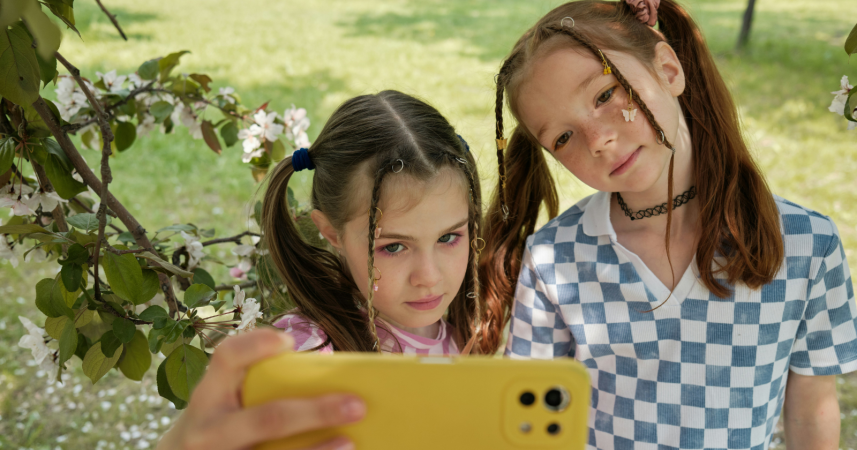
Trying to limit teen screen time without changing the culture around it is like asking one kid to unplug in a room full of glowing screens.

Add VegOut to your Google News feed. 
If you have been watching the UK debate about kids and social media from the outside, it has felt like a long loop. A tragedy hits the news, parents panic, politicians promise action, platforms promise “new tools”, and then everyone goes back to scrolling.
This week, the loop changed.
The UK government has formally launched a consultation on children’s social media use, alongside a push for phone-free schools as the default. That might sound like another “we’re looking into it” moment, but it’s happening at the same time as something more concrete: a large, real-world scientific trial in Bradford that will test what actually happens when you reduce teens’ access to social media for a period of time.
That combination is why the next phase could feel terrifying or revolutionary, depending on how it’s handled.
I’m writing this as a working mom who lives by routines. I’m also someone who knows how quickly a phone can swallow a day, even for adults with fully developed brains and a calendar full of responsibilities. So when I look at the UK’s next steps, I’m not just thinking about policy and headlines. I’m imagining a normal family trying to survive a normal Tuesday.
What the UK is actually doing right now
The easiest story to tell is “the UK is banning social media for kids.” That story spreads fast because it’s clean and emotional.
The reality is messier, and more important.
Right now, the UK government is consulting on what restrictions could look like, while also tightening expectations around phone use in schools. A consultation is not a law. It’s a signal that the state is moving from “online safety is a platform problem” to “online safety is also a childhood development problem.” That’s a huge shift.
What I find striking is the timing. Governments usually want evidence before they act. Here, the evidence and the action are being built at the same time. That can create smart momentum, and it can create panic-driven policy. The difference comes down to what the UK chooses to measure, who gets listened to, and what kind of enforcement culture it builds.
The IRL trial is the real headline
The trial is called the IRL Trial, as in “in real life,” and it’s set up like a public health intervention. A large group of adolescents will be recruited through Bradford secondary schools and assigned by school year groups to either a “limit social media” condition or a “carry on as usual” condition.
The intervention is simple on purpose. A smartphone app places a daily budget on social media use and adds a nighttime curfew, while leaving messaging apps alone. The study then looks at outcomes like self-reported anxiety (as the primary measure), sleep quality, bullying, time with friends and family, wellbeing, body image, and social comparison.
It also collects objective app-log data from participants’ main devices, with consent, so it’s not relying only on memory and self-report.
That’s the “root source” behind the media headlines. It’s not a vague “scientists say” claim. It’s a defined trial with a defined intervention and defined outcomes, hosted within a partnership that includes Born in Bradford and academic institutions.
There’s another detail that matters for anyone who has ever tried to set screen limits at home: the trial isn’t targeting one teen in isolation. It’s designed around year groups, acknowledging that social life is networked.
That’s one of the first things parents learn the hard way. Your child’s “choice” is shaped by what their friends are doing.
Why this kind of evidence has been missing
People love to argue about whether social media harms teens, but most of the research has had a frustrating problem: it’s hard to separate cause from correlation.
When a teenager is anxious or depressed, they might scroll more. When they scroll more, they might feel worse. Both can be true. Add in sleep, bullying, family stress, puberty, school pressure, and the fact that adolescents are not exactly famous for accurate self-reporting, and you get a research landscape full of noise.
That’s why this trial matters. A planned reduction in access, assigned in a structured way, paired with objective logs, moves the question from “do anxious kids scroll?” to “what changes when scrolling changes?”
Born in Bradford’s broader work also gives a grounded baseline for what “normal use” looks like. Their materials note that teenagers, including thirteen-year-olds, average about three hours a day on social media apps.
That’s not a moral statement. It’s the reality of modern adolescence.
If a country is going to regulate childhood around that reality, it needs more than opinions. It needs data that can survive criticism.
The terrifying path: surveillance disguised as protection
When people say “terrifying,” they’re usually thinking about kids suffering. I get that. I also think the terrifying version might be adults building a monitoring machine that doesn’t stop with kids.
A strict ban or restriction regime pushes one immediate question to the front: how do you prove someone’s age online?
If the answer becomes “upload documents,” “verify identity,” “track device ownership,” or “build a central system that can tell if you are fourteen or forty,” we might create a world where privacy becomes a luxury product. The kids who lose access will not be the kids with the best workarounds. The children with tech-savvy older siblings, extra devices, and parents who are too busy to supervise will find loopholes first. The children who follow rules, or who lack resources, will be the ones living inside the restrictions.
That kind of uneven enforcement is a recipe for resentment, and it can also widen social divides. Teen life already runs on belonging. Add a digital barrier that only some can cross, and you create a new status symbol.
There’s another risk: if restrictions are framed as “the state will fix this,” parents may step back from doing the slower work of building digital boundaries at home. I’ve never met a policy that can replace an adult who’s willing to be consistent, even when a child is angry.
The revolutionary path: design changes and better real life
Now for the other side.
The revolutionary version is not “kids never touch social media.” That fantasy is not realistic, and it ignores the real benefits that teens can get online, like community, creativity, and identity exploration.
The revolutionary version is that the default environment changes.
If the UK’s consultation leads to pressure on addictive design features, and if the evidence from trials like IRL shows measurable benefits from time limits and nighttime boundaries, platforms may have to adapt in ways that go beyond “add another parental control page nobody uses.”
Think about what a consistent nighttime curfew could mean for sleep alone. Most parents know the vibe: a child goes to bed, the house finally gets quiet, and then a glow appears under the bedroom door. Adults do the same thing, by the way, just with better excuses.
If a curfew becomes a normal expectation, supported by systems rather than constant fighting, you might see healthier routines emerge without every family having to reinvent the wheel.
I also like that the IRL trial leaves messaging apps untouched because it respects a basic truth: teens need connection, including family communication. The goal is not isolation. The goal is to reduce the high-volume, high-comparison, high-stimulation feeds that keep pulling attention away from real life.
That matters because, even in adults, attention is a resource. When attention gets fragmented, everything gets harder: focusing, reading, regulating emotions, even feeling satisfied after a good day. For adolescents, whose brains are still building self-control systems, the stakes are higher.
What I’ll be watching as this unfolds
The adult conversation tends to fixate on bans, but the real question is what replaces the hours.
If you reduce social media access, some teens will sleep more. Some will read. Some will be bored and cranky. Some will lean into gaming, YouTube, or whatever the next loophole offers. That’s why measuring multiple outcomes matters, and it’s why the IRL trial’s focus on anxiety, sleep, bullying, time with friends and family, body image, and social comparison feels realistic.
I’m also watching how schools are supported. “Phone-free by default” sounds simple, but anyone who has spent time around teenagers knows enforcement depends on culture, not posters. If a school policy turns into constant conflict, you get rebellion. If it turns into a shared norm with clear rules and fair consequences, you get compliance that feels almost boring. Boring is good here.
And then there’s the part nobody wants to admit: adults will need to change too.
If parents are glued to their phones at dinner, teens notice. If adults scroll in bed every night, teens learn what “normal” looks like. If we want a generation that can live with healthy boundaries, those boundaries have to exist in the household, not just in Parliament.
Final thoughts
I don’t think the UK is “finally cutting kids off” in one dramatic move. I think the UK is entering a phase where childhood and tech are being negotiated in public, with more seriousness than before.
That negotiation can go wrong. It can become surveillance, moral panic, and performative laws that kids sidestep in a weekend.
It can also go right. It can become a shift toward evidence-based boundaries, healthier defaults, and a culture that remembers teenagers are still learning how to be human, in real life, not just online.
If You Were a Healing Herb, Which Would You Be?
Each herb holds a unique kind of magic — soothing, awakening, grounding, or clarifying.
This 9-question quiz reveals the healing plant that mirrors your energy right now and what it says about your natural rhythm.
✨ Instant results. Deeply insightful.

Ainura Kalau
Ainura was born in Central Asia, spent over a decade in Malaysia, and studied at an Australian university before settling in São Paulo, where she’s now raising her family. Her life blends cultures and perspectives, something that naturally shapes her writing. When she’s not working, she’s usually trying new recipes while binging true crime shows, soaking up sunny Brazilian days at the park or beach, or crafting something with her hands.
More Articles by Ainura