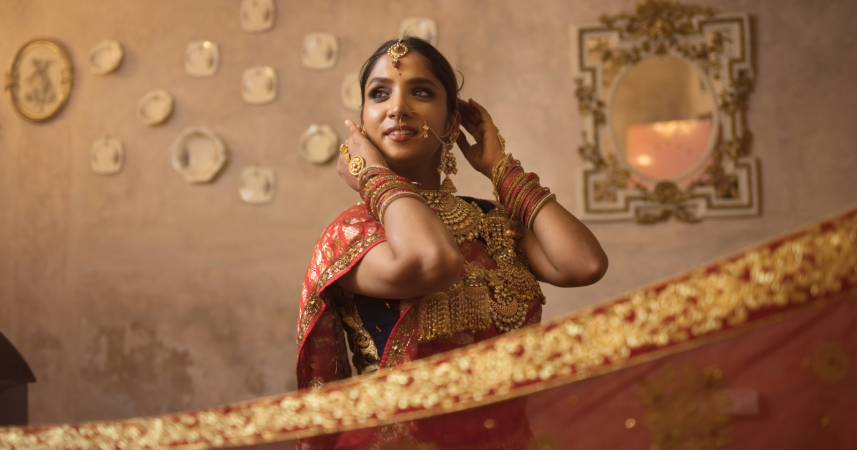
A wedding-themed party creates instant context: you know what to wear, how to move, what photos to take.

Add VegOut to your Google News feed. 
I didn’t expect to be writing about weddings where no one gets married.
But here we are.
Across Indian cities (and even campuses abroad), people are buying tickets, dressing in lehengas and sherwanis, dancing to Bollywood hits, eating chaat, posing with friends—and there’s no dulha or dulhan in sight. It’s a party dressed like a shaadi, minus the vows.
I’m fascinated by what this says about ritual, community, and how we’re reimagining milestones. Let’s dig in.
What’s actually happening
Picture a full-blown wedding vibe—baraat playlist, dhol, sangeet-style dance-offs, mehndi corners, photo booths, and a buffet that would make your auntie proud.
Now delete the couple.
That’s the format. Organizers curate a night that looks and feels like a wedding reception, but there’s no ceremony to sit through and no relatives interrogating you about your life choices.
One outlet put it perfectly: “Forget marriage, Gen Z just wants the shaadi vibes.” That quote captures the mood of it all.
Why this moment makes sense
If you’ve been to a traditional Indian wedding, you know it’s not just a party—it’s a week-long ecosystem. It’s beautiful, but it can be intense, expensive, and emotionally loaded.
This new format breaks the package apart. It lets people keep the music, fashion, food, and collective celebration while leaving the expectations at the door.
As a California-based writer who grew up around diaspora weddings—and someone who now spends weekends with a camera glued to his face—I get the appeal. You get the color and the connection without the logistics.
No gift registry. No “What are your plans?” small talk. Just release.
The psychology behind the pull
Here’s where it gets interesting. Rituals do two quiet things: they bond us, and they mark time.
Even when no one is “crossing a life threshold,” a themed party can still create a kind of liminal space—a temporary world where we step out of everyday roles.
I’ve mentioned this before but that in-between state is more than cosplay; it’s permission. Permission to dance harder, to dress louder, to be someone bolder for a night.
Strip away the obligations, and the ritual becomes pure play. You’re left with collective energy (Durkheim called it “collective effervescence”), which we normally tap during weddings anyway. No wonder the format travels.
The money (and why venues love it)
Follow the incentives and trends start making sense.
Ticketed events recoup decor, DJs, choreography, and food—without needing a real couple to bankroll it. One recent report summed up the business angle: “Guests are paying Rs 10k to attend fake weddings,” which tracks with posts from finance folks who’ve been watching the unit economics of these nights.
Meanwhile, media coverage has highlighted how these events also dovetail with India’s mammoth wedding economy. A BBC segment framed the format as “just the party,” noting how venues fill off-season dates by leaning into the spectacle without the ceremony.
If you run an events space, that’s chef’s-kiss logic: keep staff busy, keep caterers booked, keep the lights on.
Freedom from scripts (and why that matters)
Every wedding has invisible scripts. Certain songs. Certain seating charts. Certain uncle who takes the mic.
When you remove the couple, you loosen the script. You can turn the sangeet into a friend-vs-friend dance battle. Or a fashion runway. Or a 90s Bollywood nostalgia night. No “family first” politics. No pressure to perform a version of respectability for elders.
This isn’t an anti-wedding stance so much as pro-choice about how we celebrate. I’ve had nights at real weddings where the best moment wasn’t the ceremony—it was that hour on the dance floor when no one was watching and everyone was yelling the chorus. These events bottle that hour.
Community without the commitment
Here’s a reframe I love: these nights are training wheels for community.
We’re increasingly starved for shared, wholesome fun that doesn’t require membership or belief. A wedding-themed party creates instant context.
You know what to wear. You know how to move. You know what photos to take.
For people who feel awkward at bars and bored at regular clubs, this is a culturally familiar, low-friction on-ramp to belonging.
As noted by one culture piece covering the trend, “Forget the stress of real marriage—Gen Z’s latest party trend is the ‘fake wedding’,” because it delivers the nostalgia without the pressure.
I’ve watched shy friends come alive at these theme nights in a way they don’t at standard parties. The ritual scaffold does the social heavy lifting.
The vegan (and values) angle you knew I’d bring up
This is VegOut, so I’m contractually obligated (and personally delighted) to say: food makes the night.
The traditional Indian wedding spread is already paradise for plant-based eaters—chaat, dosas, biryani, dal, kachori, jalebi, the works. If you’re attending, you can usually build a beautiful vegan plate without trying.
If you’re organizing, go full “plant-forward shaadi” and nobody will miss a thing. India basically invented celebratory vegan cuisine before we had a word for it.
And values-wise, there’s something meaningful about opting into joy without consumption spirals. Renting outfits, choosing reusable decor, cutting food waste—these tweaks turn spectacle into sustainable play.
That’s self-care for the planet, too.
How to attend (without losing yourself)
A few personal rules I follow for themed nights like this:
-
Dress up, but dress you. If you’re not a heavy-embroidery person, a simple kurta or a pastel sari with clean lines still photographs beautifully.
-
Pick a role and lean in. Be the dance captain for one song. Be the mehndi storyteller. Be the photo-booth director. Agency is half the fun.
-
Eat before you, uh, “eat.” I try to put real food down before the dessert table finds me. Your future self will thank you.
-
Consent is king. Weddings get rowdy. Make sure your joy doesn’t bulldoze someone else’s boundaries.
-
Hydrate between bangers. Eternal advice, proven by science (and regret).
Thinking of hosting one? Do it responsibly
If you’re throwing a wedding-themed night, here’s a pragmatic checklist from a writer who’s helped friends set these up:
-
Theme clarity beats budget bloat. Pick one strong vibe—retro Bollywood, coastal South Indian, Punjabi dhol night—and commit.
-
Music is the engine. Curate a set list with flow: baraat energy → classic wedding anthems → late-night sing-alongs.
-
Spotlight moments. A mock varmala, a choreographed group dance, or a “toast to the singles” can anchor the arc of the night.
-
Food first. Street-food stations are crowd-pleasers and naturally plant-friendly.
-
Legals and logistics. Check noise ordinances, permits, capacity, and ID checks. Hire responsible security. Keep it 18+/21+ as your local laws require. (Obvious, but easy to forget when you’re picking marigold garlands.)
-
Photo policy. Make a call on whether it’s a “phones down during the performance” party or an “Instagram playground.” Set expectations so people can be present.
-
Respect the culture. Indian weddings are layered with tradition. Treat the aesthetics with care. Skip anything that feels like a costume joke and stay in the lane of celebration.
What this trend teaches us about modern life
Underneath the glitter, this is a story about agency.
We’re learning to remix rituals around the parts that nourish us—music, food, beauty, togetherness—and leave the scripts that don’t. It’s not anti-marriage. It’s pro-joy, pro-play, and pro-choice in how we gather.
As one BBC explainer teased it, these nights are “just the party.” That line lands because, for once, that’s enough.
The bottom line? If a theme night helps you connect, dance, and remember you’re part of something bigger—without forcing you into someone else’s milestone—why not?
The world is heavy. We could use a few more evenings where the only thing we commit to is the next chorus.
If You Were a Healing Herb, Which Would You Be?
Each herb holds a unique kind of magic — soothing, awakening, grounding, or clarifying.
This 9-question quiz reveals the healing plant that mirrors your energy right now and what it says about your natural rhythm.
✨ Instant results. Deeply insightful.

Jordan Cooper
Jordan Cooper is a pop-culture writer and vegan-snack reviewer with roots in music blogging. Known for approachable, insightful prose, Jordan connects modern trends—from K-pop choreography to kombucha fermentation—with thoughtful food commentary. In his downtime, he enjoys photography, experimenting with fermentation recipes, and discovering new indie music playlists.
More Articles by Jordan