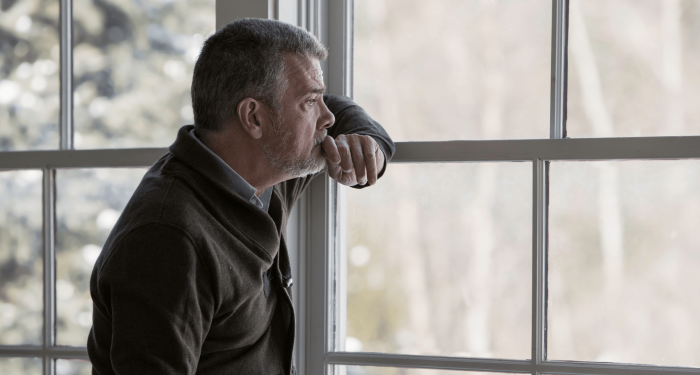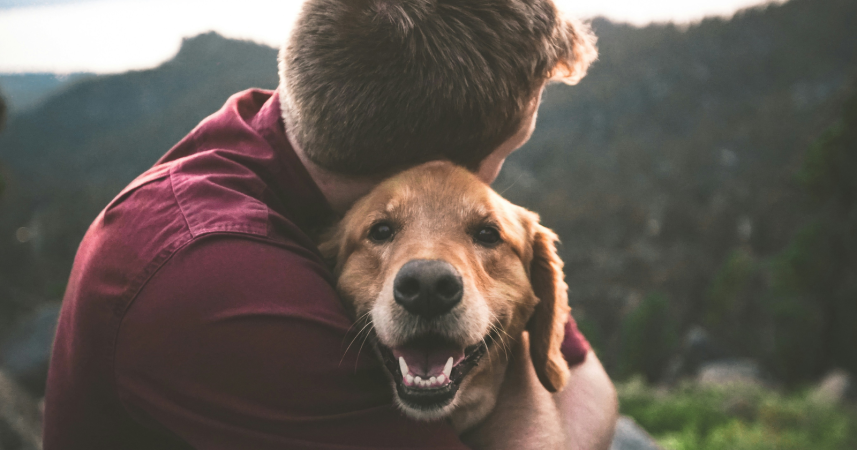
“I slept next to him last night… I didn’t want him to think I had walked away.”
I love stories where ordinary people do extraordinary things without a film crew or a soundtrack—just grit and heart.
This one starts on a quiet Chicago morning and ends at a police station, with a trembly reunion and a city full of strangers cheering.
Here’s what happened—and why it matters for anyone trying to hold on when it would be easier to let go.
The theft
On June 5, 2025, Angel Santiago—legally blind because of glaucoma—let his 14-year-old dachshund service dog, Bam Bam, out into his Logan Square backyard.
Two people came through the gate and took him.
That single, gutting moment kicked off weeks of searching, flyering, and community organizing that would pull in neighbors, local news, animal rescues, and thousands of online supporters.
People offered leads. A GoFundMe sprang to life. Rewards were posted. The story spread far beyond Chicago.
The grind
Most reunions don’t happen because of a single dazzling clue. They happen because someone refuses to stop.
For Angel, that meant walking—up to seven miles every day—calling Bam Bam’s name, handing out flyers, and retracing the same blocks again and again.
Imagine doing that while legally blind, listening for a bark that might be yours… or might not. That’s not a movie montage. That’s daily, deliberate effort.
I’ve mentioned this before but perseverance rarely looks cinematic in the moment. It looks like keeping your promise to the goal when nobody’s watching.
Angel kept his.
Community mobilization
The search didn’t stay small. It became a citywide project.
A Chicago nurse, Amy Pasalich, saw the story on social media and helped spin up a Facebook group and a GoFundMe to hire a private investigator, print more flyers, and organize volunteers.
Donations poured in—more than $20,000—to keep the search alive and the hope visible. Media picked it up. PETA even offered a reward. Chicago showed up.
As Pasalich put it, “What matters most is that Angel and Bam Bam are safe and together again.”
That sentence reads like a tidy ending, but at the time it was a North Star—something everyone could agree on when answers were scarce.
The break
On the night of August 19, a man and a woman walked into Chicago’s 16th District (Jefferson Park) police station, set a small tan-and-white dachshund on the front counter, and left without offering names or details.
The dog had a microchip.
Officers scanned it, matched the number, and quickly reached out to Angel. A local rescue leader saw a photo and recognized the face Chicago had been looking for.
Hours later—after more than ten weeks of searching—Angel and Bam Bam were back in each other’s arms.
Angel told a reporter the next morning, “I slept next to him last night… I didn’t want him to think I had walked away.”
I mean—what else is there to say? That line carries two months of worry and a lifetime of love.
The reunion
The reunion photos look exactly like you’d expect: relief, tears, foreheads pressed together. Bam Bam checked out at the vet and seemed okay.
Police are still investigating the theft. The billboards that were about to go up turned into thank-you messages. If you ever doubt the compound interest of small acts, this is your case study.
What started as a single missing-dog flyer turned into a volunteer network, a reward pool, and a city listening for one dog’s name.
What this story teaches us
Yes, this is a dog story. It’s also a human story about how to keep going.
Consistency beats intensity. Angel’s search worked because he showed up daily. Seven miles isn’t heroic once. It’s heroic when you repeat it. In behavior science, we’d call that a “high-frequency habit loop.” It keeps you moving even when motivation dips.
Visibility creates luck. The flyers weren’t just paper; they were an engine for serendipity. The more people who knew Bam Bam’s face, the more likely it was that one of them would spot him—or recognize him at a police station counter. (Same logic applies if you’re job hunting, fundraising, or trying to learn something new: make your effort legible.)
Microchips matter. The chip in Bam Bam’s shoulder turned a mystery dog into a phone number and a name. As one Chicago shelter leader put it: “microchips really do work.” CBS Chicago Keep your contact details updated. It’s a 60-second admin task that can change the ending.
Communities scale courage. This is the part I love most. A GoFundMe might feel small compared with a city the size of Chicago, but $10 here, $25 there—plus a long thread of comments saying “We’re with you”—instant energy. That energy buys flyers, time, and attention. That attention pressures the problem until it gives.
How to hold on when the outcome is out of your hands
Ever chased something that might not come back? A relationship, a business, a health milestone?
Here are principles I took from Angel’s summer that translate to the rest of us:
Pick one daily action and do it no matter what. Don’t build a to-do novel; choose one task you can repeat until it compounds. For Angel, it was walking and flyering. For you, maybe it’s 30 cold emails, 45 minutes of practice, or one page of writing.
Turn the search into a project. Projects attract help. Angel’s search had a name (“Find Bam Bam”), a hub (Facebook group and GoFundMe), and roles (flyer design, distribution, online updates). Your “missing” might be a first client or a new job. Give it edges so other people can grab on.
Share your progress, not just your hope. Updates sustain attention. “Walked 6.8 miles today.” “New flyer design.” “Called three vets.” The specificity signals seriousness and invites cooperation.
Let people be the hero they want to be. Some folks gave money. Others drove across town to staple posters. A police officer scanned a chip and Googled a number. Everyone got to be part of the good news.
Expect the ending to be weird. The people who left Bam Bam at the station didn’t even give their names. That’s real life. Endings are often quieter, stranger, or more mundane than we imagined. Don’t let that steal the joy.
The part that stays with me
There’s a quote I can’t shake from this story. A senior vice president at PETA said of the return, “I think returning this dog might have saved them both.” The Washington Post
Saved them both.
I write for practical optimists—people who want proof that staying on the path is worth it. Here’s your proof. From June 5 to August 19, a man walked his city day after day, fueled by love and stubborn hope. When the break came, it wasn’t flashy. It was a chipped dog, a helpful officer, a quick phone call, and a whole community suddenly exhaling.
If you’re in the middle of your own long search—whatever that looks like—remember Angel and Bam Bam. Make today’s mile count. Put a flyer on the corner. Ask for help. Keep your promise to the goal.
Miracles happen.
Sometimes we walk to meet them.