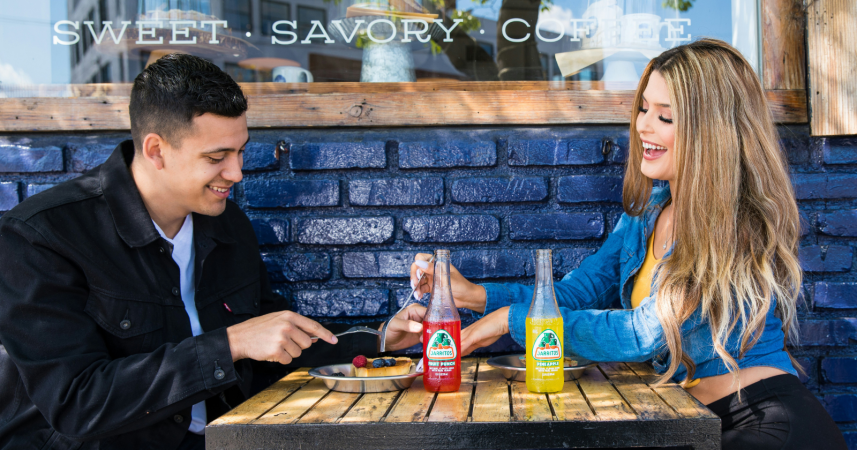
What sounds like a “foodie call” is often just a workaround: a date that doubles as dinner when your paycheck won’t stretch far enough for both.

Add VegOut to your Google News feed. 
“Nearly one third of Gen Z singles are going on dates just for the free meal.” That eyebrow-raising line has ricocheted across lifestyle sections this month, including a widely read piece from the New York Post on October 25.
The article attributes the figure—31%—to a new survey commissioned by Intuit and conducted in September among U.S. adults.
Under the headlines sits the actual origin: Intuit’s “Cuffing Economy” analysis, a fall 2025 look at how money pressures are reshaping romance for young adults.
Intuit’s blog positions the “Cuffing Economy Report” as the home for these insights and the umbrella under which the free-meal finding is being syndicated.
What the number really suggests
Across syndicated summaries, the topline is consistent: about a quarter of Americans overall and roughly a third of Gen Z say they’ve gone on a date mainly to score a free dinner.
Yahoo Finance’s digest puts the split at 26% of all U.S. adults, 31% of Gen Z.
Those are self-reports—admissions people volunteered when asked. They indicate social acceptability (or at least candor) around the practice, not a perfect log of every date.
Still, as far as snapshots go, it’s a clear one.
The money backdrop you can’t ignore
The context makes the behavior more legible. Separate research over the summer found Gen Z cutting the cost of courtship dramatically.
A Bank of America survey covered by Reuters on July 30 reported that more than half of Gen Z adults spend nothing on dating each month.
If your default dating budget is zero, accepting a restaurant invitation might feel like a workaround—ethically messy, perhaps, but economically unsurprising.
Other consumer coverage has echoed that trend line: news features and market roundups have noted the rise of “low- or no-spend” first dates, bill-splitting norms, and a tilt toward coffee walks over sit-down dinners.
It’s a shift shaped by inflation fatigue and wage frustration as much as by changing social scripts.
This isn’t a brand-new idea
If the term “foodie call” rings a bell, you’re remembering a pre-pandemic debate.
In 2019, researchers affiliated with the Society for Personality and Social Psychology published work showing that roughly a quarter to a third of women in online samples reported having gone on a date primarily for a meal.
That research also explored personality traits correlated with the behavior. Different era, different sample, similar signal: the practice existed well before 2025’s cost-of-living crunch.
What Intuit’s lens adds
So what’s new now isn’t that free-meal dating exists—it’s the framing.
Intuit’s “Cuffing Economy” situates dating choices inside a wider financial recalibration: young adults managing higher prices, earlier money conversations, and a preference for affordable date formats.
The free-meal admission is one eye-catching data point inside that broader narrative about values and budgets.
As Intuit tees it up, Gen Z is “redefining love and money” under pressure, experimenting with norms around who pays and how much a good date should cost.
Ethics, expectations, and the safety angle
It’s tempting to turn the free-dinner stat into a morality play. But self-reported motives are mushy, and the power dynamics of dating complicate easy judgments.
Opting into a meal with no romantic intention—especially if you imply otherwise—can be unfair to the person across the table and potentially risky if they feel misled.
On the other hand, some respondents may be reacting to social expectations that still cast men as default payers and restaurants as default venues, even as paychecks and prices collide.
The healthiest path out is clearer scripts: lower-cost first dates, shared expectations about splitting, and upfront communication about pace and intentions. The economics and the ethics both improve when a first meet is a 45-minute coffee or a park stroll, not a fixed-price tasting menu.
How representative is the research?
Corporate surveys like Intuit’s are useful temperature checks but they’re not census data.
The Post reports a sample of 1,500 U.S. adults in September; outlets covering the same dataset describe it as an Intuit-commissioned poll. That’s standard for brand-backed research: online panels, weighted for demographics, then packaged for media.
It’s good practice to read these numbers as directional rather than definitive. The convergence across multiple write-ups—Post, Newsweek, Yahoo Finance/AOL—strengthens confidence that the question was asked and the result was salient, even if the precise percentage would wiggle in a differently designed study.
What this means for daters right now
If you’re dating in your early twenties, you’re balancing more than chemistry. You’re budgeting for groceries and rent and trying to keep restaurant spending in check.
The free-meal phenomenon is a signal of that squeeze, not a handbook to follow.
What actually helps:
- Choose formats you can repeat without anxiety. If your monthly dating budget is slim to none—as many Gen Z respondents told Bank of America—make the default a drink, a walk, a gallery free night. Then scale up only when mutual interest (and mutual means) are clear.
- Normalize talking about money at the invite stage. “I’m doing a low-key month—coffee or a park hang?” goes a long way toward aligning expectations and avoiding the “meal ticket” dynamic.
- Split unless you’ve discussed otherwise. That de-incentivizes bad-faith “foodie calls” and protects both people from financial awkwardness.
The bigger cultural turn
The wave of coverage around Intuit’s report joins a longer trend: thrift is back in fashion, and “financially responsible” is increasingly part of the attraction package.
When half your peers are spending nothing on dates, creativity beats extravagance—and talking about money upfront reads as maturity, not an affront to romance.
The free-meal admission is catchy because it’s concrete; the deeper story is a generation rewriting the etiquette of early dating to fit the economy they actually live in.
Bottom line
The reality is nuanced.
Yes, roughly a third of Gen Z surveyed by Intuit say they’ve gone on a date mainly for the free food. But that stat lives inside a broader shift away from big-ticket first dates and toward lower-cost, clearer-expectation meetups.
If you’re going out, lead with honesty, keep the spend modest, and treat meals as an option—not a transaction.
The heart is still the heart; it’s just operating with a smarter budget.
If You Were a Healing Herb, Which Would You Be?
Each herb holds a unique kind of magic — soothing, awakening, grounding, or clarifying.
This 9-question quiz reveals the healing plant that mirrors your energy right now and what it says about your natural rhythm.
✨ Instant results. Deeply insightful.

Ainura Kalau
Ainura was born in Central Asia, spent over a decade in Malaysia, and studied at an Australian university before settling in São Paulo, where she’s now raising her family. Her life blends cultures and perspectives, something that naturally shapes her writing. When she’s not working, she’s usually trying new recipes while binging true crime shows, soaking up sunny Brazilian days at the park or beach, or crafting something with her hands.
More Articles by Ainura