Microwave heating released more micro- and nanoplastic particles from plastic food containers than refrigeration or room-temperature storage, according to a 2023 study in Environmental Science & Technology by researchers at the University of Nebraska–Lincoln (Hussain KA et al., 2023;57(26):9782–9792). What those particles do once swallowed is unsettled. In March 2024 the New England Journal of Medicine published a study that detected plastics in human artery plaque.
That paper, by Raffaele Marfella and colleagues (N Engl J Med 2024;390:900–910), was a prospective, multicenter observational study of patients undergoing carotid endarterectomy for asymptomatic carotid artery disease. Of 304 patients enrolled, 257 completed a mean follow-up of 33.7 months. Polyethylene was detected in carotid plaque from 150 patients (58.4 percent), and 31 patients (12.1 percent) also had measurable polyvinyl chloride.
A composite end point of heart attack, stroke or death from any cause occurred in 30 of the 150 patients with plastics in plaque (20.0 percent), against 8 of 107 (7.5 percent) in whom none were detected, a hazard ratio of 4.53 (95 percent confidence interval 2.00 to 10.27). The authors wrote that "our results do not prove causality" and that "laboratory contamination cannot be firmly ruled out". They also wrote that the findings "pertain only to a population of asymptomatic patients undergoing carotid endarterectomy".
The contamination question was taken up in correspondence published by the journal on 8 May 2024. Kalkman, Renkens and Grundeken of Amsterdam UMC wrote that "many factors suggest potential external plastic contamination of samples", stating that the surgical environment and equipment contain polyethylene and polyvinyl chloride. Marfella and Prattichizzo replied in the same issue.
VegOut's video "Microplastic Is Already In Your Arteries — Here's What It Does To Your Body", published 27 June 2026, looks at that arteries research.
What the Nebraska team measured
The container study tested two baby-food containers made from polypropylene and a reusable pouch made from polyethylene, both plastics approved by the US Food and Drug Administration. The researchers filled the containers with deionized water or 3 percent acetic acid, used as simulants for aqueous and acidic foods, then heated them at full power for three minutes in a 1,000-watt microwave before analyzing the liquid.
The paper reports that "some containers could release as many as 4.22 million microplastic and 2.11 billion nanoplastic particles from only one square centimeter of plastic area within 3 min of microwave heating." The polyethylene pouch released more particles than the polypropylene containers. Experiments simulating refrigeration and room-temperature storage over six months also released millions to billions of particles.
The counts depended on the container and the liquid inside it. The items tested were commercial baby-food packaging, not the tubs leftovers usually go into, and the 4.22 million figure describes some containers in that set rather than plastic containers in general.
In a separate cell-culture experiment, particles extracted from a container killed 76.70 and 77.18 percent of human embryonic kidney cells at 1,000 micrograms per milliliter after 48 and 72 hours. The university said the cells were exposed to concentrations infants and toddlers might accumulate over days or from multiple sources, rather than to the number of particles released by one container.
Kazi Albab Hussain, the study's lead author and a doctoral student in civil and environmental engineering at Nebraska, became a father in 2021, the year the team began the work. "For my baby, I was unable to completely avoid the use of plastic," he said in a university release. "But I was able to avoid those (scenarios) which were causing more of the release of micro- and nanoplastics. People also deserve to know those, and they should choose wisely."
What USDA guidance says about microwave containers
The US Department of Agriculture's Food Safety and Inspection Service sets out rules for reheating in Cooking Safely in the Microwave Oven. FSIS says only cookware specially manufactured for use in the microwave oven should go in it, and that glass, ceramic containers and all plastics should be labeled for microwave oven use.
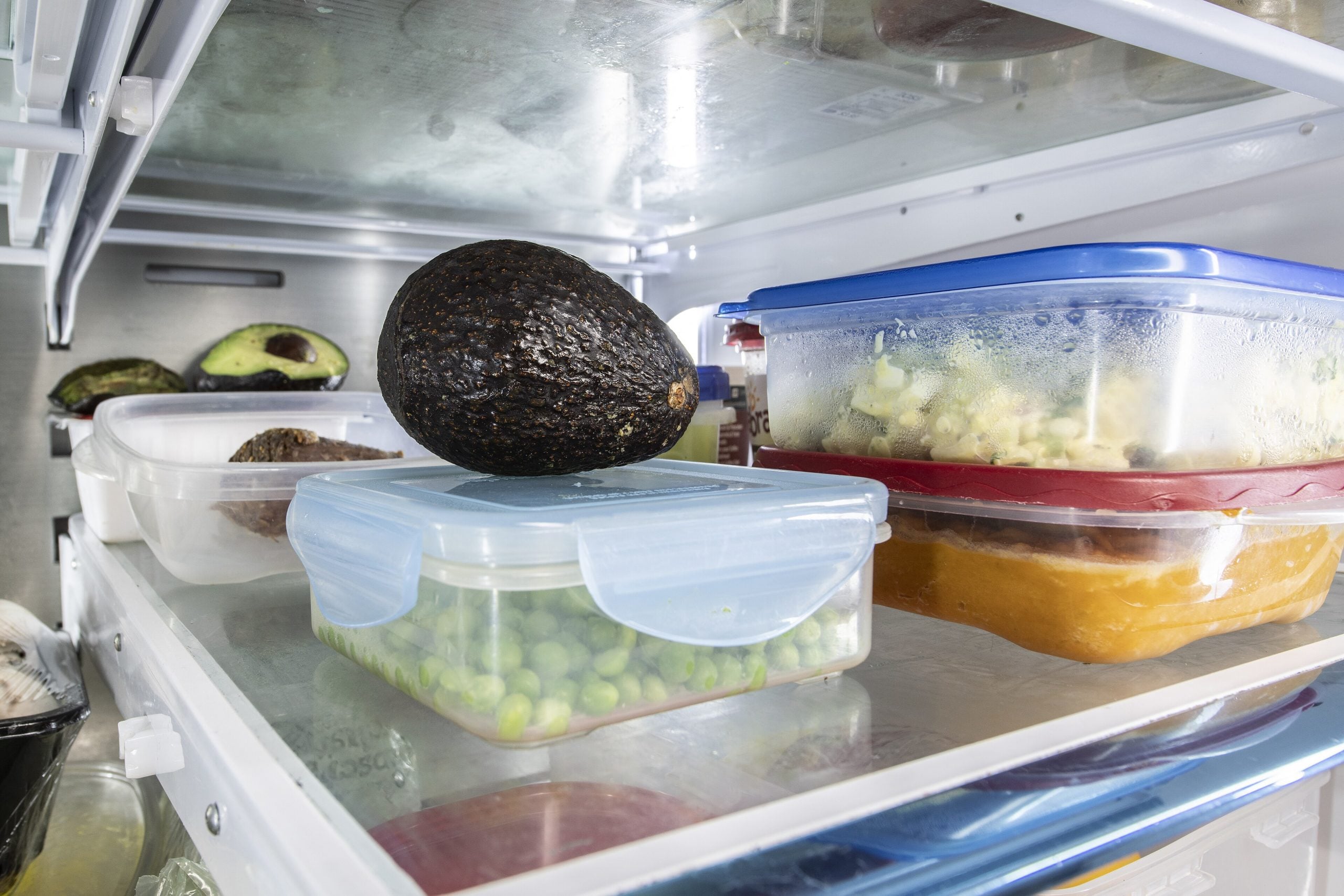
The agency is more specific about reused packaging. Plastic storage containers such as margarine tubs, take-out containers, whipped topping bowls and other one-time-use containers should not be used in microwave ovens, FSIS says, because they can warp or melt, possibly causing harmful chemicals to migrate into the food. The agency also says plastic wrap should not touch foods during microwaving.
On the food itself, FSIS says leftovers should be reheated to 165°F, with standing time afterward and a clean food thermometer used to check that the temperature has been reached.
Glass and ceramic on the leftovers shelf
For the days after a large meal, the two sources point the same way: reheat in glass or ceramic labeled for microwave use rather than in the tub the food was stored in, and keep one-time-use containers out of the microwave altogether, as FSIS advises. That practical question of what the leftovers go into sits alongside VegOut's coverage of the only vegan at Thanksgiving, and cutting single-use plastic in the kitchen comes up again in its Earth Day coverage.
What remains open is what micro- and nanoplastics do after they are eaten. The Nebraska experiments measured release from containers and exposed cultured cells to the particles; they did not track anyone who ate food heated in plastic. The NEJM study followed patients and reported an association between plastics in plaque and later cardiovascular events, with its authors stating that causality was not proven and that laboratory contamination could not be firmly ruled out.
Cooking water is another kitchen variable that changes what reaches the plate. The FDA says cooking rice in 6 to 10 parts water and draining it can cut inorganic arsenic, and also some of the nutrients added to enriched rice: Cooking rice in 6 to 10 parts water and draining it can cut inorganic arsenic by 40 to 60 percent, the FDA says, and enriched folate, iron, niacin and thiamine by 50 to 70 percent.