Cooking rice the way pasta is cooked, in six to 10 parts water to one part rice and then draining the excess, can reduce the inorganic arsenic content of the cooked grain by 40 to 60 percent depending on the type of rice, according to the US Food and Drug Administration page What You Can Do to Limit Exposure to Arsenic. The agency attributes the range to published studies, including its own research.
The same page sets out what the draining costs. Cooking in excess water lowers the nutritional value of enriched polished and parboiled rice, reducing folate, iron, niacin and thiamine, which are added during the enrichment process, by 50 to 70 percent. Rinsing rice before cooking has a minimal effect on the arsenic content of the cooked grain and will wash off iron, folate, thiamine and niacin from polished and parboiled rice, the FDA says.
Why rice takes up more arsenic than other grains
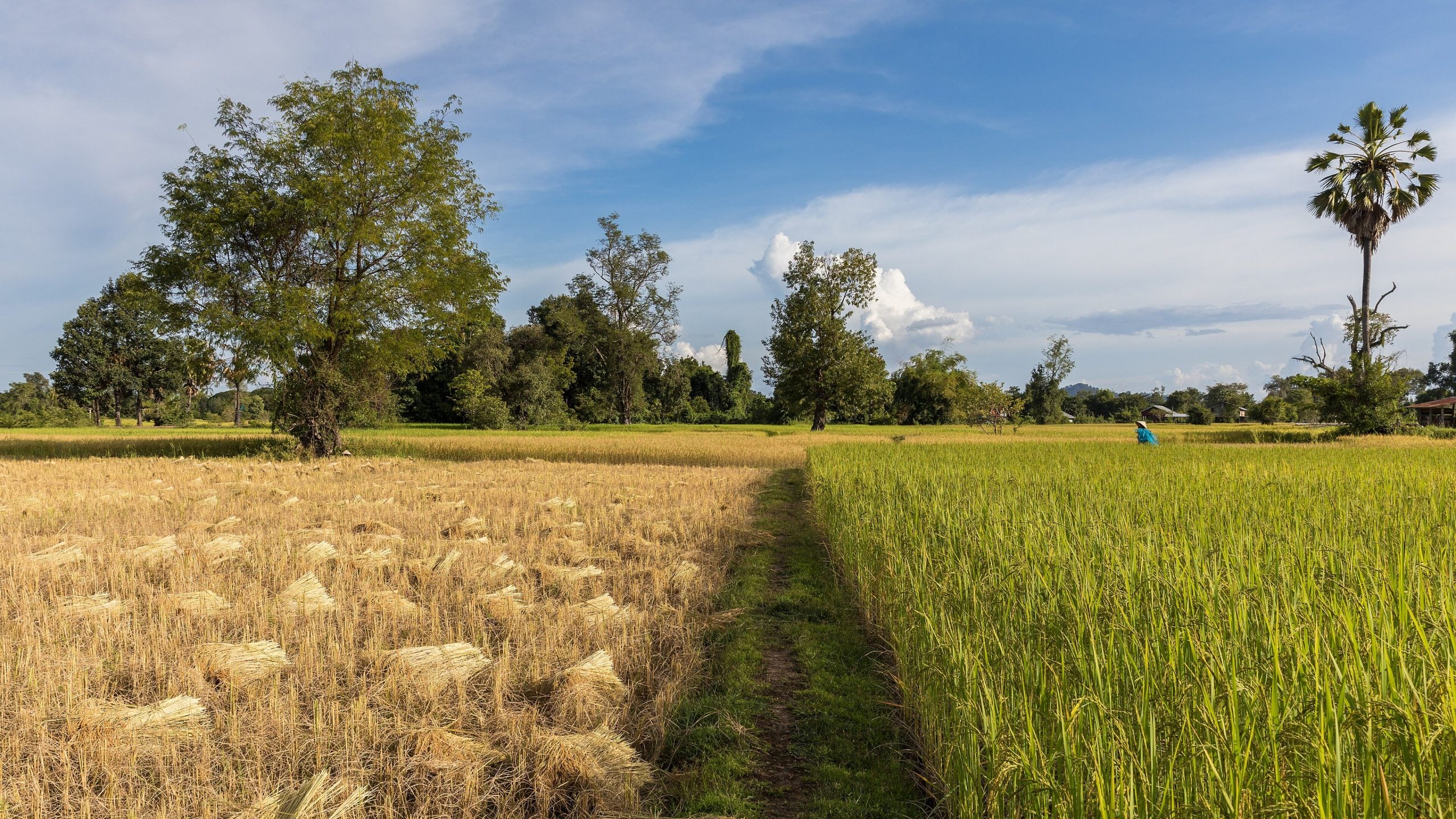
The explanation begins in the field. Arsenic is water-soluble, and rice is grown in flooded paddies, so the crop takes up more of it than cereals grown on drier ground. The University of Sheffield's Institute for Sustainable Food puts the difference at around ten times as much arsenic as other cereals. VegOut's video on rice, embedded above, looks at that paddy-soil chemistry.
Where the arsenic sits in the grain decides what cooking can do about it. Inorganic arsenic is concentrated in the outer bran layer surrounding the endosperm, which is why brown rice, unmilled and with its bran intact, carries more of it than white rice. Milling strips that layer out, but it also removes 75 to 90 percent of the grain's nutrients, which sit mainly in the bran. Arsenic is classified as a Group 1 carcinogen by the International Agency for Research on Cancer.
On what consumers should do with that, the FDA page says rice tends to absorb arsenic more readily than other crops, and that consumers can certainly eat rice as part of a well-balanced diet. For infants, that includes infant rice cereal. The agency points to American Academy of Pediatrics advice to feed infants and toddlers a variety of grains, and lists iron-fortified oat, barley and multigrain cereals as other options.
What draining the water takes with it
The FDA-linked cooking study was published by Gray and colleagues under the title "Cooking rice in excess water reduces both arsenic and enriched vitamins in the cooked grain". The agency's page states both halves of that finding in a single paragraph.
The nutrient loss applies to the rice that has had those nutrients added. Folate, iron, niacin and thiamine are put into polished white rice and parboiled rice during enrichment. In brown rice, which is not enriched that way, the nutrients are concentrated in the bran. Menon and colleagues, reviewing Gray's results, report that cooking brown rice in excess water did not cause a significant loss of iron, while the same treatment at rice-to-water ratios of 1:6 to 1:10 removed as much as 70 percent of the iron and an average of 50 percent of the vitamins from white rice.
Cooking water is one of several ordinary kitchen variables that decide how much of what is in a food reaches the plate, alongside questions such as what leftovers are reheated in. Rice turns up on holiday tables too, including the seasoned rice sides listed in VegOut's vegan Thanksgiving meal guide, and the same arithmetic applies to any pot of it.
The Sheffield method: parboil, drain, then absorb
A 2021 paper in Science of the Total Environment by Manoj Menon and colleagues at the University of Sheffield tested whether the arsenic could be taken out without the nutrients going with it. The team compared four home-friendly treatments across three brown rice types and three white rice types: unwashed and absorbed, washed and absorbed, pre-soaked and absorbed, and parboiled and absorbed, known as PBA. Nutrient elements were measured by ICP-MS and arsenic speciation by LC-ICP-MS.
PBA was the best of the four, removing 54 percent of inorganic arsenic from brown rice and 73 percent from white rice. The paper reports that it raised the margin of exposure, the measure used to assess long-term exposure to carcinogens, by 3.7 times for white rice and 2.2 times for brown rice. No significant loss of zinc was observed in either rice type, and losses of other nutrients were similar to or lower than those reported in the literature for rice cooked in excess water. In general, the treatments retained more nutrients in brown rice than in white.
The method is short. The rice is parboiled in pre-boiled water for five minutes, then drained and the water refreshed, then cooked on a lower heat until the water is absorbed. The authors hypothesized that brief parboiling would increase the dissolution of surface-bound inorganic arsenic compared with washing or pre-soaking in cold water.
"Our aim was to optimise the method to remove arsenic while keeping maximum nutrients in the cooked rice," said Menon, an environmental soil scientist in Sheffield's Department of Geography and lead author, in a university release. "We don't know the amount of arsenic in each packet rice we buy; even though brown rice is nutritionally superior to white rice as our data shows, it contains more arsenic than white rice." He said the team highly recommends the method for rice prepared for infants and children, who are highly vulnerable to arsenic exposure risks.
The research was funded through the UK Science and Technology Facilities Council's Food Network+, with partial financial support from Sheffield's School of Health and Related Research. The authors concluded that PBA is a promising technique and that further research is needed covering different regional rice types and water quality levels, a point the Sheffield team tied to arsenic-affected areas where clean water is limited.