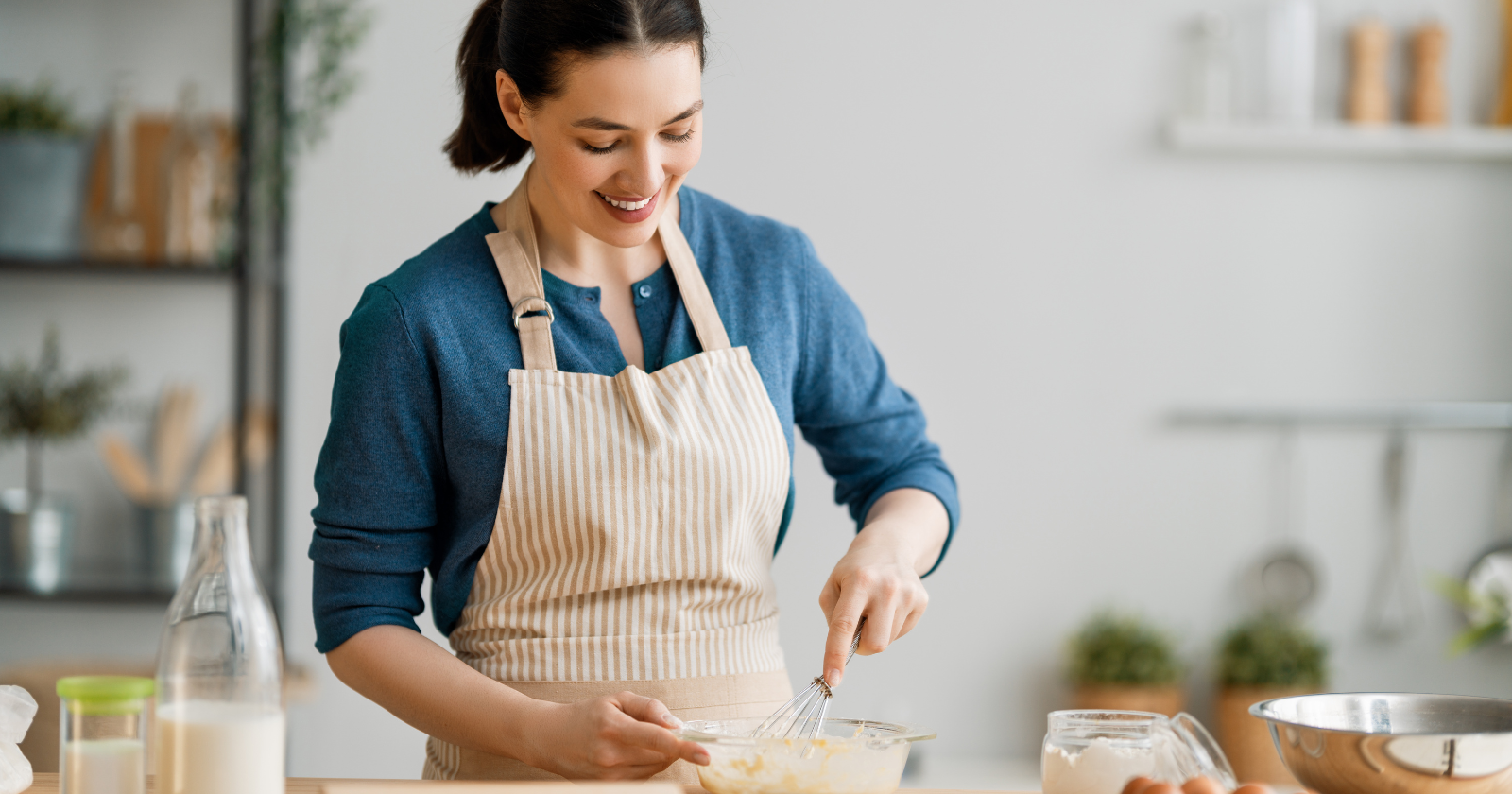
Last week, I pulled a lemon olive oil cake from the oven, sliced off a corner while it was still warm, and ate it standing at the counter. I'd been testing the batter as I went, adjusting the citrus, checking the crumb. And when it came out right, I knew it was right. No guessing. No hoping.
That small moment represents something bigger: a truce in what had been a years-long war between my ethics and my love of food.
Over the past decade, I've moved through veganism, flexitarianism, and now vegetarianism. Only one of these made me feel like a terrible person. And it wasn't for the reasons you might expect.
1. The food lover's dilemma
I've always been obsessed with food. Not in a wellness-influencer way, but in a genuine fascination with cooking, baking, flavors, and techniques. I'm the person who watches baking competitions for fun. Who reads cookbooks like novels. Who finds joy in feeding people I love.
When I went vegan, I thought I could keep all of that. I'd just redirect my passion toward plant-based cooking. And for a while, it worked.
But slowly, a split formed. My curiosity didn't care about my ethics. I'd see a croissant in a bakery window and want to understand how those layers were made. I'd watch someone braise short ribs and feel genuine fascination with the technique. I'd flip through cookbooks that weren't vegan and feel longing.
And then the guilt would hit.
2. The silent shame
The thing nobody tells you about strict ethical eating is how it can turn your own interests into evidence against you.
I felt like a fraud. A real vegan wouldn't be this interested in butter pastry. A real vegan wouldn't pause on that episode of a baking show. A real vegan would have rewired her curiosity by now to only care about plant-based food.
Research on diet and personality traits is mixed and mostly observational. The study originally cited here reported associations with CARE and SADNESS scores in one sample, with some associations weakening after the researchers accounted for sex. It did not show that vegans are more conscientious or anxious. My guilt was my own experience, not proof of a population-level effect.
The shame was relentless. I'd scroll past a recipe and feel guilty for lingering. I'd smell bread baking in a café and feel like I'd failed some invisible test. My brain kept score of every moment my curiosity wandered outside the lines I'd drawn.
I started to dread food media. Watching cooking shows felt like window shopping for a life I wasn't allowed to have. My passion, the thing that had always brought me joy, was now a source of constant internal conflict.
3. Cooking for others, but not for yourself
Here's where it got complicated.
I love feeding people. It's how I show care. When someone I love has a birthday, I want to bake them the best possible version of what they actually want. And sometimes, what they want has butter in it.
So I'd make it. I'd spend hours on a layer cake, using butter and eggs because I wanted to give them something perfect. But I couldn't taste it. I couldn't test the batter. I couldn't know if the frosting was right.
I was cooking blind for the people I loved most.
Anyone who bakes seriously knows that tasting as you go is essential. But I'd committed to rules that cut me off from the most basic feedback loop in cooking. I'd hand over a cake and genuinely not know if it was good. I'd watch people take their first bite, hoping I'd gotten it right.
Then came the awkward explanations. "I made this for you, but I can't eat it." No matter how casually I said it, it hung in the air. People didn't know how to respond. The thing I'd made with love became wrapped in weirdness, a reminder that I was somehow separate from the food I'd just created.
4. The internal war
The worst part was that none of this was visible from the outside.
I wasn't the stereotypical difficult vegan. I didn't lecture people. I didn't make faces at their food. I brought my own dishes to gatherings and genuinely didn't mind what others ate.
But inside, I was exhausted. Research on plant-based diets and restrictive or orthorexic eating is mixed. The linked study was cross-sectional and cannot show that restraint intensifies over time; in its sample, vegan and vegetarian participants actually reported lower cognitive restraint than omnivores, alongside higher scores on some orthorexia-related measures. My boundaries kept tightening and my relationship with food became anxious, but the study does not establish that veganism caused that experience.
I felt like a terrible person not because of how I treated others, but because of the constant judgment I directed at myself. For wanting to taste the cake. For being curious about the recipe. For not being vegan enough in my own mind.
5. What loosening the rules taught me
When I started moving toward flexitarianism, then vegetarianism, something unexpected happened.
I could taste things again. Not everything, but so much more than before.
The first time I tested a batch of batter I was making for my partner, actually tasting it to check if it needed more vanilla, I almost cried. I hadn't realised how much I'd missed that simple act of being fully present in my own cooking.
Eggs came back first. Suddenly I could bake properly again. Meringues, custards, olive oil cakes, soufflés. I could make things that relied on eggs for structure and actually know if they were good.
I still don't eat dairy, so there are still things I make for others that I can't fully taste. But the difference is enormous. I could watch a cooking show without feeling like I was betraying my values. I could flip through a cookbook and feel inspiration instead of shame.
My passion and my ethics found a way to coexist.
6. Finding the middle ground
These days, I'm vegetarian. Eggs yes, dairy no, no meat. It's not a perfect ethical position, and I've made peace with that.
What matters is that I can inhabit my love of food again, even if not completely. I can bake so many more things and actually taste them. When I do make something with butter for someone I love, I've made peace with not tasting it. The awkwardness has faded because I'm no longer at war with myself.
My partner and I cook together most evenings. He's not vegetarian, but he eats what I make and enjoys it. Sometimes he adds his own protein on the side. There's no weirdness. Just two people sharing food.
Motivation and context can matter, but the evidence does not support a universal rule that one motive causes problems while loosely held values always work. For me, loosening rigid rules made my relationship with food easier.
I still care about animals. But I've stopped using my food choices as a measuring stick for my own worth.
7. The real cost of rigidity
Looking back, veganism didn't make me a terrible person to others. It made me terrible to myself.
I spent years feeling guilty for my own curiosity. Ashamed of interests I couldn't control. Cut off from a passion that had always been central to who I am. I'd turned food, which had been a source of connection and creativity, into a minefield of moral judgment.
The food lover in me never went away. She just went underground, surfacing only as shame. Every time I watched a baking video or lingered over a cookbook, she was there, wanting to engage, wanting to learn, wanting to try. And every time, I pushed her back down.
Vegetarianism let her come back. Not all the way, but enough.
Final thoughts
If you're someone who loves food and you're navigating plant-based eating, I want you to know that it doesn't have to be a war.
Your curiosity about all food isn't a moral failing. Wanting to taste the cake you're baking for someone you love isn't weakness. Being fascinated by techniques that don't fit your diet doesn't make you a fraud.
The version of me who stood in the kitchen, pulling a tray of cookies from the oven for someone else, unable to taste them, wasn't living her values more fully. She was just living smaller. She'd turned something joyful into something fraught, and called it integrity.
The diet that aligns with your ethics should still leave room for you to be fully yourself. It should let you cook with both hands. It should let you taste the batter. It should let you be curious without shame.
For me, that meant loosening the rules enough to let eggs back in. And honestly? It was worth it.
Correction (14 September 2026): Descriptions of personality, anxiety and restrictive-eating research were corrected to match the scope and results of the linked observational studies.