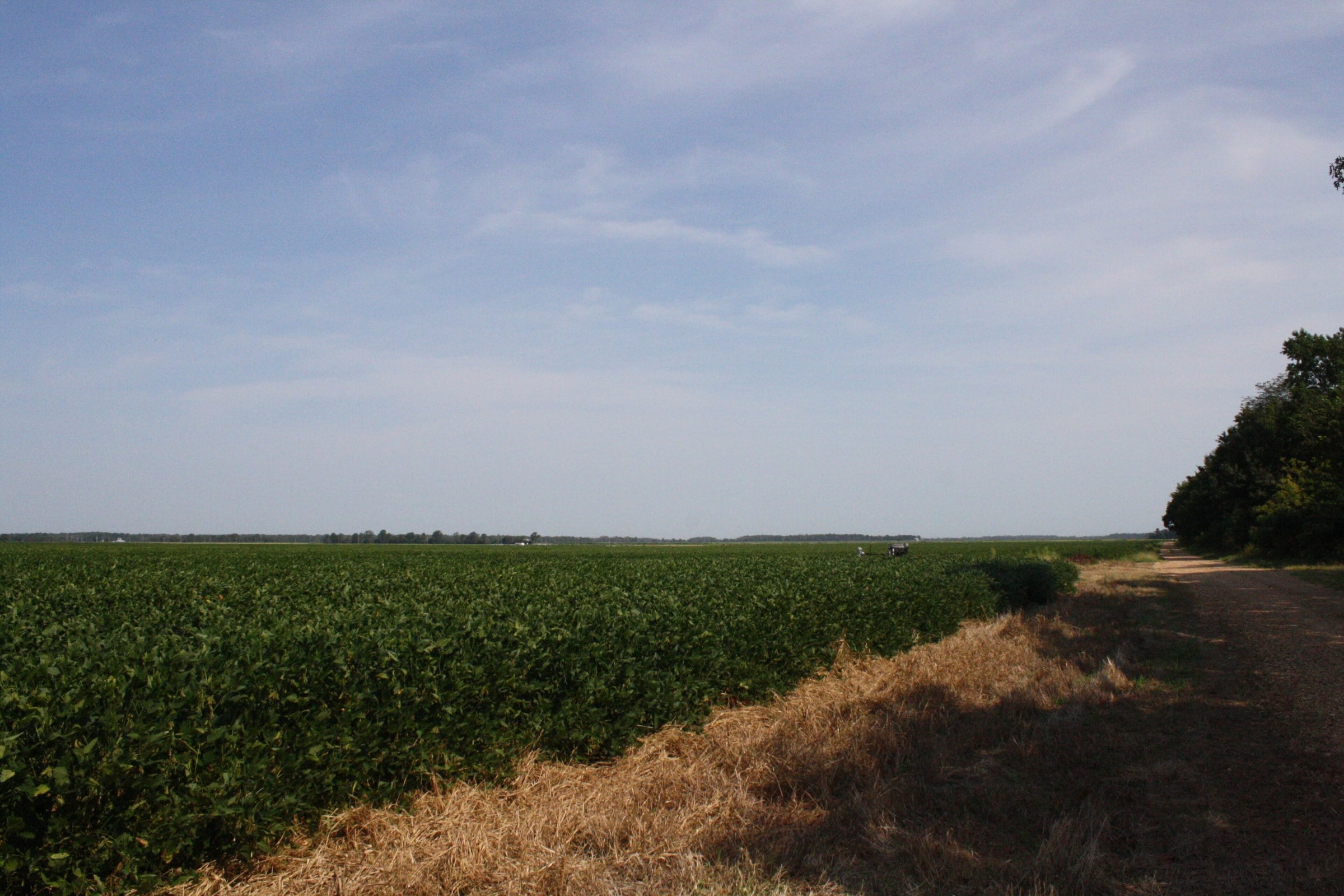
Photo: a soybean field near Beech Grove, Arkansas. Brandonrush / Wikimedia Commons, CC0.
Most of the world's soy never reaches a plate as soy. About 77 per cent of global soy is fed to livestock for meat and dairy production, and just 7 per cent goes directly into human food such as tofu, soy milk, edamame beans and tempeh, according to Our World in Data.
The figures sit in the soy section of Hannah Ritchie's article on the drivers of deforestation, first published in 2021 and given minor edits in 2024. The breakdown is for 2018 and comes from an analysis by the University of Oxford's Food Climate Research Network, which draws on the USDA's PSD database.
Where the world's soy actually goes
Chickens and other poultry take the largest share, at 37 per cent of global soy. Pigs account for about a fifth and aquaculture for 6 per cent. Beef and dairy production uses only about 2 per cent.
About a fifth of the world's soy goes to human consumption that does not pass through an animal first, and most of that is first processed into soybean oil. The foods people picture when soy is mentioned, including tofu, soy milk, tempeh and edamame beans, make up the 7 per cent. Around 4 per cent goes to biofuels, lubricants and other industrial processes, with biodiesel alone at 2.8 per cent.
A crop that grew more than 13 times over
Global soy production is more than 13 times higher than it was in the early 1960s, when output ran at 20 to 30 million tonnes a year. It is now around 350 million tonnes, and it has more than doubled since 2000.
Yields did not keep pace. Since 1961 global soy yields rose by 150 per cent while production rose by 1,200 per cent, so the area used to grow soy has more than quadrupled. In Brazil, yields have doubled since 1980 while production rose by 680 per cent, and the land given over to soy has tripled.
The growth sits on the processed side. Soy going into animal feed, biofuels and vegetable oil tripled from around 90 million tonnes to nearly 270 million tonnes by 2016, with the steepest rise coming after 1990. Over the same period, soy going directly into human foods such as tofu and soy milk rose by about three million tonnes, from around seven to 10 million. Global meat production more than tripled over the past 50 years, with the sharpest increase in poultry, the largest consumer of soy feed. Ritchie's conclusion from that pattern is that rising demand for soy has been driven by a growing appetite for meat, dairy and soybean oil.
What this means for the deforestation argument
Two countries grow most of the world's soy. The United States and Brazil each account for around a third of global production, roughly two-thirds between them, with Argentina at about a tenth. Brazil's expansion is the recent one: the US was already growing 20 million tonnes a year in 1960, a level Brazil did not reach until 1990.
On the Amazon, Our World in Data says the research suggests that by far the largest driver of deforestation in the Brazilian Amazon has been the expansion of pasture land for beef production, with soy "likely to have played at least some role" in the loss of forest.
The 2018 breakdown works against the simplest version of the soy story. Ritchie describes the idea that foods promoted as substitutes for meat and dairy, such as tofu and soy milk, are driving deforestation as a common misconception. Those products use a share of the crop that barely grew while total demand multiplied. The bulk of the harvest leaves farms as poultry, pork, farmed fish and cooking oil.
Where tofu, poultry meat and pig meat sit on emissions per kilogram is set out in Poore and Nemecek's data on the Thanksgiving main course, and the FDA review of one soy-derived ingredient is covered in the 2018 soy leghemoglobin letter.