What you seek in a hotel quietly mirrors the shifts in what you value most as you move through life.

Add VegOut to your Google News feed. 
There’s a shift that sneaks up on you as you get older.
In your twenties, travel is about spontaneity. You’ll book the cheapest bed in a hostel or crash in a noisy city-center hotel just to be “where the action is.” By your thirties, maybe you start balancing budget with comfort, picking places that are functional more than fun.
But somewhere past middle age, your hotel choices change for good. Suddenly, the places you stay matter almost as much as the places you visit. Comfort, ease, and peace start to outweigh novelty and flash.
I’ve noticed it in my own travels. These days, I find myself booking hotels for reasons I wouldn’t have thought twice about when I was younger. And I know I’m not alone.
Here are eight types of hotels you start preferring once you’ve crossed that invisible middle-age line.
1. The ones that promise a quiet night’s sleep
Back in the day, I once stayed at a place in Berlin that was literally above a techno club. The bass rattled the walls until 5 a.m. I thought it was “part of the vibe.”
These days? I wouldn’t last ten minutes.
Now, silence is gold. Blackout curtains, soundproofing, and mattresses that don’t sink like marshmallows feel non-negotiable. You’re not looking for the coolest place to crash—you’re looking for the one that respects your rest.
The science backs this shift. Getting enough quality sleep helps memory, mood, and mental sharpness—even more so as we age. A study in Sleep Foundation shows that inadequate sleep impairs attention, memory, problem‑solving, and emotional processing.
That’s why hotels that prioritize calm—like business hotels or those tucked away from nightlife—start climbing higher on the list.
2. The ones with a great breakfast included
There was a time when I thought breakfast buffets were tourist traps. Why eat in the hotel when you can “eat like a local”?
But there’s a hidden joy in waking up, walking downstairs, and having a solid breakfast waiting. No lines, no searching for a café, no wondering if they have plant-based options.
It’s not just about convenience. A good breakfast sets the rhythm of the day. I remember staying in Copenhagen at a hotel where the breakfast was simple—fresh bread, fruit, coffee—but perfect. That ritual gave the whole trip a slower, more grounded feel.
Travel expert Rick Steves once said, “Breakfast is the fuel for your day of travel.” He wasn’t exaggerating. These days, skipping a real breakfast feels like setting yourself up for crankiness by noon.
3. The ones with walkable surroundings
When you’re younger, it feels fine to rent a car, hop in taxis, or spend half your trip on public transit. Mobility is part of the adventure.
But with age comes a craving for simplicity. You start preferring hotels where you can walk out the door and actually experience the city. Cafés, bookstores, small parks—if they’re within a few blocks, that’s a win.
Research in urban psychology has shown that walkable neighborhoods boost well-being and reduce stress. I’ve felt it first-hand: staying in a centrally located Lisbon hotel, I could stroll to everything I wanted without planning. It turned what could’ve been a logistical headache into a daily flow.
When your hotel gives you that access, you’re not just staying somewhere—you’re living there, even if just for a few days.
4. The ones that don’t nickel-and-dime you
There’s something irritating about paying for Wi-Fi in 2025. Or being slapped with a “resort fee” that adds nothing of value.
You start noticing how many hotels are designed to upsell you at every turn. And the older you get, the less patience you have for it. Transparency matters.
Middle-aged travelers prefer hotels that are upfront about costs, with fewer “gotchas” at checkout. Free Wi-Fi, reasonable parking, maybe even perks like coffee or snacks.
I stayed at a small boutique hotel in Portland last year that nailed this. Free bikes, free lobby coffee, and no hidden fees. It wasn’t fancy, but the honesty made the stay feel good. Hospitality is about trust, and hotels that get this right win you over for life.
5. The ones with a good lobby and common areas
You don’t realize how important this is until you’ve lived it.
In my twenties, the lobby was a pass-through space. Who cares if it’s stylish or cozy—you’re only there for a second.
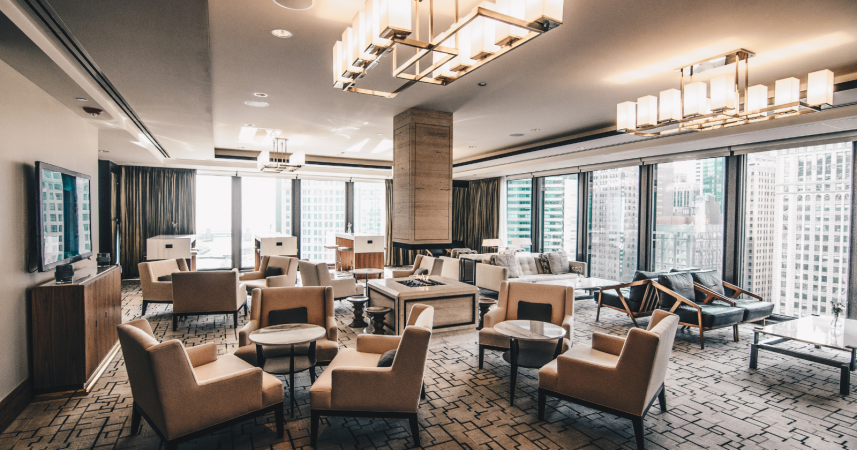
But later on, you start to notice: a well-designed lobby or lounge changes the whole experience. It gives you options. Maybe you want to read in a quiet corner, have a glass of wine, or just people-watch without being stuck in your room.
Alain de Botton once wrote, “Where we are heavily influences who we can be.” Hotels that create inviting communal spaces give you a chance to slow down and enjoy the stay. It’s not about filling time—it’s about enhancing it.
Think rooftop terraces, library corners, or even just a fireplace in the lounge. Small touches that extend your stay beyond the four walls of your room.
6. The ones with staff who actually remember you
There’s something profoundly comforting about walking back into a hotel and hearing, “Welcome back, Mr. ____.”
You realize after a certain age that hospitality isn’t about amenities—it’s about people. A friendly staff who remembers your preferences often matters more than whether the hotel has a pool.
This doesn’t mean five-star treatment. Even mid-range hotels can pull it off. I once stayed at a place in Mexico where the staff remembered my morning coffee order after the first day. That tiny act made me feel more at home than any design detail could.
Psychologists call this the “recognition effect”—the deep human need to feel seen. One hospitality study found that personalized interactions like recalling a guest’s favorite drink "deepen their emotional attachment" to the hotel.
In a world that often feels rushed and transactional, a hotel that makes you feel like more than a booking number stands out.
7. The ones that feel like a retreat from chaos
Travel isn’t always restful. Airports, delays, crowds—they take a toll. Which is why more and more middle-aged travelers crave hotels that feel restorative.
It doesn’t need to be a full spa retreat. Sometimes it’s just about uncluttered design, calming colors, or a quiet courtyard. Minimalist hotels, wellness-focused stays, or even historic properties with an aura of calm hit differently once you’re older.
I once stayed in a converted monastery in Italy. At 25, I probably would’ve complained about the lack of TV. At 45, the silence felt like medicine.
Psychologist Mihaly Csikszentmihalyi, who studied “flow,” once noted that minimizing distractions helps restore attention—and that’s exactly what these serene hotel environments do: they give your mind a break.
Researchers point out that environments offering “soft fascination” (like simple, calming surroundings) can replenish attention depleted by everyday stress.
8. The ones that make logistics easy
Finally, this might be the biggest shift of all. You stop tolerating hotels that make you jump through hoops.
Clunky apps, complicated check-ins, endless forms—no thanks. At this stage of life, you want frictionless logistics. Smooth booking, friendly staff, quick service when you need it.
This ties into the concept of “decision fatigue,” the mental drain from making too many small choices. The easier the hotel makes things, the more energy you have for enjoying your trip.
One of my favorite stays recently was at a mid-range hotel in Tokyo where everything just worked. Check-in took two minutes, the Wi-Fi connected instantly, and the room was exactly as promised. It wasn’t glamorous, but it felt effortless—and that’s worth more than any rooftop pool.
The bottom line
Hotels are more than beds and bathrooms. They reflect how we travel—and how we change over time.
Past middle age, your priorities shift. You stop looking for “the coolest” and start looking for “the easiest,” “the calmest,” or “the most human.” It’s not settling. It’s evolving.
And honestly? That evolution makes travel better. Because when you’re rested, well-fed, and treated with respect, you get to focus on what really matters: the experience of being somewhere new.
So if you’ve noticed yourself scanning hotel reviews for words like quiet, walkable, or no hidden fees, don’t fight it. That’s just the wisdom of age showing up in your booking habits.
And it’s a wisdom worth listening to.
If You Were a Healing Herb, Which Would You Be?
Each herb holds a unique kind of magic — soothing, awakening, grounding, or clarifying.
This 9-question quiz reveals the healing plant that mirrors your energy right now and what it says about your natural rhythm.
✨ Instant results. Deeply insightful.

Jordan Cooper
Jordan Cooper is a pop-culture writer and vegan-snack reviewer with roots in music blogging. Known for approachable, insightful prose, Jordan connects modern trends—from K-pop choreography to kombucha fermentation—with thoughtful food commentary. In his downtime, he enjoys photography, experimenting with fermentation recipes, and discovering new indie music playlists.
More Articles by Jordan