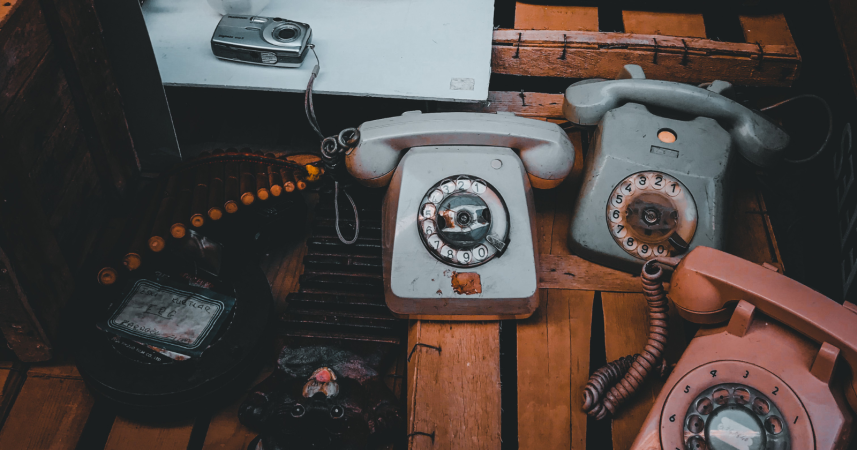
Venture into any Boomer's basement and you'll discover a carefully curated museum of obsolete technology, abandoned fitness dreams, and enough empty containers to supply a small nation—all preserved by the unshakeable belief that someday, somehow, that 1987 brass doorknob will save the day.

Add VegOut to your Google News feed. 
Last weekend, I descended into my basement to find the Christmas decorations, and what should have been a fifteen-minute task turned into a three-hour archaeological expedition through decades of "might need it someday" treasures.
As I navigated around towers of carefully labeled boxes and mysterious bundles wrapped in yellowing newspaper, I couldn't help but laugh at myself. Here I was, surrounded by evidence of my generation's particular brand of preparedness mixed with nostalgia, each item justified by that eternal mantra: "You never know when this might come in handy."
If you're a fellow Boomer, you probably have your own version of this underground museum. We came by this habit honestly, raised by parents who lived through the Depression and knew what real scarcity looked like.
My grandmother, who survived those lean years and still managed to find joy in small things, would save every rubber band and piece of string. Watching her taught me that being prepared wasn't paranoia; it was wisdom.
But somewhere along the way, we Boomers have taken this lesson and run with it, creating basement kingdoms filled with items that tell the story of our generation's unique relationship with stuff.
1) Phone books from the last two decades
Do you have a stack of phone books dating back to 1998? Welcome to the club. Even though we all have smartphones now, there's something about those thick yellow pages that we can't quite let go of.
Maybe it's because we remember when finding a plumber meant flipping through actual pages, not typing into a search bar. I keep telling myself I'll recycle them, but what if the internet goes down? What if I need to look up that restaurant that closed in 2003?
The logic doesn't hold up under scrutiny, but there they sit, a paper monument to a time when information lived in books, not clouds.
2) Cables for devices that no longer exist
Open any drawer or box in my basement, and you'll find a tangled nest of cables that could probably stretch to the moon and back. There are chargers for flip phones I haven't owned in fifteen years, printer cables for computers that ran Windows 95, and mysterious adapters whose purpose has been lost to time.
Every time I consider throwing them out, a voice in my head whispers, "But what if you need to connect that old camcorder to transfer those family videos you've been meaning to digitize for the past decade?"
The fact that the camcorder itself broke in 2007 doesn't seem to factor into this equation.
3) Exercise equipment that serves as expensive coat racks
Remember when we all bought ThighMasters? Or that Ab Roller that promised us six-pack abs in just minutes a day? My basement houses a graveyard of fitness ambitions, each piece of equipment representing a January resolution that didn't make it to February.
The stationary bike holds winter coats beautifully, and the weight bench makes an excellent surface for storing boxes of holiday decorations. We keep them because surely, one day, we'll get back to that exercise routine.
The fact that our knees now protest when we climb stairs doesn't diminish our optimism about eventually using that rowing machine gathering dust in the corner.
4) National Geographic magazines dating back to the Carter administration
Those yellow spines create a beautiful timeline along my basement shelves, chronicling world events from when our hair had its natural color. We can't throw them away because they're educational, historical documents.
What if a grandchild needs to do a school project on the Mount St. Helens eruption? Sure, they could find better images online in seconds, but there's something about holding that physical magazine, smelling that particular scent of aging paper and photography chemicals.
Plus, we paid good money for that subscription, and throwing them away feels like admitting defeat to the digital age.
5) Margarine containers and glass jars for "storage"
My collection of empty containers could supply a small restaurant. Cool Whip tubs, margarine containers, pickle jars, jam jars - all washed and waiting for their moment of glory. This particular habit comes straight from watching my mother, who was a seamstress and taught me that creativity and practicality could coexist.
She stored buttons in baby food jars and organized her sewing supplies in ice cream containers. After having to accept food stamps for two years to feed my children, I learned the hard way that you save what you can, when you can.
Even now, financially secure after remarrying, that urge to save every potentially useful container runs deep. Security can vanish overnight, and somehow having fifty empty spaghetti sauce jars makes me feel prepared.
6) Owner's manuals for appliances you threw away during the Reagan years
There's an entire file box in my basement devoted to instruction manuals for items I no longer own. The manual for the microwave we had in 1985? Check. Instructions for programming the VCR we donated in 2001? Of course.
Assembly instructions for furniture we left behind in three moves? Naturally. We keep them because what if we buy something similar and the instructions are basically the same? What if someone asks us how to set the clock on a 1992 Sony boom box? These scenarios have never occurred, but being prepared for them somehow feels responsible.
7) Craft supplies for hobbies you tried once
Have you ever tried decoupage? Macramé? Soap making? If you're like me, evidence of every crafting phase lives in carefully organized boxes in your basement.
There's the calligraphy set from when addressing wedding invitations by hand was still a thing. The basket-weaving materials from that phase in the '90s. Enough scrapbooking supplies to document the entire neighborhood's life stories.
We keep them because creativity might strike again, and when it does, we'll be ready with our glue guns loaded and our decorative scissors sharpened.
Final thoughts
As I finally located those Christmas decorations behind a wall of saved wrapping paper (smoothed, folded, and sorted by occasion), I realized that our basements aren't just storage spaces.
They're time capsules of good intentions, memory banks of different eras, and physical manifestations of the lessons our parents taught us about waste and want.
Maybe we don't really need that box of doorknobs from every house we've ever lived in, but there's comfort in knowing they're there, just in case. After all, you never know when you might need a brass doorknob from 1987. And if that makes us Boomers, well, at least we'll be prepared Boomers.
What’s Your Plant-Powered Archetype?
Ever wonder what your everyday habits say about your deeper purpose—and how they ripple out to impact the planet?
This 90-second quiz reveals the plant-powered role you’re here to play, and the tiny shift that makes it even more powerful.
12 fun questions. Instant results. Surprisingly accurate.