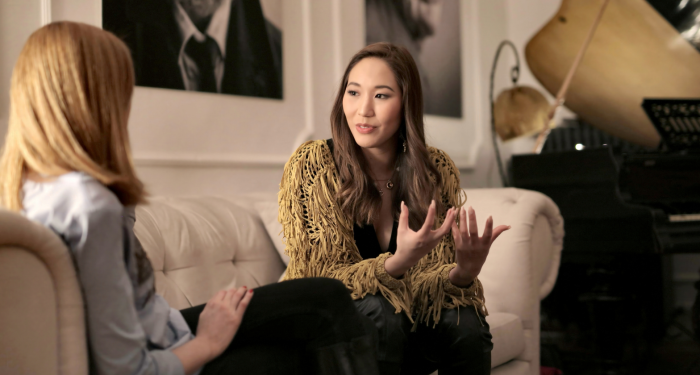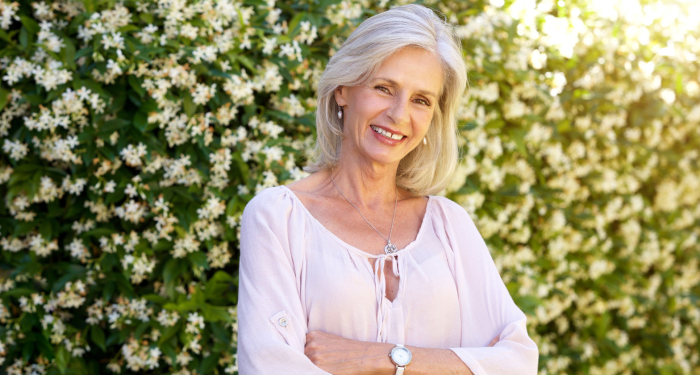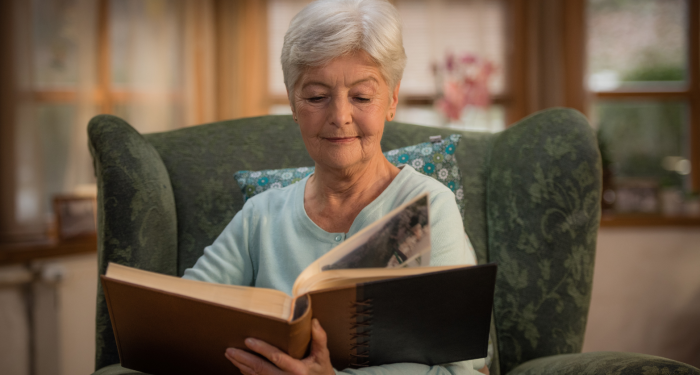
The room was full of people who once hung on my every word, but that night at my high school reunion, I discovered that somewhere between the laugh lines and the gray hair, I'd transformed from the person everyone wanted to talk to into someone they looked straight through.

Add VegOut to your Google News feed. 
Last month, I attended my 40th high school reunion. Walking into that banquet hall, I felt like a ghost returning to haunt a place where I'd once been vibrantly alive.
The same faces were there, now softened by time, but something fundamental had shifted. When I approached a group of former colleagues, their eyes skidded past me like I was furniture.
These were people who once sought my opinions, laughed at my stories, asked for my advice. Now, I had to practically tap shoulders to join conversations, and even then, the circle never quite opened to include me.
I stood there, holding my drink, remembering how I used to command attention in any room. Not through effort or performance, but simply by being myself: Confident, engaged, full of stories from my classroom.
That evening, I realized the cruelest trick of aging isn't what happens to our bodies. It's what happens to our presence.
The moment you realize you've become background noise
There's a particular kind of vertigo that comes with this realization. One day you're contributing ideas in meetings, making people laugh at parties, being sought out for your perspective.
Then gradually, so slowly you don't notice at first, you become part of the wallpaper. People's eyes slide over you at gatherings. Younger colleagues explain things to you that you've known for decades. Waiters hand the wine list to your younger companion.
When did I cross that invisible line? Was it when my hair went completely silver? When I started wearing bifocals and could finally see my wrinkles clearly? Or was it more subtle than that, a gradual fading that happens to all of us who dare to age in a culture obsessed with youth?
The research tells us this isn't imagination. Studies show that after 50, we become increasingly invisible in social situations.
But knowing this intellectually doesn't soften the blow when you experience it viscerally, when you feel yourself dissolving in real time in a room where you once sparkled.
Why visibility matters more than vanity
This isn't about vanity or needing to be the center of attention. It's about something much deeper: The human need to be seen, to matter, to have our existence acknowledged.
When we become invisible, we lose more than social standing. We lose the mirror that tells us we're still here, still relevant, still part of the living world.
I think about Virginia Woolf's observation that women have served as looking glasses for men, reflecting them at twice their natural size. But who reflects us when we age? Who tells us we still matter when society has decided we're past our expiration date?
After taking early retirement at 64 when my knees couldn't handle standing all day anymore, I mourned more than just my career. I mourned my identity as someone who mattered, who had something to contribute.
Those "Teacher of the Year" awards gathering dust on my shelf felt like artifacts from someone else's life, someone visible and vital.
The invisible labor of staying relevant
Have you noticed how much energy it takes to remain visible as we age? The constant effort to prove we're still sharp, still current, still worth including? It's exhausting, this performance of relevance.
We update our wardrobes to avoid looking "dated." We pepper our conversation with current references. We pretend to understand technology that baffles us, all in service of not being dismissed as irrelevant.
But here's what I've learned: The harder we try to stay visible through these external measures, the more invisible we become. It's like shouting into a void. The culture has already decided our value, and no amount of trendy clothes or forced enthusiasm for social media will change that narrative.
I recently read Rudá Iandê's "Laughing in the Face of Chaos," which I mentioned in my last post about embracing uncertainty.
His insight that "We live immersed in an ocean of stories, from the collective narratives that shape our societies to the personal tales that define our sense of self" resonated deeply. The story our culture tells about aging is one of decline and irrelevance. But what if we could write a different story?
Finding light in the shadows
Something unexpected happened after that reunion. Instead of spiraling into self-pity, I got angry. Not bitter anger, but the clarifying kind that burns away what doesn't matter. If I was going to be invisible anyway, why was I still performing for an audience that wasn't watching?
This anger became freedom. I stopped dyeing my hair. I wore what felt good on my body, not what I thought made me look younger. I spoke up in conversations without worrying if anyone wanted to hear from me. Paradoxically, when I stopped trying so hard to be seen, I began to feel more visible to myself.
The truth is, we can't control whether others see us. But we can control whether we abandon ourselves in the process of aging. We can choose to inhabit our lives fully, even if the spotlight has moved on.
The power of claiming your own space
Recently, at my book club, a younger member talked over me for the third time that evening. Instead of shrinking back as I usually did, I said firmly, "I wasn't finished." The room went quiet. She apologized. I continued my thought. It was a small moment, but revolutionary for me.
Claiming space as an older person isn't about demanding attention. It's about refusing to participate in our own erasure. It's about speaking even when no one seems to be listening, taking up room even when the world suggests we should shrink, being fully present even when others look through us.
I think about my students over the years, particularly the quiet ones who bloomed when someone finally saw them. We all need witnesses to our existence. But perhaps the most important witness is ourselves.
Perhaps the real tragedy isn't becoming invisible to others, but becoming invisible to ourselves, forgetting that we still have stories to tell, wisdom to share, life to live.
Final thoughts
The hardest part of aging really isn't the physical decline. Our bodies are remarkably adaptable, and we find ways to work with and around our limitations.
But learning to exist in a world that no longer sees us requires a different kind of strength. It requires us to generate our own light in rooms that no longer reflect it back to us.
Some days I still feel invisible. But I've learned to see this as a strange gift. When you're no longer performing for others' approval, you can finally discover who you are when no one's watching.
And that person? She's more interesting, more authentic, more genuinely luminous than the person who used to light up rooms. She just glows more quietly now, and mostly for herself.