It starts with one drawer, one shelf, one box in the garage. Then it turns into a whole system of saving things for the future. Most of it is never needed, but it still feels wrong to toss. Here are nine classic examples.

Add VegOut to your Google News feed. 
I grew up around working class Boomers, the kind of people who can stretch a dollar, fix what’s broken, and make you feel slightly guilty for throwing away a perfectly good lid.
Their saving habits come from somewhere real. When you’ve lived through layoffs, tight months, and the belief that something might break tomorrow, you learn to keep backups.
I respect that.
But there’s a point where being prepared turns into living inside a storage unit. And if you’ve ever opened a cabinet and been attacked by a pile of mismatched plastic lids, you know exactly what I mean.
Here are nine “just in case” items that tend to stick around forever, even though they rarely get used.
1) Plastic containers from takeout
These containers are the gateway drug.
You order takeout once, and suddenly you’ve got a cabinet full of stained, misshapen tubs with lids that belong to a different timeline.
The logic is simple: Free storage. Why buy containers when noodles come with one?
The problem is most takeout plastic is not built for repeat use. Lids stop sealing. Containers warp. And they keep that ghost smell of last month’s garlic sauce no matter how much dish soap you throw at them.
In restaurants, storage is ruthless. If a container doesn’t seal properly, it’s out.
At home, people keep twenty containers that don’t work because it feels wrong to toss them.
A simple fix: Keep a small, usable set.
If you want to be generous, keep five. If you want peace, keep three.
The rest is just clutter wearing a lid.
2) Glass jars they swear they’ll reuse
Old pasta sauce jars. Pickle jars. Jam jars.
Boomers love jars because jars feel useful. They look sturdy. They feel like something you can repurpose into a better life.
It could hold leftovers. It could hold screws.
It could become a salad dressing jar, even though nobody is making salad dressing because they can’t find the jar under the other jars.
The truth is, a couple of jars can be handy.
But a shelf full of them becomes visual noise, and half of them will always smell faintly like pickles.
If you reuse jars, pick your best two or three and recycle the rest.
Preparedness is great. A jar collection is a different hobby.
3) The “good” napkins and paper towels
Some households have two levels of napkins.
Everyday napkins, used without ceremony.
And the “good napkins,” saved for a special occasion that never shows up.
These might be thick paper towels, the nice napkins from a party, or a stash from a restaurant that feels too fancy to waste.
Here’s the issue: Saving the good stuff can turn into postponing enjoyment.
You end up living in the “not yet” mindset.
I’ve done it with food.
I once saved a premium chocolate bar for months, waiting for the perfect moment. When I finally ate it, it tasted like my pantry. Not tragic, but definitely not magical.
Use the good napkins on a random weeknight.
That is what makes life feel better in real time, not in theory.
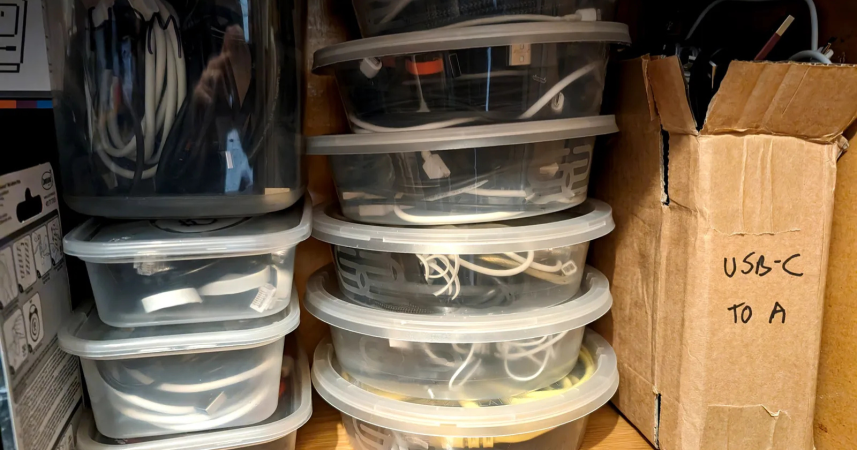
4) Random cords and chargers from dead devices
There’s always a drawer.
Every cord ever. Chargers from phones nobody owns. Cable types that look like they belong in a museum.
The explanation is always the same: “You never know.”
And sure, sometimes you do need an old cable.
But most of the time, when that moment comes, you either can’t find the cord anyway or it doesn’t fit the device you have now.
What you’re really saving is the idea of future convenience.
What you’re actually creating is a mess you have to dig through every time you need anything.
If you want to keep a cord drawer, make it intentional.
Keep what matches devices you currently own. Toss duplicates. Recycle the rest.
Your future self will thank you.
5) Grocery bags inside grocery bags
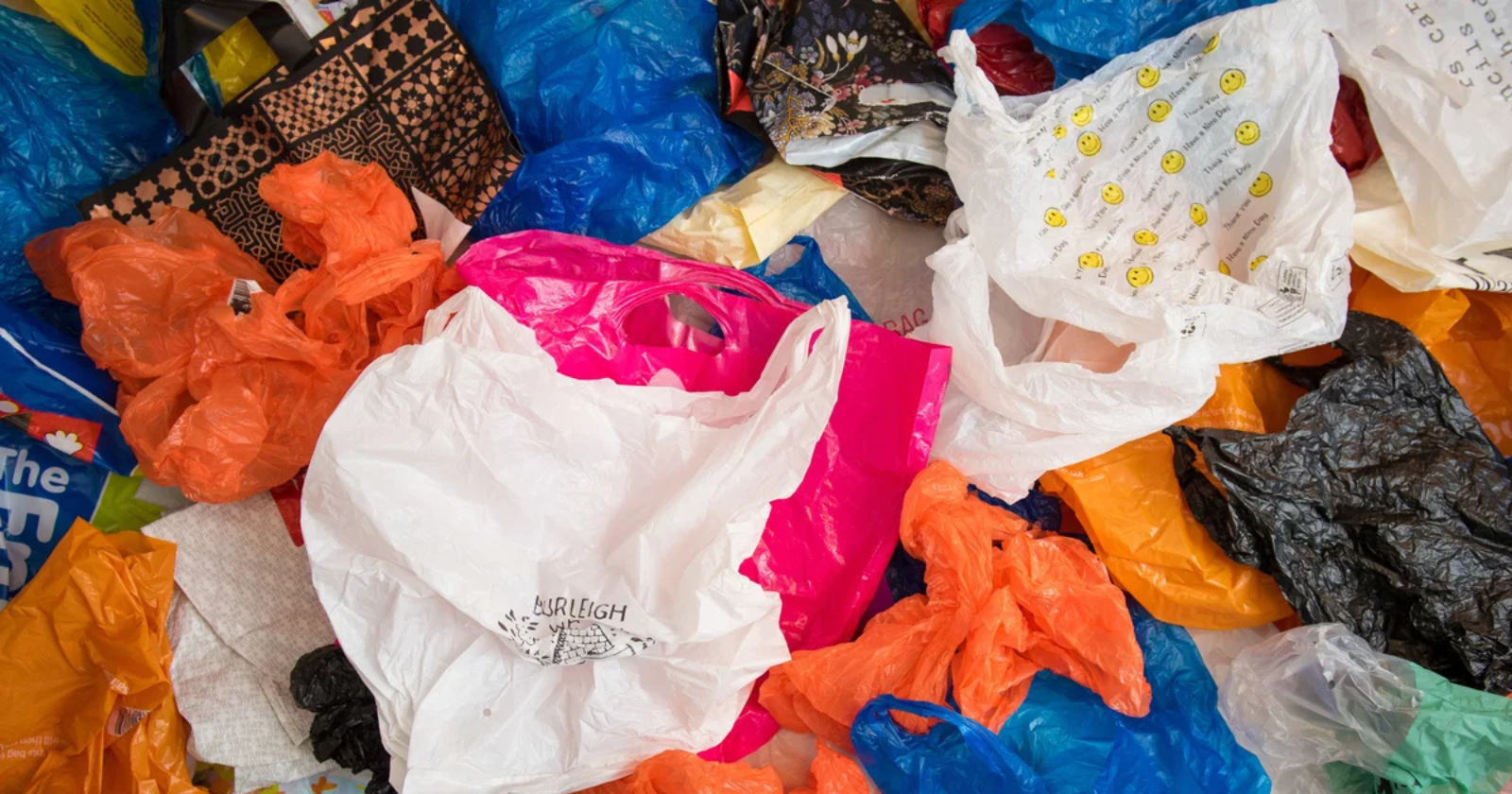
A bag full of bags is practically a cultural artifact at this point.
It started as a smart habit. Reuse the bags. Save money. Be resourceful.
Then it turns into an infinite loop where you keep bags because you already have bags to hold the bags.
There’s also the practical side.
Old bags rip. Some are dirty. Some have been carrying raw meat or leaking produce juice and now they’re just quietly gross.
Keep a reasonable number for trash liners or quick errands.
Recycle the extras.
If you want to level up, get two sturdy totes and make your life simpler.
6) Free samples and hotel toiletries
Boomers love free stuff.
Not because it’s luxury, but because it feels like a win.
Little hotel shampoos. Tiny soaps. Dental floss from the dentist. Random lotion packets.
All saved for travel, even though they travel with a full toiletry bag like they’re moving abroad.
A small travel kit is useful.
A shoebox of sample bottles is just postponed decision-making.
Pick a purpose.
If you travel, keep a small pouch and use it.
If you don’t, donate unopened items to a shelter or community pantry.
Someone will use that soap this week instead of it aging in your bathroom drawer.
7) Old spices and expired pantry items
This is where the food side gets real.
Boomers hate wasting food, so pantry items stick around way past their prime.
Spices from 2012. Baking powder that lost its power in a past life.
Oil that smells slightly off, but they use it anyway because “it’s probably fine.”
Spices don’t technically go bad in a dramatic way, but they absolutely lose flavor.
And when your spices are weak, your meals get dull.
Then you think you’re bored of cooking, when really you’re just cooking with dust.
In restaurants, we date things and rotate stock constantly.
At home, the pantry becomes a time capsule.
If you want an easy upgrade to your diet, clean your pantry.
Toss expired items. Replace the few spices you actually use.
Cooking will instantly taste more alive.
8) “Someday” clothes that don’t fit anymore
This one is emotional, not practical.
People save clothes that don’t fit because they’re attached to a version of themselves.
The outfit from when they felt confident. The jeans from a different decade. The suit from a job they were proud of.
Sometimes it’s hope. Sometimes it’s guilt. Sometimes it’s both.
But a closet full of “someday” clothes has a cost.
It makes getting dressed harder. It keeps you mentally negotiating with the past.
It also hides the clothes that actually fit and look good right now.
If it’s sentimental, store it intentionally, like in a labeled box. If it’s not, donate it.
Someone else can wear it next week instead of it hanging in the dark waiting for a maybe.
9) Broken appliances they plan to fix
Similarly, there’s always a broken item that’s “still good.”
A toaster that half works. A blender that smells like burning.
A fan that only runs if you tap it like you’re starting a stubborn engine.
The repair mindset is admirable.
Working class people learned to fix things because replacing them wasn’t always an option.
Finally, though, there’s the modern reality: Lots of appliances are cheaper to replace than repair.
And “I’ll fix it” often turns into “I’m storing it.”
Here’s a rule I use: If I’m not going to fix it within 30 days, I’m not going to fix it.
Either schedule the repair, take it in, order the part, or let it go.
Because every broken item you keep becomes a tiny mental tax.
It takes up space, and it quietly reminds you of unfinished business.
The bottom line
Working class Boomers save things “just in case” because they grew up in a world where resources were tighter and stability wasn’t guaranteed.
That habit helped them get through real problems.
But a lot of the time, the stuff they save is no longer solving a problem.
It’s just taking up space, creating clutter, and adding friction to everyday life.
The goal isn’t to throw everything away and live with one plate and one fork.
The goal is to keep what you truly use, and let go of what’s just sitting there out of fear, guilt, or habit.
The next time you find yourself staring into a drawer full of mystery cords or a cabinet full of takeout lids, ask yourself one honest question: If I needed this tomorrow, would I even remember I had it?