From accidentally stacking plates like you're busing your own table to panic-flipping through wine lists with deer-in-headlights terror, these subtle behaviors immediately telegraph to servers and fellow diners that this isn't your usual Tuesday night.

Add VegOut to your Google News feed. 
Ever find yourself at a nice restaurant feeling like everyone else belongs there except you?
I'll never forget my first real fine-dining experience. I was twenty-two, fresh out of college, and had just landed my first job at a Michelin-starred restaurant. Before training started, they sent us to eat there as guests. Watching myself and the other newbies navigate that meal was like watching a comedy of errors unfold in slow motion.
We flagged down servers like we were hailing cabs. We stacked our plates when we finished. One guy actually snapped his fingers to get attention. The experienced diners around us? They moved through the evening like they'd been doing this their whole lives. Because they probably had.
After spending the next decade working in luxury F&B, from boutique hotels to high-end restaurants, I learned to spot the telltale signs of someone who rarely ventures into fine dining territory. Not because I'm judging, but because I've been there. We all start somewhere.
The thing is, these little giveaways aren't about being "uncultured" or "unsophisticated." They're just habits we pick up from casual dining that don't quite translate when you're dropping $200 on dinner.
So whether you're planning a special anniversary dinner or trying to impress a client, here are the moves that instantly broadcast "I don't do this often" to everyone in the room.
1) They panic about the wine list
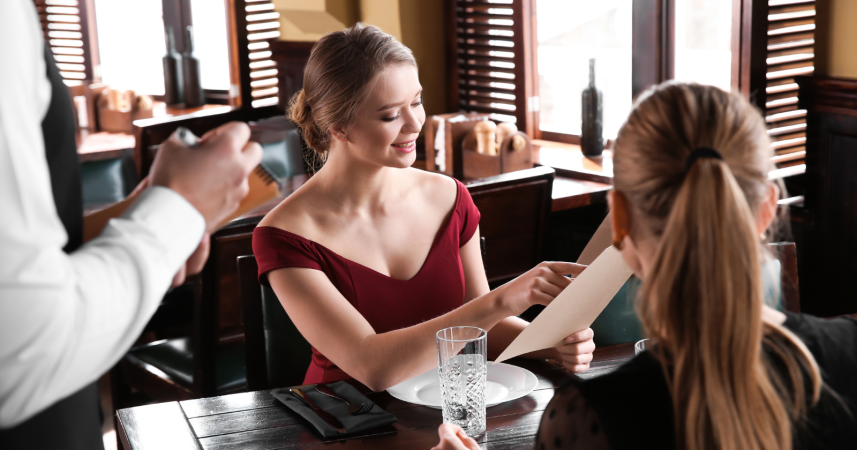
You've seen it happen. The server hands over the wine list, and suddenly someone at the table looks like they've been asked to defuse a bomb. They flip through pages nervously, their eyes widening at prices, desperately searching for something, anything, they recognize.
Here's what regulars know: you don't need to be a sommelier. When I lived in Bangkok, I watched wealthy businesspeople handle wine lists at five-star hotels every week. They'd simply tell the sommelier their price range and what they were eating. That's it.
The real pros? They'll say something like "We're looking for something around $80 that pairs well with seafood." The sommelier does the rest. No need to pretend you know the difference between a 2018 and 2019 Burgundy.
2) They treat servers like they're invisible (or like best friends)
There's this weird thing that happens when people feel out of place. They either become overly formal and barely acknowledge the staff, or they swing the opposite way and try to become instant buddies with their server.
I've watched people ignore servers mid-sentence to continue their conversation. I've also seen guests launch into their entire life story when asked how their evening is going.
Regular fine diners? They treat service staff like the professionals they are. Polite, friendly, but not overly familiar. A simple "thank you" when they pour your water. Eye contact when ordering. Basic human respect without the awkward extremes.
3) They photograph everything (with flash)
Look, I get it. When you're paying serious money for a meal, you want to document it. But nothing screams "special occasion" quite like someone standing up to get the perfect overhead shot of their appetizer while the flash blinds half the dining room.
During my years in fine dining, I watched this evolution happen. First came the discrete photos. Then the flash photography. Then people literally rearranging table settings for the 'gram.
Want to take photos? Go ahead. But keep it subtle. No flash. Don't make other diners wait while you stage your salmon. And definitely don't ask your server to take multiple shots of your table "for the lighting."
4) They order before everyone else is ready
This one's subtle but so obvious once you know it. The server asks if you're ready to order. One person immediately launches into their selection while everyone else is still buried in their menus.
Experienced diners have this unspoken choreography down. They'll make eye contact around the table, confirm everyone's ready, then one person (usually whoever made the reservation) indicates to the server that they're ready to order as a group.
It's the difference between a synchronized swim routine and someone doing cannonballs while everyone else is still putting on sunscreen.
5) They mishandle the napkin situation
The napkin tells a story. Leave it crumpled on the table when you go to the bathroom? Dead giveaway. Tuck it into your collar? Unless you're eating lobster, that's another tell.
Here's what I learned working in those restaurants: napkin goes on your lap when you sit down. If you leave the table temporarily, place it on your chair. When you're done with the meal, loosely fold it and place it to the left of your plate.
Sounds ridiculous? Maybe. But these little rituals are part of what you're paying for in fine dining. It's theater, and everyone has a role.
6) They get confused by the cutlery
Three forks. Two knives. A spoon that might be for soup but could be for dessert. Suddenly, eating becomes a multiple-choice exam.
I'll let you in on a secret from my time in the industry: work from the outside in. That's it. The fork farthest from your plate is for your first course. The whole intimidating spread becomes manageable when you realize it's just a roadmap for your meal.
Watched a guy at my weekly poker game tell us about using the wrong fork at a business dinner and spending the rest of the meal trying to figure out if everyone noticed. They probably did. But honestly? No one really cares as much as you think they do.
7) They don't understand the pacing
Casual dining has trained us for efficiency. Order, eat, pay, leave. Maybe 45 minutes total. Fine dining operates on a different timeline.
Newcomers often seem uncomfortable with the pace. They'll flag down servers asking where their food is after fifteen minutes. They'll try to order everything at once. They'll ask for the check while other people at their table are still eating.
The rhythm of fine dining is intentionally slower. Courses are spaced out. You're meant to converse, sip wine, enjoy the atmosphere. It's not about filling your stomach and leaving; it's about the experience.
8) They're overwhelmed by the menu
"What's a gastrique?" "Is burrata a type of cheese?" "Why doesn't it say what comes with the steak?"
Fine dining menus can read like poetry written in another language. Inexperienced diners often spend the entire meal stressed about what they're ordering, afraid to ask questions, worried they'll pronounce something wrong.
Regular patrons? They ask. Without embarrassment. "How is the duck prepared?" "What would you recommend between these two?" Your server expects these questions. They want you to enjoy your meal, not suffer through a guessing game.
9) They don't know when to leave
Finally, there's the lingering question of when to go. Some people bolt the second they sign the check. Others camp out for hours, unaware that their table has been needed for the next reservation since twenty minutes ago.
Fine dining has a rhythm here too. After dessert, you might be offered coffee or digestifs. This is your wind-down period. Once you've paid, you can certainly sit for a few more minutes to finish your conversation. But when you see servers resetting every table around you, that's your cue.
Final thoughts
Here's what took me years to learn: none of this really matters as much as you think it does.
Sure, knowing these unwritten rules can help you feel more comfortable in upscale restaurants. But I've seen millionaires eat with the wrong fork and nobody batted an eye. I've watched CEOs mispronounce wine names and still have fantastic meals.
The real secret? Confidence and courtesy go further than perfect etiquette ever will. Be polite to your server. Don't be afraid to ask questions. Enjoy the experience instead of stressing about the rules.
After all, even those of us who worked in fine dining for years still occasionally grab the wrong fork. The difference is, we've learned to laugh about it.
What’s Your Plant-Powered Archetype?
Ever wonder what your everyday habits say about your deeper purpose—and how they ripple out to impact the planet?
This 90-second quiz reveals the plant-powered role you’re here to play, and the tiny shift that makes it even more powerful.
12 fun questions. Instant results. Surprisingly accurate.