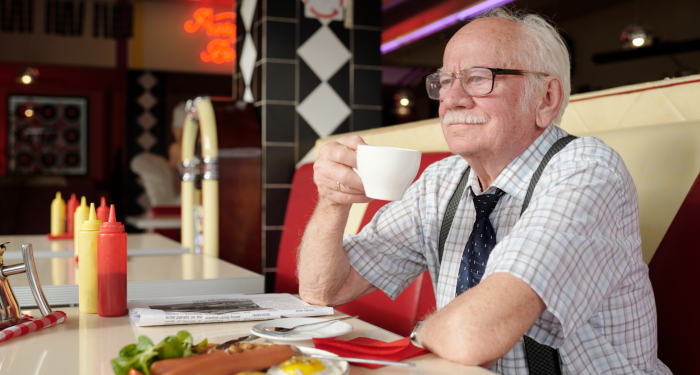
Good diners tend to get better service. Not because servers play favorites, but because respect creates ease. And ease makes everything smoother.
I spent most of my 20s in luxury food and beverage.
White tablecloths. Tasting menus. Wine pairings that cost more than my rent at the time.
And while every generation has its quirks, there’s a specific set of restaurant habits that tend to show up again and again with older diners.
Before anyone gets defensive, this isn’t about age.
I’ve met incredible, kind, generous Boomers who make a server’s night.
This is about behaviors.
And behaviors can be unlearned.
If you’ve ever wondered why service sometimes feels… colder than expected, this list might explain it.
Let’s get into it.
1) They treat the menu like a legal document
Have you ever watched someone interrogate a menu like they’re cross-examining a witness?
“What exactly does ‘pan-seared’ mean?”
“Is the sauce on top or underneath?”
“How big is the plate compared to last year?”
Menus are meant to guide, not overwhelm.
When every line item turns into a ten-minute Q&A, it slows the entire dining room down.
Servers usually know the food well.
They don’t always know how this dish compares to something you had in 1998.
There’s a difference between curiosity and over-analysis.
One makes service smoother.
The other makes everyone tense.
2) They snap, wave, or call out for attention
This one hurts to watch.
Snapping fingers. Waving arms. Calling out “young man” or “miss” across the dining room.
In hospitality, eye contact is currency.
Servers are trained to scan their sections constantly.
If you need something, a look or a slight hand raise works just fine.
When someone snaps, it doesn’t make service faster.
It just signals impatience.
And patience is one of the unspoken agreements of dining out.
3) They insist on customizing everything
Swapping sides. Removing ingredients. Adding sauces.
Asking for things that aren’t on the menu.
Some modifications are totally reasonable.
Allergies, dietary needs, or genuine preferences deserve respect.
But when a dish becomes a build-your-own project, it creates friction in the kitchen.
Most menus are designed intentionally.
Balance, flavor, timing, and plating all matter.
When too many changes come in, mistakes happen.
Then frustration follows.
Ironically, the more control someone tries to exert, the less enjoyable the experience usually becomes.
4) They compare everything to “how it used to be”
“This isn’t how they made it back in the day.”
“Restaurants don’t do things properly anymore.”
“Portions used to be bigger.”
Nostalgia is powerful. I get it.
But kitchens evolve. Ingredients change. Costs shift. Techniques improve.
Holding every meal up against a memory from decades ago sets the experience up to fail before the food even arrives.
The best meals happen when you meet the restaurant where it is, not where it was in your head.
5) They camp at the table long after paying
There’s enjoying a conversation, and then there’s turning a table into a personal lounge.
When a restaurant is busy, lingering for 30 to 60 minutes after paying has a ripple effect.
Servers lose potential income.
Hosts struggle with waitlists.
The flow of service breaks down.
No one wants to rush guests.
But awareness goes a long way.
If you’re done eating and drinking and the place is packed, it might be time to continue the conversation elsewhere.
6) They lecture servers about how things should be done
This one usually starts with “I’ve been coming to restaurants longer than you’ve been alive.”
Advice is great when it’s asked for.
Unsolicited lectures rarely land well.
Most servers are professionals.
Many have trained for years.
Some are working toward other goals while still taking their job seriously.
Talking down to someone because of their role says more about the speaker than the listener.
Respect is the foundation of good service on both sides of the table.
7) They get frustrated with modern payment systems
Tap to pay. QR codes. Digital receipts.
For some diners, this feels unnecessary or confusing.
And that’s understandable.
But technology isn’t a personal attack.
It’s usually there to make things faster and more accurate.
When frustration gets directed at the server, it creates tension where none needs to exist.
A calm question works better than an irritated comment. Every time.
8) They tip based on arbitrary rules from decades ago
“I don’t tip on tax.”
“I only tip if the server really earned it.”
“This is generous where I’m from.”
Tipping culture is messy. I won’t pretend it isn’t.
But using outdated or personal rules often means servers get penalized for things outside their control.
Kitchen delays. Policy changes. Staffing shortages.
If service was genuinely poor, that’s one thing.
But if the experience was solid, tipping accordingly keeps the system fair.
Like it or not, tips are still a major part of a server’s income.
9) They forget that restaurants are shared spaces
Finally, this is the big one.
Talking loudly on speakerphone.
Rearranging tables without asking.
Making offhand comments about other guests or staff.
Restaurants are communal environments.
Everyone is there for an experience, not just their own.
A little spatial and social awareness goes a long way.
When diners remember that they’re part of a shared atmosphere, everything improves.
Noise levels. Mood. Service quality.
It’s the difference between taking up space and sharing it.
The bottom line
Dining out isn’t just about food.
It’s about relationships, energy, and mutual respect.
Most servers don’t expect perfection.
They expect basic courtesy.
If this list stings a little, that’s not a bad thing.
Self-awareness is one of the most underrated personal development tools we have.
Good diners tend to get better service.
Not because servers play favorites, but because respect creates ease.
And ease makes everything smoother.
Next time you sit down at a restaurant, try this simple question:
“How can I make this interaction easier for the people serving me?”
The answer usually leads to a better meal.
And a better experience for everyone involved.
What’s Your Plant-Powered Archetype?
Ever wonder what your everyday habits say about your deeper purpose—and how they ripple out to impact the planet?
This 90-second quiz reveals the plant-powered role you’re here to play, and the tiny shift that makes it even more powerful.
12 fun questions. Instant results. Surprisingly accurate.