From changing tires to balancing checkbooks by hand, a veteran teacher reveals the surprising everyday abilities that separate generations—and why losing them might cost us more than convenience.

Add VegOut to your Google News feed. 
Last week, I watched my neighbor's twenty-something son stand helplessly in front of a flat tire, phone dead, waiting for AAA while his father changed the other three cars' tires in the time it took for help to arrive.
It struck me then, watching this generational divide play out in real time, how many essential life skills have quietly disappeared from younger generations' toolkits.
I'm not talking about outdated abilities like using a rotary phone or programming a VCR. These are fundamental skills that create independence, build character, and quite frankly, make life richer.
After three decades teaching high school and now watching my own grandchildren navigate adulthood, I've noticed patterns in what's been lost in our rush toward digital convenience.
1) Balance a checkbook by hand
Do you know exactly how much money you have right now, without checking an app? I reconcile my bank statement manually every month, a ritual I've maintained since 1970. My grandchildren watch in bewilderment as I use a calculator and pen, cross-referencing receipts I keep in an envelope.
During my years as a single mother raising two children on a teacher's salary, knowing exactly where every penny went meant the difference between making rent or not. I learned that automation breeds complacency.
When you write every transaction by hand, you feel the weight of money leaving. My daughter once overdrew her account by $400 because she "thought the app updated in real-time." The skill isn't just math; it's mindfulness about money.
2) Write a thank-you note that actually means something
I keep a drawer of quality stationery and real stamps, not for nostalgia but for necessity. After 32 years of teaching, I know the power of a handwritten note. When my second husband died, I received 147 sympathy cards and responded to each one personally.
My grandchildren text "thx" for birthday gifts. I taught them to write three sentences: Acknowledge the specific gift, share how you'll use it, and express genuine gratitude.
They think it's outdated until I show them how my former students still treasure notes I wrote decades ago. Real gratitude requires real effort.
3) Have a difficult conversation without texting
When I needed to tell my son I couldn't afford his college tuition, I sat across from him at the kitchen table. When my daughter's postpartum depression worried me, I drove three hours to have the conversation face-to-face.
Today's young people break up via text, quit jobs via email, and express anger through selective emoji use. I learned through my divorce, through caring for dying parents, through my husband's Parkinson's diagnosis, that hard conversations require presence.
You need to see tears, hear voice breaks, offer physical comfort. Digital distance is cowardice disguised as convenience.
4) Mend things instead of replacing them
My sewing kit isn't quaint; it's revolutionary. I darn socks, patch jeans, replace buttons, take in seams. My mother taught me that everything could be fixed with patience and skill. When my granddaughter ripped her favorite dress, she wanted to order a new one online.
Instead, I taught her to make the repair beautiful with embroidered flowers over the tear.
During those lean single-mother years, mending wasn't just economical. It taught my children that broken doesn't mean worthless. I can reupholster furniture, repair window screens, and fix a running toilet.
YouTube tutorials can't teach the satisfaction of restoration.
5) Make a meal from whatever's available
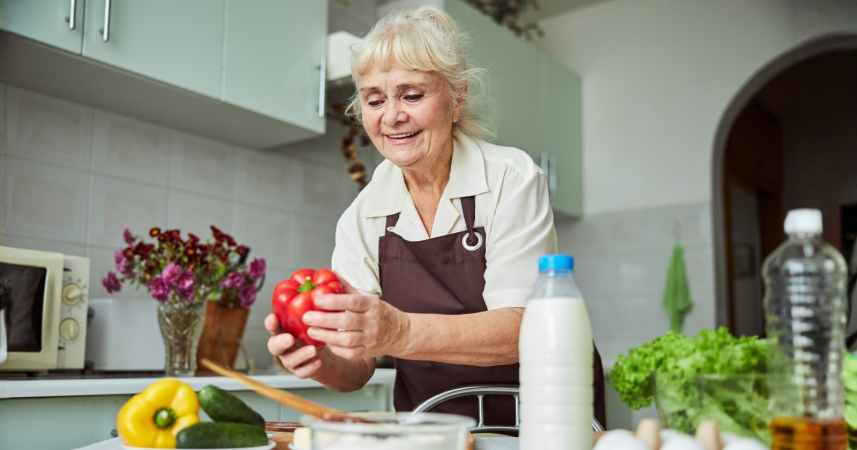
"There's nothing to eat" means something very different to me than to my grandchildren. I don't need a recipe or a grocery run to create dinner. My Monday soup tradition uses whatever needs using: Wilted vegetables, leftover rice, that last bit of pasta.
During the years we relied on food stamps, I learned that cooking from scratch wasn't just cheaper but creative. Young people today panic without specific ingredients, unable to substitute or improvise. I taught both my children to see a pantry not as individual items but as possibilities.
When my car broke down during a snowstorm and I couldn't shop for a week, I fed my family well from canned goods and creativity.
6) Navigate without GPS
Can you find your way home if your phone dies? I keep an atlas in my car and know how to read it. During my teaching years, I could get to any student's house using landmarks and memory.
My second husband proposed during a weekend we spent deliberately getting lost, finding our way with only a paper map.
My grandchildren can't imagine navigating without turn-by-turn directions. I taught them to notice the sun's position, to remember major roads, to pay attention to their surroundings. Getting lost taught me problem-solving. Now people panic when GPS fails, unable to read street signs or ask for directions.
7) Wait without entertainment
I can sit in a waiting room without a phone, stand in line without scrolling, ride a bus just thinking. During my husband's chemotherapy treatments, I learned that waiting is its own activity.
My grandchildren bring chargers everywhere, panicking at 20% battery. I discovered during my mother's battle with Alzheimer's that being present means being comfortable with stillness.
Those hours in hospital waiting rooms taught me to observe people, to sit with my thoughts, to find peace in pauses. The ability to be alone with yourself without distraction is becoming extinct.
8) Remember important information without digital help
What phone numbers do you know by heart? I know my Social Security number, my children's birthdates, my doctor's phone number, and at least twenty other phone numbers from memory.
During my teaching career, I memorized 150 students' names every September.
My grandchildren don't know their own parents' phone numbers. When my phone died during an emergency, I could still call my daughter from a payphone. I exercise my memory daily, not through apps but through use.
The backup isn't iCloud; it's my own mind. When the power goes out, when phones die, when systems fail, I still function.
9) Build community without social media
I know my neighbors' names, their children, their struggles. My weekly supper club, my church group, my widow's support circle all exist through actual presence.
When my husband was dying, neighbors brought meals without a meal-train app. When I needed help after knee surgery, friends organized themselves through phone calls and showing up.
My grandchildren have hundreds of "friends" online but no one to water their plants when they're gone. I learned through divorce, through single motherhood, through widowhood, that real community requires showing up, not logging on.
Final thoughts
These skills aren't about rejecting progress or romanticizing the past. They're about maintaining human capabilities that create resilience, deepen relationships, and build genuine confidence. Every generation loses something to gain something else.
But perhaps we should be more thoughtful about what we're willing to let go.
The next time technology fails you, ask yourself: Could you manage without it? The answer might inspire you to reclaim a few of these fading arts.