From asking for coffee refills in Bangkok to realizing that small talk with strangers marks you as irredeemably American, these everyday habits you've never questioned will suddenly make sense when you discover the rest of the world thinks you're completely insane for doing them.

Add VegOut to your Google News feed. 
The first time I ordered coffee in a Bangkok café, I held up the line for three minutes.
Not because of a language barrier – I was asking for "just a regular coffee, black" and the confused barista kept showing me different beans and brewing methods.
It took me embarrassingly long to realize that what I considered "regular" coffee was actually a very specific American thing.
That moment kicked off three years of daily discoveries about things I'd assumed were universal but were actually as American as apple pie.
Living in Thailand wasn't just a career break between my hospitality days and writing life; it became an education in how deeply American my worldview really was.
You know that feeling when you suddenly see something that was always there?
That's what leaving the U.S. does to your perspective.
After spending my twenties in New York's luxury F&B scene and then relocating to Southeast Asia, I collected enough of these moments to fill a book.
Here are the ones that hit me hardest – the everyday American things you don't even know are American until you're standing in a foreign country wondering why everyone's looking at you funny.
1) Free refills and bottomless everything
Remember that coffee incident?
It got worse when I asked for a refill.
The barista's expression suggested I'd asked to borrow his motorcycle.
Free refills on coffee, soda, and sometimes even fries are so standard in America that we don't think twice about camping out in a diner with unlimited coffee.
Try that in most other countries and you'll get a new check with every cup.
In Europe, they'll charge you for each tiny espresso.
In Asia, ordering multiple drinks means paying for multiple drinks – revolutionary concept, right?
The whole "bottomless" culture extends beyond drinks, too.
Those endless breadsticks at chain restaurants? Not a thing elsewhere.
All-you-can-eat buffets exist globally, sure, but the casual expectation that your $3 coffee comes with infinite refills? Pure Americana.
2) Ice in everything
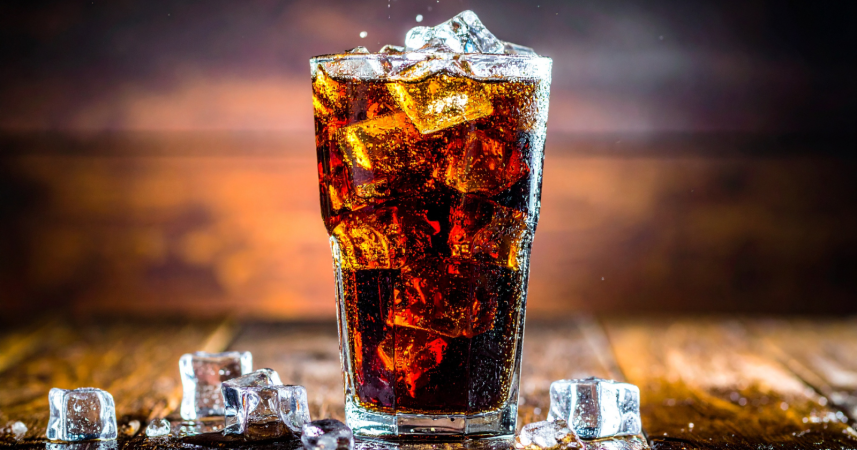
Want to instantly identify yourself as American abroad? Ask for extra ice.
In Bangkok's sweltering heat, you'd think ice would be everywhere. Nope.
My drinks came with maybe three cubes floating sadly at the top.
Asking for more ice became my daily crusade, met with confusion or mild annoyance depending on the establishment.
Europeans view our ice obsession as particularly bizarre.
Order a Coke in Paris, and you'll get it slightly chilled with no ice.
Request ice, and you might get two cubes if you're lucky.
Meanwhile, back home, we fill cups to the brim with ice before adding the actual drink.
We ice our water, our juice, our coffee – hell, we even created an entire beverage category around iced coffee that most of the world finds baffling.
The American ice industrial complex is real, and you don't appreciate it until you're sweating through a humid afternoon with a lukewarm beverage.
3) Small talk with strangers
During my first week in Bangkok, I tried striking up a conversation with someone waiting for the train.
You'd have thought I'd proposed marriage.
The polite but firm cold shoulder taught me quickly that chatting with strangers isn't a universal pastime.
Americans will talk to anyone about anything.
We'll discuss the weather with the person behind us in the grocery line, share life stories with our Uber driver, and somehow know our barista's college major by the third visit.
This isn't fake friendliness – we genuinely think this is normal human behavior.
Most other cultures find this absolutely exhausting.
In many Asian countries, bothering strangers with unnecessary conversation is considered rude.
Northern Europeans might actively avoid eye contact to avoid interaction.
That casual "Hey, how's your day going?" to a shop clerk? In most countries, they're wondering why you're asking about their personal life when you just came to buy toothpaste.
4) Driving everywhere
I learned to navigate Bangkok's public transport out of necessity, but it revolutionized how I thought about getting around.
You mean I don't need a car for literally everything?
Unless you're in New York City or a handful of other metros, American life assumes car ownership.
We drive to the gym that's half a mile away.
We drive to the corner store.
Some of us drive to get the mail at the end of the driveway.
Living abroad showed me how bizarre this looks to everyone else.
Most places have functional public transport, walkable neighborhoods, or at a minimum, a cultural acceptance of walking more than fifty feet.
In Bangkok, despite the infamous traffic, the combination of trains, buses, motorbike taxis, and actual walking meant car-free living was totally doable.
The American suburban design that requires a car for basic survival?
That's not normal city planning – it's a specific choice we made that most of the world finds utterly mystifying.
5) Tipping culture
Nothing prepared me for the awkwardness of trying to tip in countries where it's insulting.
After years in New York's restaurant scene, not tipping felt like theft.
But in Japan, leaving money on the table might have someone chasing you down to return it.
In Australia, rounding up is nice but not expected.
Our whole 20% standard (which keeps creeping up) is uniquely American.
We've built an entire wage system around the assumption that customers will voluntarily pay employees' salaries directly.
Try explaining that to someone from a country where workers just get paid a living wage by their employers – radical idea, I know.
The mental math, the social pressure, the guilt, the confusion about who to tip and how much – all of this is our special national burden that the rest of the world watches with bewilderment.
6) The size of everything
When I returned to Boston after three years away, my first grocery store visit gave me an actual anxiety attack.
The cereal aisle alone was longer than entire markets I'd shopped in abroad.
American portion sizes, car sizes, house sizes, and especially store sizes are absolutely bonkers by global standards.
That "small" soda that's 16 ounces? That's a large in most countries.
Our standard dinner plates are serving platters elsewhere.
The suburban American home with multiple bathrooms, a two-car garage, and a basement bigger than most international apartments? Not normal.
Those massive pickup trucks that have never seen a day of actual work? Other countries point and laugh.
We've supersized everything to the point where normal-sized things feel inadequate.
It's only when you spend years in places where a family of four happily lives in 700 square feet that you realize our space expectations have gone completely off the rails.
7) 24/7 availability
Sunday afternoon in Bangkok, everything's open.
Monday at 2 AM? You can still grab dinner, shop for clothes, or get a massage.
But here's the thing – this isn't the American version of 24/7.
We expect everything, all the time, delivered to our door if possible.
That Sunday Amazon delivery, the 3 AM DoorDash order, the round-the-clock customer service – this is our specific brand of instant gratification.
Other countries might have night markets or late-night food spots, but the American expectation that all services should be available whenever we want them? That's us.
Most European shops close by 6 PM and forget about Sunday shopping.
Latin American businesses shut down for long lunch breaks.
The idea that convenience should trump workers' personal time is a particularly American value we've exported, but that hasn't quite taken hold the way we practice it.
8) Optimism as a default setting
Finally, this might be the most American thing of all – our relentless, sometimes delusional optimism.
Living in Thailand during various political upheavals, economic uncertainties, and daily frustrations, I noticed locals had a different relationship with disappointment.
There was an acceptance, a philosophical shrug that said "this is how things are."
Meanwhile, I was constantly thinking about how to fix, improve, or overcome every obstacle.
Americans believe everything is fixable, that tomorrow will be better, that there's always a solution.
We're raised on "you can be anything" and "follow your dreams" to a degree that seems naive to much of the world.
Other cultures have a more realistic, sometimes fatalistic view of life's limitations.
This optimism drives innovation and ambition, sure, but it also makes us uniquely bad at accepting when things just suck and can't be immediately fixed.
That "everything happens for a reason" positivity? That's not universal wisdom – it's American coping mechanism.
Final thoughts
Coming back to America after three years in Southeast Asia was harder than leaving in the first place.
Reverse culture shock hit different because I was seeing my own country through foreign eyes.
These quirks aren't necessarily good or bad – they're just ours.
But recognizing them changed how I navigate the world.
I still ask for extra ice (some habits die hard), but I'm more aware that I'm asking for something specifically American.
Travel doesn't just show you new places; it holds up a mirror to your own cultural programming.
Those things you never questioned because everyone around you does them too?
They're not human nature – they're learned behaviors specific to your patch of earth.
Next time you're abroad, and something feels "wrong," ask yourself: is it actually wrong, or is it just not American?
The answer might surprise you.