Boomers aren’t trying to confuse anyone. They’re simply carrying habits shaped by a very different world, one that didn’t involve QR codes, mobile orders, digital wallets, or a thousand choices for everything.

Add VegOut to your Google News feed. 
I’ve always believed restaurants say a lot about how different generations see the world. Sit a boomer and their grandkid at the same table and you’ll witness two completely different approaches to the exact same experience.
And honestly, it’s kind of fascinating.
Part of it is cultural, part of it is psychological, and part of it is simply the habits we all pick up from the world we grew up in.
But when you put these differences side by side, you end up with moments that leave grandkids looking at their grandparents like they’ve just stepped out of a time capsule.
Here are eight classic boomer restaurant habits that tend to confuse the younger crowd every single time.
Let’s dive in.
1) Asking for everything instead of scanning the menu
Have you ever watched a boomer order like they’re negotiating with a vendor at a farmers’ market?
It usually starts with questions the menu already answers. What type of bread is the sandwich on? What size are the salads? How spicy is the spicy option?
Meanwhile, their grandkids are sitting there thinking, It literally says all of this right there.
But here’s the thing. Boomers grew up in an era where menus were vague and servers were the primary source of information. If you wanted to know something, you asked. You didn’t scroll, zoom, swipe, or scan anything.
To a teenager today, this feels like unnecessary effort. To a boomer, it’s just how ordering works.
2) Reusing napkins, packets, and anything else that isn’t nailed down
This one always cracks me up.
Boomers will wipe their hands, fold the napkin neatly, and place it beside their plate like it’s going to get graded. If there are extra sauce packets, they take them home. If the paper coasters are nice, those too.
But it’s not wastefulness or frugality in the modern sense. It’s the mindset they were raised with. You didn’t throw something away if it was still usable.
Grandkids, meanwhile, live in a world of endless refills, disposables, and everything-on-demand. Watching their grandparents carefully fold a napkin can feel like watching a ritual from a different century.
3) Treating servers like long lost cousins
I can’t tell you how many times I’ve seen a boomer strike up a full life-story conversation with the server before anyone has even opened a menu.
- What’s your major?
- Where are you from?
- How long have you been working here?
They mean well. They genuinely care. But kids today are often caught off guard by how much personal information their grandparents can extract over the course of one appetizer.
It’s not that younger generations are unfriendly. They just grew up with a different sense of boundaries. Social interaction now has layers. Boomers missed that whole transition.
So while teenagers are silently wishing the ground would swallow them during the fifth follow-up question, their grandparents are building rapport like it’s 1975.
4) Substitutions that feel like rewriting the entire menu
There’s a specific type of boomer confidence that shows up only when it’s time to order food.
It starts with something like, “I’ll have the veggie burger.”
Then comes the sentence that changes everything.
“But instead of the veggie patty, could you do grilled mushrooms? And instead of the bun, maybe a tortilla? And instead of fries, could you do a baked potato? Actually, no butter. And can you bring the toppings on the side?”
Grandkids are usually frozen in silence, unsure whether to laugh, hide, or take notes.
But boomers come from a time when customizing your meal didn’t require a user interface. You simply asked. And people usually made it happen.
To younger generations, though, this level of customization feels like a complex negotiation.
5) Splitting the bill with exact math
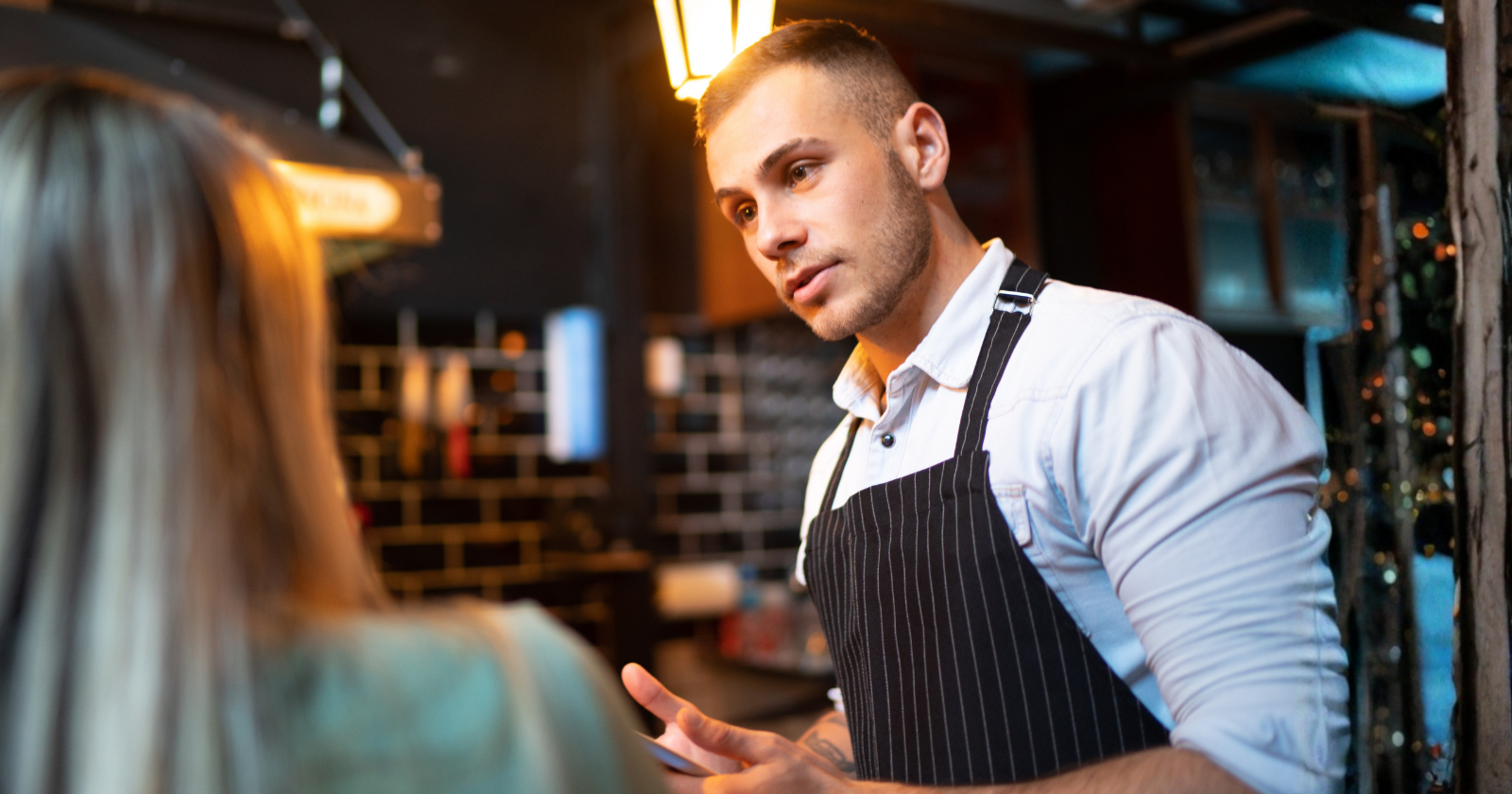
This is the one that confuses grandkids the most.
Boomers have an unshakable belief that restaurant bill splitting should resemble a finance exam. Every penny accounted for. Tax divided fairly. Tip recalculated. And heaven forbid one person ordered an extra drink.
Meanwhile, their grandkids are hovering over the bill saying, “Let’s just split it evenly,” or “I’ll Venmo you.”
Boomers don’t trust the concept of digital money floating through the ether. They trust exact math on scratch paper. They trust fairness they can physically see.
And honestly, I kind of admire that consistency.
6) Refusing to start eating until everyone is served
This one is oddly sweet but still confusing to younger people who grew up in a world where food photos take longer than actual meals.
Boomers won’t take a single bite until every plate has hit the table. Even if their soup is cooling by the second.
Grandkids do not understand this. They’re used to casual eating, shared small plates, snacking, and meals that don’t follow formal structure.
But for boomers, waiting is a sign of respect. You start together. Period. It’s a small ritual wrapped in manners, and even though it baffles younger kids, it reflects a kind of social rhythm that’s disappearing.
7) Commenting on the prices out loud
If the restaurant is even slightly pricier than expected, boomers will mention it. Out loud. Multiple times.
- “Twelve dollars for soup?”
- “Seventeen ninety five for a salad?”
- “I remember when this cost three bucks.”
Grandkids stare at their water glasses, pretending not to hear.
Part of this is nostalgia. Part of it is habit. And part of it is the very real financial calculus boomers learned growing up, where eating out was a treat, not something people did on a random Tuesday.
To younger generations, restaurant prices are normal. To boomers, they’re a permanent point of discussion.
8) Leaving cash on the table like it’s the final scene of a movie
Even in a restaurant with touchless payment, QR menus, and card readers at every corner, many boomers still prefer to leave tip money directly on the table.
Sometimes neatly tucked under a plate. Sometimes folded next to the salt shaker. Sometimes handed directly to the server with a firm handshake.
To their grandkids, cash might as well be ancient relic technology.
But boomers grew up trusting physical currency. They trust seeing money transferred in real time. And there’s a small emotional element to it too. A feeling of connection, gratitude, and intention.
It’s not just a tip. It’s a gesture.
The bottom line
Boomers aren’t trying to confuse anyone. They’re simply carrying habits shaped by a very different world, one that didn’t involve QR codes, mobile orders, digital wallets, or a thousand choices for everything.
If anything, their restaurant quirks tell a story about values. About connection. About caution. About tradition. About making the most of a moment.
And honestly, watching these generational differences play out in something as simple as ordering lunch is a reminder that change never stops. But neither does the humanity behind it.
What’s Your Plant-Powered Archetype?
Ever wonder what your everyday habits say about your deeper purpose—and how they ripple out to impact the planet?
This 90-second quiz reveals the plant-powered role you’re here to play, and the tiny shift that makes it even more powerful.
12 fun questions. Instant results. Surprisingly accurate.