From the perfectly timed "Oh, I wish I had your free time" to the classic "Good for you for trying that at your age," these seemingly sweet comments from fellow retirees pack a hidden punch that every neighborhood veteran knows all too well.

Add VegOut to your Google News feed. 
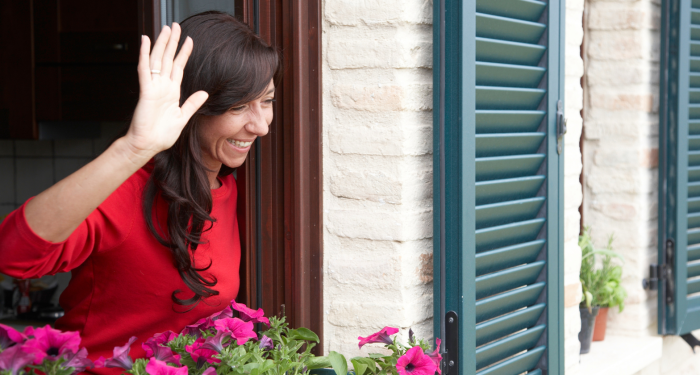
Picture this: You're watering your petunias on a perfectly pleasant Saturday morning when your neighbor strolls over, coffee mug in hand, and that particular smile stretched across their face.
You know the one.
It's the smile that makes your stomach tighten just a little because you sense what's coming.
"Oh, how nice that you're finally getting around to your garden," they say, their tone sweet as artificial sweetener.
"It was starting to look a bit... lived in."
After three decades of teaching teenagers, I thought I'd mastered the art of decoding passive-aggressive communication.
But retirement introduced me to a whole new arena: Neighborhood dynamics among my fellow boomers.
Let me tell you, some of my generation have turned the backhanded comment into an art form.
The thing about passive-aggressive comments is that they're designed to sting while maintaining plausible deniability.
They're wrapped in such pleasant packaging that if you react, suddenly you're the one being "too sensitive."
It's exhausting, really.
Yet, understanding these patterns can help us navigate them with more grace and less internal screaming.
1) "I wish I had time to relax like you do..."
This one usually comes when you're sitting on your porch reading or tending to your garden in the middle of a weekday.
The implication? That your retirement or different work schedule somehow makes your life less valuable or busy than theirs.
I heard this just last week while pruning my English roses.
My neighbor, still working full-time at 68, made this comment while literally watching me wrestle with thorny branches in 90-degree heat.
The irony wasn't lost on me.
What they don't see are the doctor appointments, the volunteer work, the care we provide for aging parents or grandchildren.
Our schedules might look different, but leisure isn't laziness and everyone's time has value regardless of employment status.
2) "Your house has such a cozy, lived-in look."
Translation: Your house looks messy or outdated.
This comment often comes during those impromptu visits where they catch you off-guard.
They'll glance around, taking in your comfortable chaos or dated decor, and deliver this gem with a smile that doesn't quite reach their eyes.
What strikes me about this particular comment is how it weaponizes the concept of home.
After my knee surgery last year, keeping up with housework became challenging.
But you know what? A home should look lived in.
It should show evidence of the life happening within its walls.
The stack of library books, the half-finished crossword puzzle, the photos covering every surface; these are proof of a life being fully lived.
3) "Good for you for trying something new at your age."
Whether you've taken up pickleball, joined a book club, or decided to learn Spanish, this comment manages to simultaneously patronize and age you in one fell swoop.
The underlying message? That somehow trying new things past 60 is brave rather than completely normal.
Recently, a friend from my supper club started taking dance lessons at 71.
When she mentioned it to a neighbor, she got this exact response, complete with a pat on the shoulder.
We spent our entire next dinner discussing how infantilizing it felt.
When did curiosity and growth become age-restricted activities?
The assumption that we should settle into some kind of stasis after retirement is wrong and harmful.
4) "It must be nice to afford that."
This one comes out whenever you mention a trip, a new purchase, or even a restaurant meal.
It's particularly sharp because it combines judgment about spending with assumptions about your financial situation.
They deliver it with that smile, but the subtext is clear: You're either showing off or being irresponsible.
Do you know what's interesting about this comment?
It often comes from people who have no actual knowledge of your financial situation.
Maybe you saved for months for that cruise, or you're using an inheritance from a loved one to finally see the world.
Maybe, just maybe, how you spend your money is nobody else's business.
The grief support group at church has taught me that everyone carries invisible burdens.
That trip might be healing a loss nobody knows about.
5) "I remember when I used to have energy like that..."
This gets deployed when you're active or enthusiastic about something.
The speaker is usually roughly your age or younger, and they're projecting their own relationship with aging onto you.
It's meant to remind you that you're supposed to be slowing down, that your energy is somehow surprising or temporary.
Last month, I spent an entire weekend double-digging new beds in my garden.
When my neighbor saw me hauling compost, she delivered this line with a wistful sigh.
She's 64, while I'm 68.
The difference? I've chosen to stay active despite my knee issues, modifying rather than stopping.
Energy is something we cultivate or let atrophy.
6) "You're so brave to wear that!"
Oh, this one.
Whether it's a bright color, a modern style, or simply something that shows your arms, this comment suggests you're violating some unspoken dress code for your age.
The "brave" is doing a lot of heavy lifting here, implying you're taking a risk by not dressing "appropriately."
Can we talk about how exhausting these fashion rules are? Who decided that reaching a certain age means surrendering to beige and baggy?
If I want to wear my purple sundress with the bold print, that's not brave, it's Tuesday.
The real bravery would be living your entire life according to other people's expectations.
7) "Your grandchildren must keep you busy."
This assumes that your primary identity and purpose revolve around grandchildren.
And if you don't have grandchildren? Prepare for the awkward silence followed by pity.
The comment diminishes everything else you might be doing with your life while reinforcing a narrow view of what gives meaning to older adults.
Yes, many of us adore our grandchildren when we have them, but we're also individuals with our own interests, goals, and contributions.
The assumption that grandparenting is or should be our main focus ignores the rich, complex lives we're leading.
8) "At least you're keeping yourself occupied..."
This might be the most dismissive of all.
Whatever you're doing, whether it's volunteering, working part-time, pursuing hobbies, or maintaining friendships, gets reduced to mere time-filling.
It suggests that without "real" work, you're just marking time.
The five women in my supper club are some of the busiest people I know.
Between volunteer work, caregiving, creative pursuits, and community involvement, we're living full and meaningful lives.
The condescension in this comment reveals more about the speaker's fear of aging than anything about our reality.
Final thoughts
After all these years, I've learned that passive-aggressive comments say more about the person making them than they do about us.
They're often rooted in fear, insecurity, or outdated beliefs about aging.
While we can't control what others say, we can control how we respond.
Sometimes that means setting boundaries, sometimes it means letting it roll off our backs, and sometimes it means responding with such genuine warmth that it completely disrupts their script.
The key is remembering that their words don't define our worth or our choices.
We get to decide what our lives look like, cozy houses, purple dresses, busy schedules and all.
If You Were a Healing Herb, Which Would You Be?
Each herb holds a unique kind of magic — soothing, awakening, grounding, or clarifying.
This 9-question quiz reveals the healing plant that mirrors your energy right now and what it says about your natural rhythm.
✨ Instant results. Deeply insightful.
Marlene Martin
Marlene is a retired high school English teacher and longtime writer who draws on decades of lived experience to explore personal development, relationships, resilience, and finding purpose in life’s second act. When she’s not at her laptop, she’s usually in the garden at dawn, baking Sunday bread, taking watercolor classes, playing piano, or volunteering at a local women’s shelter teaching life skills.
More Articles by Marlene