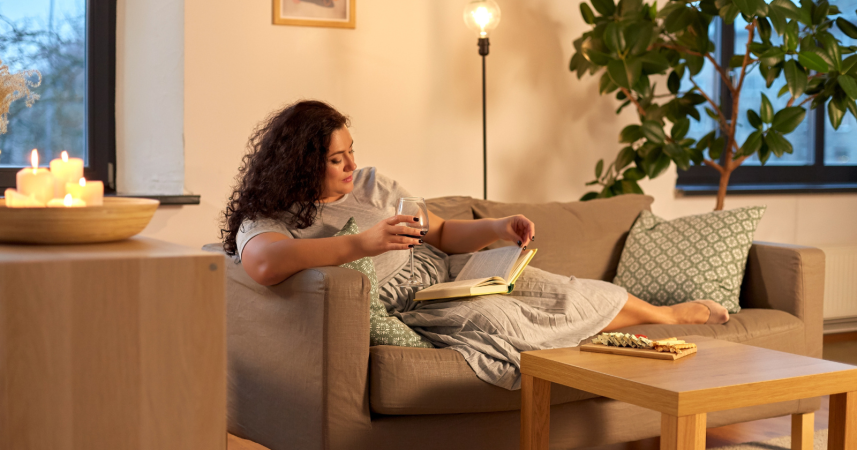
True style lives in the details. These eight subtle home upgrades, from lighting to textures, instantly make guests feel like they’ve stepped into a space curated by someone with impeccable taste, no designer budget required.
You can tell a lot about a person by their home. Not in a judgmental way, but in the sense that your space tells your story before you even open your mouth.
When people step into your place, they’re not consciously evaluating your taste—but they feel it. The lighting, the textures, the scent, even the way you serve water… it all sends a quiet signal.
The good news? You don’t need a million-dollar renovation to make your place feel refined. Small, intentional upgrades can make your home feel elevated, cohesive, and effortlessly stylish.
Here are little things that make a big impression.
1) Upgrade your lighting (and stop relying on the ceiling light)
Nothing screams “college apartment” like a single overhead light glaring down on everyone.
Lighting is one of those subtle details that separates a space that feels “fine” from one that feels like a boutique hotel lobby.
Try layering your lighting. Add a floor lamp in the corner, a small table lamp on a sideboard, maybe even a warm-toned bulb in a wall sconce.
I’m a huge fan of warm white light (2700K or lower) — it flatters skin tones, food, and furniture alike.
If you really want to impress, get a few dimmers or smart bulbs. They’re inexpensive and instantly create a vibe that says, this person has thought about ambiance.
When guests walk in and the lighting feels intentional, they might not know why your home feels so good — but they’ll feel it.
2) Frame your art like an adult
Art is personal. But framing is what turns it from “poster tacked to the wall” to “tastefully curated.”
You don’t need to spend hundreds at a gallery. In fact, some of the best pieces I’ve seen were inexpensive prints, postcards from travels, or even vintage cookbook pages displayed in minimalist frames.
Here’s the trick: use consistency. Black, white, or natural wood frames in similar tones create visual harmony. You can mix sizes, but keeping the palette tight makes everything look intentional.
Bonus tip: hang your art lower than you think. The center should be roughly at eye level (around 57 inches from the floor).
It’s a small adjustment that makes your walls look like they were arranged by someone with an eye for design.
3) Switch to real glassware and matching dinnerware
It’s funny how something as simple as glassware can elevate the entire experience of having guests over.
I once read in Danny Meyer’s Setting the Table that people notice details that make them feel cared for. Matching plates and glasses do exactly that.
You don’t need to be fancy — just coordinated. Ditch the mismatched mugs and random pint glasses from college events. Invest in a small set of matching wine glasses, decent water tumblers, and a simple dinnerware set.
Even casual meals feel more elevated when the tableware is cohesive. It’s the same principle chefs use in fine dining — the plate sets the stage for the meal.
4) Get your scent game right
Nothing creates a first impression like smell.
Ever walked into a friend’s home and thought, “Wow, it smells amazing in here”? That’s the power of scent memory — it lingers long after people leave.
Find a home scent that fits your vibe. Maybe it’s a candle with sandalwood and vanilla notes, or a diffuser with bergamot and cedar. Subtle is the keyword here. You want signature, not overpowering.
I keep a small candle on my coffee table and light it about 15 minutes before guests arrive. It’s one of those rituals that makes the whole place feel intentional, even if the sink is still drying from a quick clean-up.
5) Add greenery — real or fake (but high quality)
Plants are like instant mood lifters. They bring color, texture, and life to any room.
If you’ve got a green thumb, go for real ones — a fiddle-leaf fig or a snake plant can make a huge statement.
But if you’re prone to forgetting about watering, invest in a few realistic faux options. The key word being realistic.
The trick is to avoid the shiny, plastic-looking ones. Go for matte finishes and natural hues. A simple olive tree in a terracotta pot can do wonders.
Also, don’t underestimate fresh flowers. A single vase of tulips or eucalyptus branches on the table instantly tells guests, “I care about this space.”
6) Upgrade your textiles
Think about the textures your guests actually interact with — the couch throw, the hand towel in the bathroom, the rug underfoot.
Quality fabrics instantly elevate the experience of a room. Replace scratchy towels with soft, neutral ones. Swap out that worn-out bath mat for something plush. Layer a cozy throw blanket on the sofa.
I once stayed at a small Airbnb in Lisbon that nailed this — simple furniture, but the textiles were incredible.
Linen bedding, thick towels, and soft lighting. It felt high-end not because of the price tag, but because of the sensory experience.
Texture equals comfort. And comfort, in my opinion, is the most underrated form of luxury.
7) Curate your surfaces
Less is more — but not too little. A coffee table covered in clutter feels chaotic. One that’s completely empty feels sterile. The sweet spot is somewhere in between.
Here’s a simple formula: something with height (like a candle or vase), something flat (like a book or tray), and something personal (like a small sculpture, travel souvenir, or piece of nature).
Grouping items in threes tends to look more balanced to the eye.
And let’s talk books for a second. A few well-chosen coffee table books say a lot about you. They can be on food, design, photography — whatever reflects your interests. They make your space feel lived-in, not staged.
8) Pay attention to your entryway
Lastly, the first few seconds after someone walks into your home matter more than you think.
An inviting entryway — even a small one — sets the tone. A rug to define the space, a hook or small shelf for keys, maybe a framed print on the wall.
If you’ve got the room, a bench or stool adds a practical and aesthetic touch. It says, “Stay a while.”
And please — good lighting here too. A dim or overly harsh entryway light is an instant mood killer.
Your entryway doesn’t have to be grand; it just has to feel intentional. Guests notice effort, not square footage.
The bottom line
You don’t need a designer budget to create a home that feels sophisticated — you just need a designer mindset.
It’s all about thoughtfulness. Choosing things because they make you feel good, not because they’re trendy. Paying attention to the details most people overlook.
When I worked in hospitality, I learned that guests rarely remember the thread count of the sheets or the brand of the soap. What they remember is how the space made them feel.
Your home works the same way. Light that candle, fluff the pillows, and throw on a good playlist.
Because impeccable taste isn’t about impressing people — it’s about creating an atmosphere where everyone, including you, feels at ease.