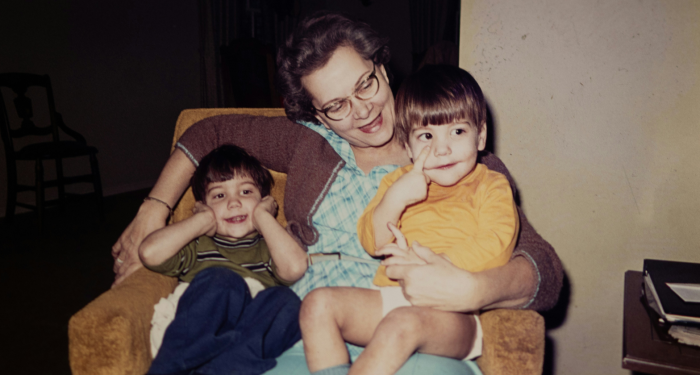
Some of the most valuable life skills were forged in friction, slowness, and limitation. They weren’t comfortable, but they shaped an entire generation.
I’ve been thinking about this a lot lately.
Partly because I’ve spent the last decade bouncing between kitchens, gyms, airports, and coworking spaces.
And partly because every time I talk to someone younger than me, I’m reminded just how fast the world changed.
The 1980s weren’t ancient history.
But they might as well be another planet.
No smartphones. No Google. No delivery apps.
No constant feedback loops telling you whether you’re doing life “right.”
People had to figure things out.
Slowly. Sometimes painfully.
And in the process, they picked up life skills that feel almost extinct today.
Let’s talk about eight of them.
1) Navigating without GPS
If you grew up in the 80s, you learned how to get lost. And more importantly, how to get un-lost.
Paper maps were a thing.
Asking for directions was normal.
You actually had to visualize where you were going instead of blindly following a blue dot.
I remember my dad pulling over at gas stations, unfolding a map that was larger than the hood of the car, and somehow knowing which direction was north.
That skill feels like witchcraft now.
But there was something powerful about it.
You paid attention. You noticed landmarks. You built a mental model of your environment.
Today, many of us can’t get across our own city without GPS telling us when to turn.
The moment the signal drops, panic sets in.
The old-school skill wasn’t about maps.
It was about orientation.
About being present enough to understand where you are in relation to where you want to go.
That applies to life more than we’d like to admit.
2) Being unreachable
Here’s a wild concept: not being available all the time.
In the 1980s, if someone wanted to reach you and you weren’t home, that was it.
They’d try again later.
Or they’d leave a message.
Or they’d just wait.
There was no expectation of instant replies.
No “hey?”
No “did you see my message?”
No anxiety spiral because someone watched your story but didn’t text back.
People learned how to sit with space.
That meant boredom. Silence. Waiting.
It also meant deeper focus.
When you were with someone, you were actually with them.
As someone who’s worked in hospitality, I think about this a lot.
The best meals, the best conversations, the best nights happen when phones disappear.
Gen Z grew up online.
That’s not a criticism, it’s just reality. But being constantly reachable changes how you think, how you rest, and how you relate to others.
The 80s taught people that absence isn’t a problem.
Sometimes, it’s the point.
3) Fixing things instead of replacing them
If something broke in the 1980s, your first instinct wasn’t to replace it.
Appliances lasted longer.
Clothes were repaired.
Shoes were resoled.
Cars were understood, not just driven.
You learned basic competence by default.
I see this mindset all the time in kitchens.
A great chef doesn’t throw away a dish because something went wrong.
They adjust. They troubleshoot. They adapt.
That mentality came from a time when replacing things was expensive and inconvenient.
So you learned patience. You learned problem-solving.
Today, the dominant move is to upgrade.
Phone slow? New phone.
Laptop glitchy? New laptop.
Relationship uncomfortable? New relationship.
The 80s skill wasn’t mechanical. It was psychological.
It taught people that effort often beats escape.
4) Talking to strangers without fear
Small talk wasn’t awkward. It was a life skill.
You talked to people at grocery stores. On planes. In waiting rooms.
You made eye contact.
You read social cues.
You learned how to hold a conversation without emojis doing the emotional labor for you.
This is one of those skills I didn’t fully appreciate until I worked in luxury food and beverage.
Hospitality is basically applied human psychology.
You learn quickly that confidence isn’t about being loud.
It’s about being comfortable engaging with someone you don’t know.
Gen Z is incredibly articulate online.
But many struggle with unstructured, face-to-face interaction.
There’s no script. No edit button. No safety net.
The 80s forced people to practice social friction daily.
And like lifting weights, it made them stronger over time.
5) Delayed gratification
 Waiting used to be normal.
You waited for photos to be developed.
You waited for your favorite song to come on the radio.
You waited for letters in the mail.
You waited to save up for things you wanted.
That waiting built tolerance for frustration.
It also built appreciation.
When something finally arrived, it mattered.
I’ve noticed this difference most clearly with food. A slow-cooked meal hits differently than something microwaved in three minutes.
Not because it’s fancy, but because effort changes perception.
Books like Atomic Habits and The Psychology of Money touch on this idea constantly.
The ability to delay gratification is one of the strongest predictors of long-term success.
The 1980s trained that muscle accidentally.
Today, convenience is incredible.
I love it.
But when everything is instant, patience becomes optional.
And optional skills tend to atrophy.
6) Entertaining yourself
No algorithm decided what you did next.
If you were bored, you figured it out.
You read. You went outside. You messed around with friends.
You listened to entire albums front to back.
You daydreamed.
That last one matters more than we think.
Some of my best ideas, both in business and writing, came from moments where nothing was happening.
No input. No notifications. Just space.
In the 80s, boredom wasn’t a failure. It was a feature.
Gen Z has infinite entertainment in their pocket.
That’s amazing.
It’s also dangerous if you never learn how to be alone with your thoughts.
The older skill was internal stimulation.
Learning how to generate interest instead of consuming it.
That’s a rare ability now.
And a valuable one.
7) Handling conflict face-to-face
You couldn’t mute someone in real life.
If you had an issue with someone, you dealt with it.
Awkwardly. Imperfectly. But directly.
No vague subtweets.
No disappearing.
No typing paragraphs and deleting them five times before sending.
You learned tone. Body language. Timing.
Conflict resolution is uncomfortable. It always has been.
But avoiding it doesn’t make it go away. It just stretches it out.
I’ve seen this play out in work environments, relationships, even gyms.
People who can address tension early almost always have better outcomes.
The 80s didn’t make people better communicators because they were wiser.
It made them better because they had fewer escape routes.
And finally…
8) Trusting yourself more than external validation
Lastly, and this might be the biggest one, people in the 1980s learned to trust their own judgment.
There were fewer opinions coming at you every day.
Fewer comparisons. Less pressure to perform publicly.
You made decisions.
You lived with the results. You adjusted.
Today, it’s easy to outsource your thinking.
Reviews tell you what to buy.
Likes tell you what matters.
Trends tell you who to be.
I’m not anti-tech. I grew up with it. I use it daily.
But there’s a quiet confidence that comes from not constantly checking whether you’re doing life correctly.
The 80s didn’t offer much guidance.
So people became their own reference point.
That skill is harder to develop now, but it’s still possible.
And it might be one of the most important ones of all.
The bottom line
Every generation gains something and loses something.
Gen Z is adaptable, informed, and globally aware in ways the 1980s couldn’t imagine.
But some of the older life skills came from friction, slowness, and limitation.
Those things weren’t comfortable.
But they were formative.
The good news?
You don’t need a time machine to relearn them.
You can put the phone down.
You can sit with boredom.
You can fix instead of replace.
You can talk to strangers.
You can trust yourself a little more.
Progress doesn’t mean abandoning everything that came before.
Sometimes it means choosing what’s still worth keeping.
And that’s a skill every generation needs to learn, sooner or later.
Just launched: Laughing in the Face of Chaos by Rudá Iandê
Exhausted from trying to hold it all together?
You show up. You smile. You say the right things. But under the surface, something’s tightening. Maybe you don’t want to “stay positive” anymore. Maybe you’re done pretending everything’s fine.
This book is your permission slip to stop performing. To understand chaos at its root and all of your emotional layers.
In Laughing in the Face of Chaos, Brazilian shaman Rudá Iandê brings over 30 years of deep, one-on-one work helping people untangle from the roles they’ve been stuck in—so they can return to something real. He exposes the quiet pressure to be good, be successful, be spiritual—and shows how freedom often lives on the other side of that pressure.
This isn’t a book about becoming your best self. It’s about becoming your real self.