
Before convenience took over, kids helped run the house. These eight old school chores built the kind of work ethic many don’t learn anymore.
Let’s be honest.
Every generation complains about the next one. Boomers said Gen X was lazy. Gen X said Millennials were entitled. Millennials now roast Gen Z for being “too sensitive” and refusing to tolerate toxic workplaces.
And most of that is just noise.
But when it comes to work ethic, Boomers really did grow up with something many Gen Z kids never had to deal with: constant responsibility baked into daily life.
Not because Boomers were tougher or better people.
Because the world was less convenient.
No meal kits. No Instacart. No robot vacuums. No dishwasher in every home. No smartphones to distract you through every boring task. No quick replacements for things that broke.
So kids helped, a lot. And those chores weren’t cute little “responsibility charts.” They were often essential to how the household ran.
I’m not saying Gen Z is lazy. I’ve worked with some incredibly sharp, motivated Gen Z people who are more disciplined than older coworkers.
But their childhoods often had fewer built-in opportunities to train that “do it anyway” muscle.
So here are eight household chores Boomers did as kids that quietly built grit, consistency, and a work ethic that later showed up in school, careers, and life.
1) Doing the dishes by hand
If you grew up with a dishwasher, you might not understand how brutal this used to be.
Boomer kids were often on dish duty every night. Not just rinsing a plate. Full-on kitchen cleanup.
Scrape. Soak. Wash. Rinse. Dry. Put away.
And if you didn’t do it, the whole house felt it. The kitchen stayed messy, the next meal was harder to cook, and the sink turned into a gross science experiment.
What did that build?
Consistency.
Hand washing dishes is repetitive, boring, and unavoidable. There’s no shortcut and no hack. You just do it because it needs to be done.
That’s basically adulthood in a nutshell.
In hospitality, I learned the same lesson early. A great kitchen runs on discipline, not vibes. No one says, “I don’t feel like cleaning the station today.”
You clean it because that’s the job.
Dishes taught that exact mindset early.
2) Hanging laundry outside to dry
Dryers weren’t always common. So laundry was a bigger process than most of us know.
Boomer kids often helped by carrying wet clothes outside, pinning them to the line, checking on them, and rushing to pull them back in when rain showed up.
It sounds simple, but it actually required planning and awareness.
You had to pay attention to the weather. You had to be on time. You had to finish what you started.
That trains a very underrated part of work ethic: forward thinking.
The adult world rewards people who anticipate problems before they become emergencies. Hanging laundry teaches that without a motivational speech.
It also teaches patience.
Clothes dry when they dry. You can’t force it.
3) Cooking from scratch for the family
A lot of Boomer kids weren’t raised on frozen meals. Many meals were cooked from basic ingredients, and kids helped.
Peeling potatoes. Chopping vegetables. Stirring sauces. Watching the stove. Setting the table. Cleaning up afterward.
Sometimes it wasn’t optional. It was “help out or dinner doesn’t happen.”
The main skill this builds is competence.
When you learn to cook from scratch, you learn how to create results using raw materials. That skill transfers into everything.
It’s why people who can cook often become better problem-solvers in general. They’re used to working with what they have.
I’ve spent a lot of time around great chefs. The best ones aren’t just creative. They’re calm under pressure.
They adapt quickly, manage timing, and keep standards high.
Helping cook as a kid is a miniature version of that training.
4) Mowing the lawn with a push mower
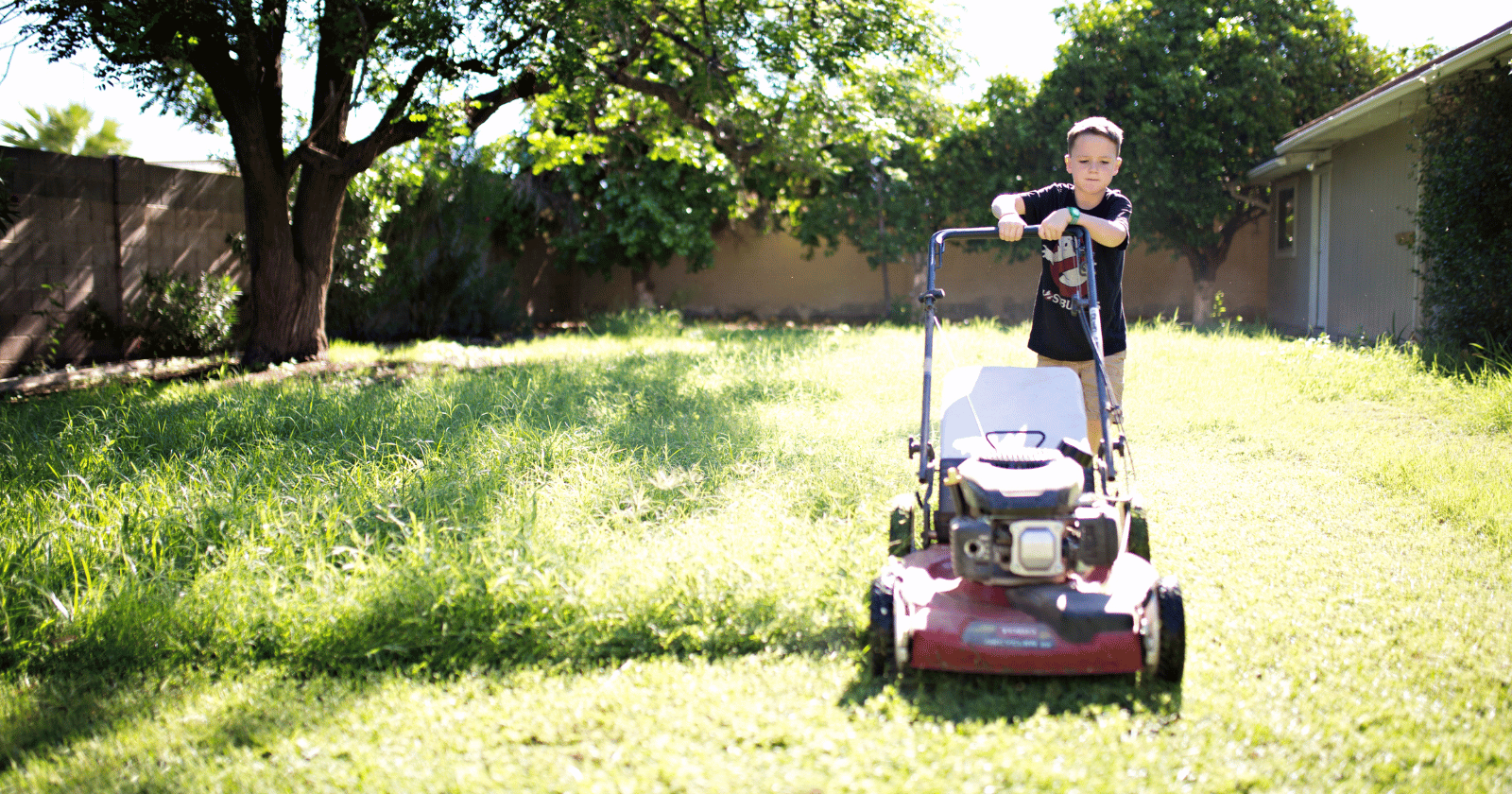
Not the self-propelled kind either.
A real push mower. The kind that felt like dragging a stubborn animal across the yard.
Boomer kids often had to mow lawns regularly, and it wasn’t a five-minute task. It took time, effort, and patience.
This chore built endurance.
It also taught something important: you don’t quit halfway.
With lawn mowing, you can’t leave it half done and call it progress. The yard looks terrible until the whole job is finished.
That’s a powerful lesson because so much of adult success is about finishing, not starting.
Anyone can start something.
Few people keep going when it gets boring.
5) Babysitting younger siblings constantly
Boomers didn’t grow up with the childcare options we have now. So older kids often became built-in babysitters.
Sometimes it was an occasional thing. Often it was daily.
And if you’ve ever watched kids, you know it forces you to grow up fast.
You learn to be patient because kids don’t care about your mood. You learn leadership because someone has to be in charge. You learn responsibility because things can go wrong quickly.
You also learn emotional control, because losing your temper makes everything worse.
Babysitting teaches accountability in a way few other chores do.
You can’t say, “I just didn’t feel like it today.” A younger sibling needs care whether you’re tired or not.
That kind of early responsibility can create a strong sense of duty that carries into work later in life.
6) Cleaning the house properly (not just picking up)
There’s a difference between tidying and cleaning.
Boomer kids were often expected to do deep cleaning. Scrubbing floors, wiping down surfaces, cleaning bathrooms, polishing furniture, washing windows, and dealing with the gross stuff.
And the funny part is: no one celebrates you for it.
You clean a bathroom and nobody throws you a party. The reward is simply that things don’t fall apart.
That’s why it builds work ethic.
It trains attention to detail. It trains discipline. It teaches you to take pride in your environment.
Most importantly, it teaches you to do things that won’t get applause.
A lot of adult success comes from doing unsexy work consistently.
The work no one sees. The work that prevents future problems.
Cleaning teaches that early.
7) Running errands without a phone or a car
Boomers did errands in a way that sounds wild now.
They walked or biked to the store. They carried groceries home. They went to the post office. They returned library books. They paid bills in person.
And they did it without GPS, without texting their parents for instructions, and without a phone to distract them.
This builds self-reliance.
There’s something powerful about learning you can navigate the world and complete tasks on your own.
It builds a quiet confidence that later becomes “I can figure this out” energy.
I’ve traveled a lot, and one thing I’ve noticed is that independence grows from small wins.
Every time you successfully handle something alone, your brain starts trusting you.
That trust becomes fuel for ambition.
8) Fixing things instead of replacing them
Here’s a massive difference between then and now.
Boomers grew up in a time when you didn’t replace things right away. You fixed them.
Boomer kids often learned basic repair skills through everyday life.
Patching clothes. Polishing shoes. Fixing bikes. Helping with tools. Gluing broken furniture.
Maintaining household items. It wasn’t a hobby. It was survival. And it built resourcefulness.
When you grow up fixing things, you start believing problems are solvable. You don’t panic the second something breaks.
You troubleshoot. You experiment. You keep going.
That mindset is at the heart of work ethic.
It’s not about grinding. It’s about being the kind of person who looks at a problem and thinks, “I’ll work it out.”
The bottom line
Boomers didn’t develop work ethic because they were morally superior.
They developed it because daily life demanded more effort, and kids were included in that effort early.
Their chores were often essential.
Not optional. Not “extra credit.” Just part of being in a household.
Gen Z grew up with more convenience, more technology, and often more support. That’s not a bad thing. It’s progress.
But progress also removes some of the built-in training opportunities that used to shape discipline.
Here’s the good news though: work ethic isn’t fixed. It’s a muscle you can train at any age.
If you want more of it, you don’t need to romanticize the past or pretend it was better.
You just need to take on small responsibilities consistently, especially the boring ones.
Cook more meals from scratch. Clean your space like you respect it. Fix something instead of replacing it.
Finish what you start even when it’s not fun.
Because work ethic isn’t about being tough.
It’s about being dependable.
And that’s something every generation can build.
If You Were a Healing Herb, Which Would You Be?
Each herb holds a unique kind of magic — soothing, awakening, grounding, or clarifying.
This 9-question quiz reveals the healing plant that mirrors your energy right now and what it says about your natural rhythm.
✨ Instant results. Deeply insightful.