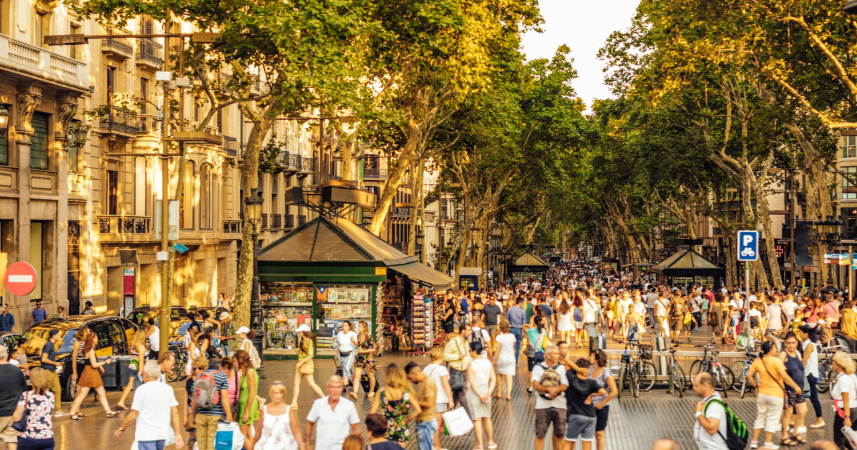
Once-hidden paradises where Boomers found enlightenment and empty beaches in the 80s have morphed into Instagram battlegrounds and concrete jungles, leaving travelers to wonder if there's anywhere left on Earth that hasn't been hashtagged to death.

Add VegOut to your Google News feed. 
Remember when travel meant discovering something real, not just recreating what you saw on Instagram?
I was having drinks with a friend's dad last month, and he pulled out these old photo albums from his trips in the 80s. Bali, Thailand, Cancun. The photos looked like they were from a different planet.
Empty beaches, local markets without a selfie stick in sight, genuine interactions with locals who weren't trying to sell you a "authentic experience" package for $200.
"You wouldn't recognize these places now," he said, and honestly, he was right. Having spent three years living in Thailand and traveled extensively throughout Southeast Asia, I've seen firsthand how mass tourism can transform a destination from paradise to theme park.
The 80s were this sweet spot for travel. Jet travel had become affordable enough that regular people could explore, but Instagram hadn't turned every beach into a photo shoot location. Boomers were out there discovering these incredible spots that had real character, real culture, real soul.
Now? Many of these same places have been loved to death. Here are eight destinations that were Boomer paradise in the 80s but have been completely transformed by the tourist tsunami.
1) Bali, Indonesia
In the 80s, Bali was the ultimate hippie haven. Surfers would disappear there for months, living in basic beach huts for a few dollars a day. The island had this magical quality where Hindu ceremonies happened organically in the streets, and rice terraces weren't ticketed attractions.
Today's Bali? It's basically Los Angeles with worse traffic. Seminyak is wall-to-wall boutique hotels and overpriced brunch spots serving $15 smoothie bowls. The famous rice terraces now have entrance fees and Instagram swing attractions that cost more than a local family makes in a week.
During my years in Bangkok, I'd meet travelers who'd just come from Bali. The stories were always the same: traffic jams that turned 10-minute trips into two-hour ordeals, beaches so packed you couldn't find a spot to lay your towel, and "traditional" ceremonies performed five times a day for tour groups.
The spiritual heart of the island hasn't completely disappeared, but you have to work hard to find it now, dodging the influencers and their ring lights along the way.
2) Cancun, Mexico
Here's something wild: Cancun was literally built from nothing in the 1970s. By the 80s, it had become this perfect balance of development and natural beauty. Manageable resorts, pristine beaches, easy access to Mayan ruins without the crowds.
I visit Mexico regularly for food research, and modern Cancun is everything wrong with mass tourism. Spring break has turned it into a year-round frat party. The hotel zone is a 14-mile strip of concrete and neon where a beer costs $12 and the closest thing to Mexican culture is the guy making guacamole tableside at Senior Frogs.
The beaches are eroding from overdevelopment. The reef is dying from sunscreen and boat traffic. And those Mayan ruins? Chichen Itza now gets 2.6 million visitors a year. You're literally shoulder-to-shoulder with other tourists trying to get that perfect pyramid shot.
3) Phuket, Thailand
Living in Thailand for three years gave me perspective on what Phuket used to be versus what it's become. Old-timers in Bangkok would tell me about the Phuket of the 80s: fishing villages, empty beaches, local seafood restaurants where the catch of the day was actually caught that day.
Patong Beach today is like if Times Square and Vegas had a baby and raised it on steroids. The famous Bangla Road is sensory assault of go-go bars, ping pong shows, and tourists haggling over fake designer goods. The beaches that were once pristine are now lined with jet ski operators who'll try to scam you for "damage" you didn't cause.
Maya Bay, made famous by "The Beach," had to be closed indefinitely because tourism literally killed it. That's not hyperbole. The coral died, the ecosystem collapsed, all because thousands of people a day wanted to see where Leonardo DiCaprio filmed a movie.
4) Santorini, Greece
The 80s photos of Santorini show what looks like a completely different island. White-washed buildings, blue domes, sure, but also locals actually living their lives, donkeys that were transportation not tourist props, and sunsets you could watch without 500 phones blocking your view.
Now it's a cruise ship disaster. Some days, five massive ships dock simultaneously, dumping 15,000 people onto an island with a local population of 15,000. The narrow streets of Oia become human traffic jams. Getting that famous blue dome photo requires waiting in line.
The traditional cave houses have been converted to Airbnbs that locals can't afford. The island's infrastructure is collapsing under the weight of tourism. They're literally running out of water because every hotel needs an infinity pool for Instagram.
5) Goa, India
Goa in the 80s was where Boomers went to find themselves. Portuguese colonial architecture, endless beaches, a laid-back vibe that made time seem optional. It was the end point of the hippie trail, where you could live on the beach for months without seeing another tourist.
Today's Goa is package tour central. Russian signs outnumber Hindi ones in some areas. The beaches are divided between party zones blasting EDM 24/7 and family resorts with kids' clubs and water slides. The famous flea markets sell the same mass-produced "handicrafts" you'll find in every tourist destination from Bali to Tulum.
Beach shacks that served fresh fish and cold beer have been replaced by beach clubs with minimum spends and reserved daybeds. The trance parties that defined 90s Goa have been commercialized into festivals with VIP sections and $20 cocktails.
6) Ko Samui, Thailand
During my time in Thailand, I heard endless stories about Ko Samui before the airport. In the 80s, getting there meant an overnight train and a sketchy ferry. The difficulty kept the masses away. Those who made the journey found coconut groves, empty beaches, and bungalows that cost less than a Bangkok taxi ride costs today.
The airport changed everything. Now it's Thailand's second-busiest island destination. Chaweng Beach is basically Phuket-lite with the same Irish pubs, girly bars, and overpriced seafood restaurants with pictures on the menu.
The Full Moon Party's evil twin offspring have spread across the island. Every night is some kind of party somewhere. The backpackers who made the island famous have been priced out by Russian oligarchs and Chinese tour groups.
7) Tulum, Mexico
Tulum in the 80s was where backpackers went when Cancun felt too commercial. Mayan ruins overlooking the Caribbean, empty beaches, cabanas without electricity. It was rustic, it was real, it was magical.
What happened to Tulum should be studied in tourism schools as a cautionary tale. It went from backpacker secret to influencer playground in record time. The beach road is now packed with boutique hotels charging $500 a night for the privilege of not having air conditioning (they call it "eco-chic").
The famous beach is divided into private sections for each hotel. The public areas are disasters of seaweed and garbage. Traffic is so bad they're building a train that will probably just bring more tourists. And those spiritual wellness retreats? A week of yoga and smoothies costs more than most Mexicans make in a year.
8) Barcelona, Spain
Finally, Barcelona. In the 80s, it was this undiscovered gem. Incredible architecture, amazing food, beaches, culture, and prices that made Paris look expensive. The 1992 Olympics put it on the map, and it's been downhill ever since.
During my annual Europe trips, I've watched Barcelona buckle under tourism. Las Ramblas is picked clean by pickpockets. The Gothic Quarter is Airbnb apartments and tourist trap restaurants serving "authentic" paella that would make a Valencian cry. Locals have been priced out of their own city.
The city literally had to ban tourist apartment rentals in certain neighborhoods because residents couldn't find places to live. Anti-tourism graffiti is everywhere. Locals spray tourists with water guns in protest. When the people who make a city special can't afford to live there anymore, what's left?
Final thoughts
Look, I'm not saying don't travel. Travel has shaped who I am, taught me more than any book ever could, and introduced me to incredible people and experiences. But there's a difference between traveling and consuming destinations like they're products.
These eight places were special because they were real. They had character, culture, authenticity. Mass tourism turned them into caricatures of themselves, theme parks designed to give tourists what they think they want rather than what made these places special in the first place.
Want to avoid contributing to the next paradise lost? Stay longer, go deeper, spend money with locals not international chains. Skip the famous spots for the unknown ones. Learn some of the language. Eat where locals eat, not where TripAdvisor tells you to.
The best travel experiences I've had, whether living in Bangkok or exploring hidden corners of Mexico, came from getting off the beaten path. The beaten path is beaten for a reason, and it's usually not worth the traffic.
What’s Your Plant-Powered Archetype?
Ever wonder what your everyday habits say about your deeper purpose—and how they ripple out to impact the planet?
This 90-second quiz reveals the plant-powered role you’re here to play, and the tiny shift that makes it even more powerful.
12 fun questions. Instant results. Surprisingly accurate.