Before sleek touchscreens and planned upgrades, appliances were built like tanks. Many 80s machines are still humming along in basements and kitchens, proving durability used to be the standard. Here are eight old school appliances that outlast most modern replacements.

Add VegOut to your Google News feed. 
There’s a special kind of pain that comes from buying a new appliance, only for it to start acting up a year later.
A weird noise. A mystery error code that forces you into a 2 a.m. YouTube rabbit hole.
And meanwhile, somewhere out there, an old machine from the 80s is still doing its job with zero drama.
I’m not saying everything was better back then. Plenty of modern appliances are smarter, more efficient, and more stylish.
But tougher? Not even close.
A lot of appliances today are built like phones. Sleek, sealed, and basically disposable. The older stuff was built like work gear. Heavy, simple, and made to survive.
And if you’re trying to live better, eat better, and build routines that actually stick, there’s something we can learn from that kind of design.
Let’s talk about eight appliances from the 80s that are still running, and why they keep outlasting what we buy today.
1) KitchenAid stand mixer
If you’ve ever used an older KitchenAid mixer, you know it immediately.
It’s heavy. It’s stable. It feels like a piece of industrial equipment that somehow ended up in your kitchen.
In one of my early luxury food jobs, we had a KitchenAid that was older than most of the staff. It had dents and scratches and it looked like it had seen things. The chef called it “the tank.”
We used it constantly. Bread dough, pastry, whipped cream, you name it. It never struggled. It never overheated. It never needed a “rest.”
The reason these mixers last is simple: strong motors, metal gears, and a build that wasn’t designed to be replaced every few years.
A lot of modern appliances look great, but they’re packed with parts that aren’t meant to be repaired. Older KitchenAids were built to be serviced and kept alive.
If you cook at home and want to eat better, a reliable mixer is one of the best tools you can own.
2) Cast-iron waffle maker
There are waffle makers, and then there are those old cast-iron monsters from the 80s.
They’re heavy. They’re simple. They don’t have a digital display or a fancy settings panel. They look like they belong in a cabin, or maybe in a medieval kitchen.
And they’re still running.
Why? Because they’re basically two slabs of iron with a hinge and a heating element. Not much can break.
No sensors. No plastic parts. No weak mechanisms.
Just heat, pressure, and patience.
And I love the patience part.
You can’t rush a cast-iron waffle maker. You have to wait. You have to keep an eye on it. You have to get good at the timing.
It’s the same with building healthy habits. The people who win long-term aren’t the ones chasing quick fixes.
They’re the ones willing to do things the slower way, the right way, the repeatable way.
3) Top-loading Whirlpool or Maytag washing machine
Not a kitchen appliance, but it absolutely deserves a spot here.
Because if you’ve ever dealt with a modern washing machine that throws error codes for no clear reason, you know how absurd it’s gotten.
Too much soap? Error. Too little soap? Error.
The machine senses “imbalance” and just gives up. Like it’s offended by your towels.
Meanwhile, those old top-loading Whirlpool and Maytag washers from the 80s are still sloshing along like unstoppable beasts.
They were built with mechanical timers, simple motors, and parts you could actually replace.
No Wi-Fi. No touchscreens. No smart features.
Just a machine that washes clothes.
And here’s why that matters in a self-development sense: unreliable stuff adds friction to your life.
The more time you waste dealing with failures and repairs, the less energy you have for the habits you actually care about. Cooking, working out, meal prepping, sleeping well, staying consistent.
A reliable machine gives you more brain space. And brain space is valuable.
4) Cuisinart food processor
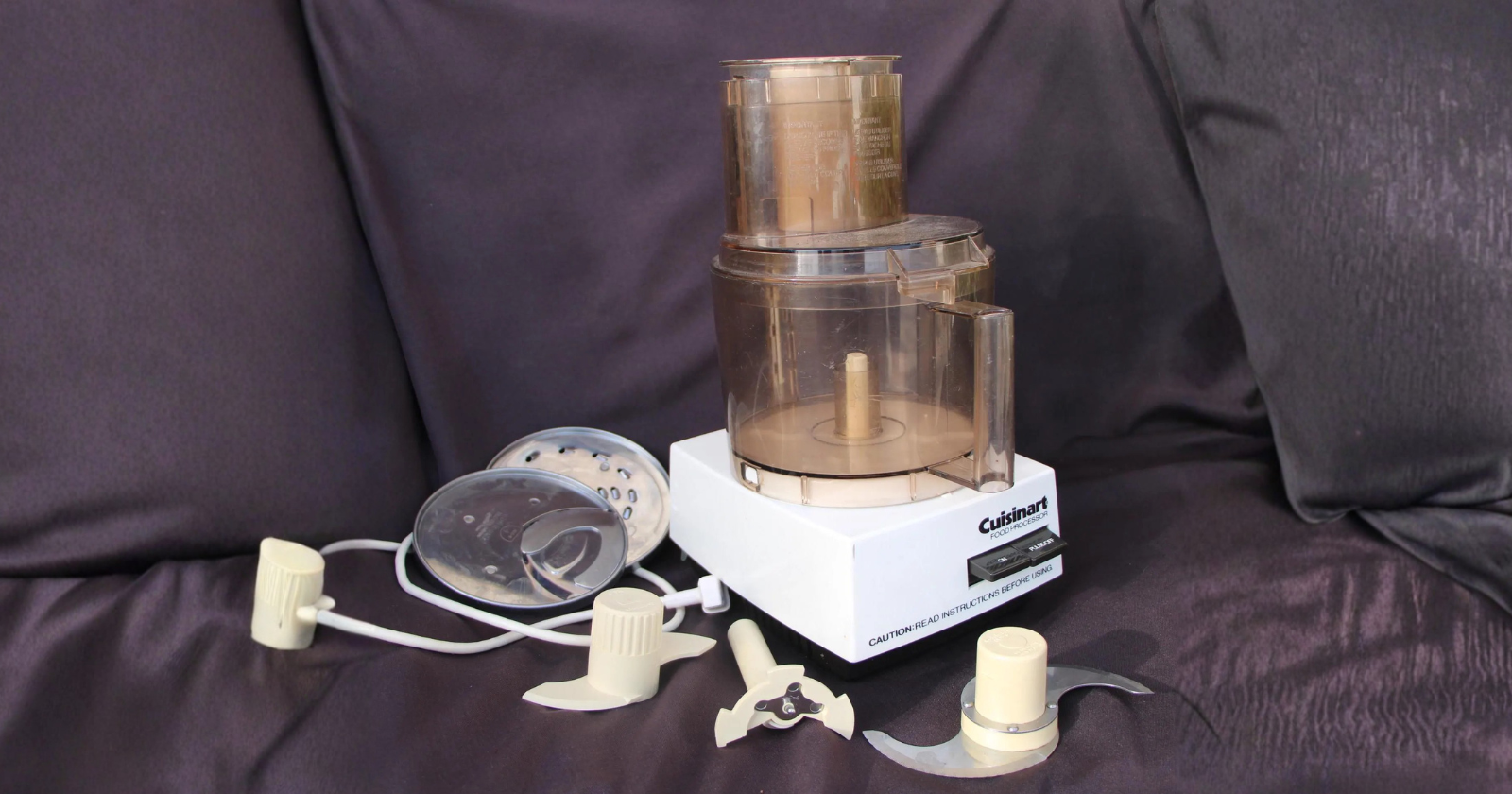
The classic Cuisinart food processors from the 80s are still all over the place, and they’re still powerful.
You can usually spot them instantly. Big buttons. Chunky build. A bowl that could survive being dropped off a counter and still keep going.
These things were made for heavy use, which makes sense because food processors are meant to save time.
And if you’re trying to eat better, time is everything.
A food processor makes healthy cooking faster and easier without forcing you to rely on ultra-processed “shortcut” foods.
You can make hummus in five minutes. Salsa in two. Pesto in three. Shred carrots for salads. Chop onions without crying. Blend sauces without buying bottled ones full of sugar and preservatives.
Modern food processors can still be great, but cheaper models often have weaker motors and flimsy parts. They work fine until you ask them to do anything challenging.
Old Cuisinarts were built with the assumption that you were going to use them constantly.
5) Kenmore refrigerator
If you grew up around an older Kenmore fridge, you probably remember the sound.
A steady hum. A click. A consistent rhythm.
Those fridges didn’t have ice dispensers that jam, screens that glitch, or panels that break. They weren’t designed to impress you.
They were designed to stay cold.
And a surprising number of them are still running decades later.
The secret is that they had fewer features, fewer failure points, and more durable compressors.
Modern fridges are more efficient, sure. But they’re also more complicated. And complexity creates more ways to break.
When a fridge breaks, it doesn’t just inconvenience you. It wastes food. It wastes money. It disrupts your eating routine.
And if you’re trying to stay consistent with how you eat, your fridge is one of your most important support systems.
Healthy eating becomes much easier when you can store fresh groceries and keep leftovers safely.
6) Electric can opener
It sounds boring until you’ve owned one of those modern can openers that dies after a year.
Older electric can openers were simple and strong. Metal gears, solid magnets, and motors that didn’t act like they were on their last breath every time you opened a can of chickpeas.
If you cook at home, you probably use canned ingredients more than you think.
Beans. Tomatoes. Coconut milk. Pumpkin. Tuna. Broth.
A reliable can opener feels like a minor detail until it stops working mid-cook, and now you’re trying to pry open a can like you’re auditioning for a survival show.
And again, it’s about friction.
Good habits fail when your environment makes them harder than they need to be. A tiny thing like a can opener can be the difference between making dinner and ordering takeout.
That’s why these simple, durable tools matter.
7) Vitamix blender
Before Vitamix became the blender of wellness influencers, it was a serious machine for serious people.
Smoothie bars used them. Restaurants used them. Health-conscious home cooks used them.
And the older ones? A lot of them still run today.
That’s the beauty of industrial-grade build quality. Powerful motor, durable blades, minimal nonsense.
If you’re trying to eat better, a blender like this makes healthy choices easier.
Smoothies become simple. Soups become smoother. Sauces become homemade. You can blend frozen fruit, greens, and seeds without the motor overheating.
And when a blender is weak, you stop using it. That’s the problem with so many modern appliances. They work just well enough to get your money, but not well enough to earn a permanent spot in your routine.
A good blender doesn’t just make food. It makes consistency easier.
8) Finally, Mr. Coffee drip machine
Finally, let’s talk coffee.
Not the fancy espresso machines with ten settings, Bluetooth, and a milk frother you never clean.
I’m talking about the old Mr. Coffee drip machines from the 80s. Simple. Reliable. Built like a little square robot with one job: make coffee.
These lasted because they were basic. Strong heating elements, simple switches, and fewer plastic parts that crack or loosen.
And there’s a bigger point here.
We’ve overcomplicated everything. Appliances. Routines. Diets. Even personal growth.
But the stuff that sticks usually isn’t complicated. It’s consistent.
A simple coffee machine that works every morning is a reminder that you don’t need perfection. You need reliability.
The bottom line
I’m not trying to argue that the 80s were some golden age where every appliance was perfect.
But when it comes to durability, the older stuff had a clear advantage.
It wasn’t designed to impress you for a week. It was designed to show up for you for decades.
And that’s a mindset worth stealing.
Because the best habits and routines work the same way.
They don’t rely on motivation. They don’t rely on novelty. They don’t require fancy tools.
They’re built solid, repeated often, and simple enough to keep going even when life gets messy.
Maybe the real lesson here isn’t just that appliances used to be tougher.
It’s that we should build our lives the same way.
Choose what lasts. Maintain what matters. And stop replacing things that only need a little care.
If You Were a Healing Herb, Which Would You Be?
Each herb holds a unique kind of magic — soothing, awakening, grounding, or clarifying.
This 9-question quiz reveals the healing plant that mirrors your energy right now and what it says about your natural rhythm.
✨ Instant results. Deeply insightful.

Adam Kelton
Adam Kelton is a writer and culinary professional with deep experience in luxury food and beverage. He began his career in fine-dining restaurants and boutique hotels, training under seasoned chefs and learning classical European technique, menu development, and service precision. He later managed small kitchen teams, coordinated wine programs, and designed seasonal tasting menus that balanced creativity with consistency.
After more than a decade in hospitality, Adam transitioned into private-chef work and food consulting. His clients have included executives, wellness retreats, and lifestyle brands looking to develop flavor-forward, plant-focused menus. He has also advised on recipe testing, product launches, and brand storytelling for food and beverage startups.
At VegOut, Adam brings this experience to his writing on personal development, entrepreneurship, relationships, and food culture. He connects lessons from the kitchen with principles of growth, discipline, and self-mastery.
Outside of work, Adam enjoys strength training, exploring food scenes around the world, and reading nonfiction about psychology, leadership, and creativity. He believes that excellence in cooking and in life comes from attention to detail, curiosity, and consistent practice.
More Articles by Adam