
Music in the 80s wasn’t background noise. It was identity. We used to save up allowance money for weeks just to buy one record. We didn’t skip tracks; we learned them by heart.
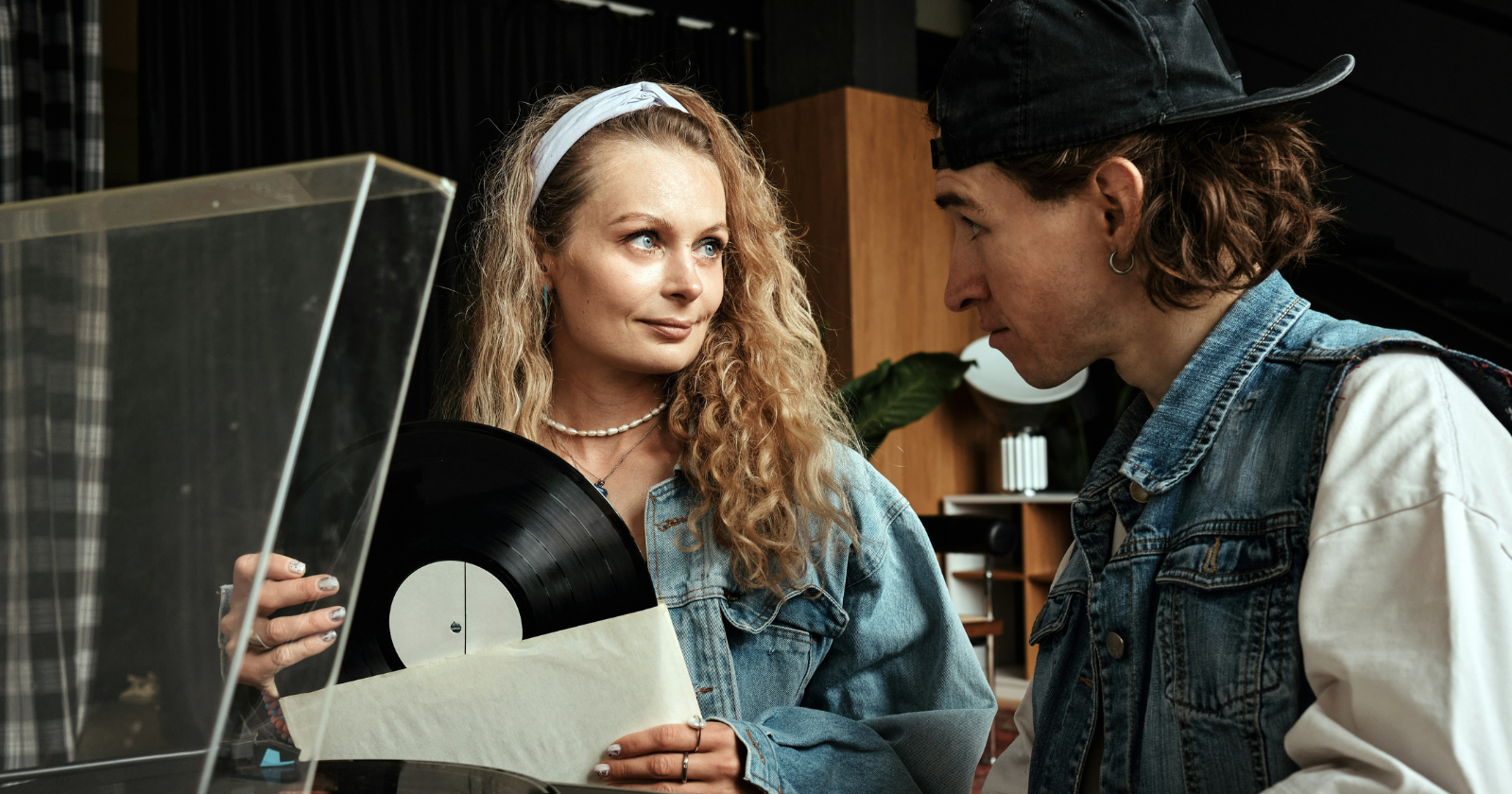
If you grew up in the 80s, you know what it felt like to hold music in your hands.
Vinyl, cassettes, maybe even those early CDs that skipped if you looked at them wrong.
You didn’t just listen to music. You committed to it. You sat cross-legged in front of a stereo, reading every lyric and liner note, rewinding a favorite song until the tape thinned out.
And even though streaming gives us everything instantly, it somehow gives us less. Less connection. Less patience. Less meaning.
Music back then felt like a ritual. Some albums from that decade still hold up better than anything we scroll through today.
Here are eight that defined the soundtrack of being a teenager in the 80s (and still sound timeless, even without an algorithm to push them your way).
1) Thriller (Michael Jackson)
Let’s start with the obvious.
There’s a reason Thriller became the best-selling album of all time. Every track is a masterclass in rhythm, storytelling, and production. Quincy Jones’ fingerprints are all over it, and the mix of funk, pop, and rock still feels alive today.
Songs like “Billie Jean” and “Beat It” didn’t just dominate radio; they shaped pop culture itself.
I remember hearing Thriller for the first time through giant foam headphones plugged into my cousin’s cassette player. We must have listened to “Wanna Be Startin’ Somethin’” three times in a row, trying to catch every sound layered into it.
No playlist can recreate that level of obsession.
Thriller wasn’t just music. It was an event.
2) The Joshua Tree (U2)
This album hits differently when you listen to it as an adult.
Back then, it felt massive. The soundscape, the emotion, Bono’s voice echoing like he was singing from the edge of the universe.
What really makes The Joshua Tree timeless is how honest it is. Songs like “I Still Haven’t Found What I’m Looking For” and “With or Without You” tap into something universal (our endless search for meaning, love, and belonging).
When I was traveling through the American Southwest a few years ago, I listened to this album while driving past miles of open desert. It was like hearing it for the first time again.
That mix of spiritual yearning and raw landscape is exactly what the band captured in 1987.
There’s nothing in today’s top charts that feels quite that sincere.
3) Purple Rain (Prince and The Revolution)
Nobody did it like Prince.
Purple Rain is what happens when genius, rebellion, and vulnerability collide in the same studio.
The guitar solo in the title track is still unmatched.
Prince blurred every line (between rock and funk, between masculinity and femininity, between art and performance). He made confidence look effortless.
What’s fascinating from a psychological perspective is how authenticity drives influence. Prince wasn’t trying to be anyone else, and that’s why people couldn’t stop watching him.
That lesson applies far beyond music. Whether it’s fashion, business, or creativity, the people who stand out are the ones who stop copying and start owning who they are.
Every spin of Purple Rain reminds us of that truth.
4) Born in the U.S.A. (Bruce Springsteen)
Springsteen wrote this album for the working class, but it ended up resonating with everyone.
It’s one of those records that sounds triumphant on the surface yet aches underneath. The title track gets mistaken for patriotism, but it’s really about disillusionment.
The Boss has always had a knack for packaging struggle inside an anthem.
“Dancing in the Dark” captures that restless energy of wanting more from life (that sense that something’s missing but you can’t quite name it).
That theme still feels relevant.
We live in a world overflowing with opportunity and distraction, yet people feel emptier than ever. Born in the U.S.A. reminds us that fulfillment doesn’t come from success alone; it comes from connection, meaning, and grit.
You can feel that in every guitar chord.
5) Like a Virgin (Madonna)
Madonna changed everything.
Before her, female pop stars were expected to be polished and palatable. She came along and rewrote the rules.
Like a Virgin wasn’t just catchy. It was controversial, playful, and unapologetic. She used sexuality as power, fashion as identity, and pop music as protest.
The 80s wouldn’t have been the same without her.
Madonna also understood branding before anyone used that word. Every outfit, video, and lyric was intentional. She knew how to provoke thought while selling millions of records.
Even today, in an era of curated Instagram personas, few artists have her level of control and vision.
Listening to Like a Virgin now feels like studying the blueprint of modern pop.
6) Hysteria (Def Leppard)
If you were an 80s teen, chances are you blasted Hysteria from your car stereo until the speakers crackled.
It was bold, loud, and packed with hits (“Pour Some Sugar on Me,” “Love Bites,” “Animal”).
The production took three years and nearly broke the band, but it paid off. Every note feels designed to fill an arena.
There’s something psychologically satisfying about that kind of sound (all precision and payoff). It’s engineered dopamine.
Def Leppard gave us one of the most polished rock albums ever made, and it still holds up today.
Put it next to a modern pop-rock track and you’ll hear the difference immediately. The 80s weren’t afraid of grandeur. They made music big enough to believe in.
7) The Queen Is Dead (The Smiths)
If Hysteria was loud confidence, The Queen Is Dead was introspective rebellion.
Morrissey’s lyrics were self-aware and poetic, equal parts melancholy and wit. Johnny Marr’s jangly guitar made sadness sound beautiful.
Every moody teen who ever wrote bad poetry in a notebook probably had this album on repeat.
Maybe that’s why it still matters. It spoke to the outsider, the overthinker, the person trying to figure out where they fit in.
I’ve mentioned this before, but there’s something powerful about nostalgia that isn’t just sentimental (it’s reflective). Revisiting old music helps us see who we were, who we’ve become, and what parts of ourselves we’ve kept hidden.
Listening to The Queen Is Dead today feels like flipping through an old journal. Uncomfortable, yes, but also grounding.
8) Appetite for Destruction (Guns N’ Roses)
The 80s had no shortage of loud, rebellious rock, but Appetite for Destruction was on another level.
It was raw, dangerous, and unapologetically real.
From the first riff of “Welcome to the Jungle” to the swagger of “Sweet Child O’ Mine,” the album captured chaos and charisma in equal measure.
Axl Rose’s voice and Slash’s guitar work created something that was both gritty and iconic.
This album reminds me of how rebellion used to sound. Not digital, not filtered, not auto-tuned. Just human imperfection turned into art.
That’s what makes it timeless.
In a world where most music is engineered for algorithms, Appetite for Destruction feels alive precisely because it’s flawed.
It’s messy, loud, and a little dangerous (like adolescence itself).
Final thoughts
Music in the 80s wasn’t background noise. It was identity.
We used to save up allowance money for weeks just to buy one record. We didn’t skip tracks; we learned them by heart.
That commitment (really listening and really feeling) made the experience unforgettable.
Streaming gives us everything, yet we engage with almost nothing deeply.
Maybe that’s why those 80s albums still sound better today. They were built to last, not to trend.
If you still have a record player or an old box of cassettes somewhere, pull them out this weekend.
Put on one of these albums.
Turn the volume up.
And remember what it felt like when music wasn’t just something we consumed, but something we lived.
If You Were a Healing Herb, Which Would You Be?
Each herb holds a unique kind of magic — soothing, awakening, grounding, or clarifying.
This 9-question quiz reveals the healing plant that mirrors your energy right now and what it says about your natural rhythm.
✨ Instant results. Deeply insightful.