These aren’t just driving skills. Patience, awareness, decisiveness, and respect for shared space show up everywhere else in life, too.
If you want a crash course in human behavior, skip the psychology books and spend 15 minutes in a grocery store parking lot.
Seriously.
Parking lots are where patience goes to die.
They are the modern coliseum.
A place where everyone thinks they’re right, no one is fully paying attention, and somehow a simple act like parking a car becomes a deeply personal test of character.
And look, before anyone sharpens their pitchforks, this isn’t about hating on an entire generation.
Every age group has its quirks.
But after years of driving, traveling, and spending more time than I’d like circling lots with a coffee going cold in the cup holder, I’ve noticed some very specific habits that tend to show up again and again.
If you’ve ever felt your blood pressure spike before you even made it into the store, there’s a good chance one of these was involved.
Let’s get into it.
1) Treating the parking lot like a scenic drive
Have you ever followed someone who seems to believe the parking lot is a place to relax, reflect, and maybe work through a few life decisions?
I’m not talking about cautious driving.
I’m talking about crawling along at a pace that suggests they’re sightseeing.
Ten miles under what already feels like a walking-speed limit.
Braking every few feet.
Pausing as if the asphalt itself might suddenly speak.
Meanwhile, there’s a line of cars behind them, engines idling, drivers doing that tight-lipped smile that says, “I am trying very hard to be a good person right now.”
I get it. Parking lots can be chaotic.
Pedestrians pop out of nowhere.
Carts roll freely like they’ve been possessed.
But there’s a difference between being careful and being completely unaware that other people exist.
In kitchens, we call this spatial awareness.
If you stopped in the middle of the pass during dinner service, you didn’t last long.
Parking lots work the same way.
Keep it moving when you can.
2) Stopping dead to decide everything
This one is a close cousin of the first, but it deserves its own spot.
You’re driving along, things are flowing, and then suddenly the car in front of you stops.
No turn signal. No clear reason. Just a full stop, right there in the lane.
Why?
They’re deciding where to park.
Not pulling into a spot. Not yielding. Just stopping to think.
Sometimes for a long time.
I’ve seen people sit there, blinker-less, scanning the horizon like they’re choosing a plot of land to build a home, not a place to leave their car for 20 minutes.
Here’s the thing.
Decisions are great.
Thoughtfulness is admirable.
But parking lots reward decisiveness.
If you miss a spot, you loop back. You don’t block traffic while you weigh the pros and cons of being three rows closer to the entrance.
In business, hesitation kills momentum.
In parking lots, it kills patience.
3) Taking forever to back out of a spot
I once had a manager who told me, “If you’re going to do something slowly, at least do it smoothly.”
That advice did not make it to the parking lot.
There’s a particular kind of reverse maneuver where the car inches back so slowly that you wonder if time itself has slowed down.
The reverse lights come on, and then nothing happens.
Then a tiny movement. Then a pause. Then another tiny movement.
All the while, cars stack up behind them like planes waiting for clearance.
Look, backing out can be tricky.
I’m not asking for Fast and Furious-level precision.
But at some point, you have to commit.
Check your mirrors, turn your head, and go.
This is especially painful when you’ve already stopped to let them out.
You’ve done the polite thing. You’re waiting. You’re invested now.
And the return on that investment is watching someone reverse at the speed of a loading bar stuck at 12 percent.
4) Leaving the car in the lane while doing something else
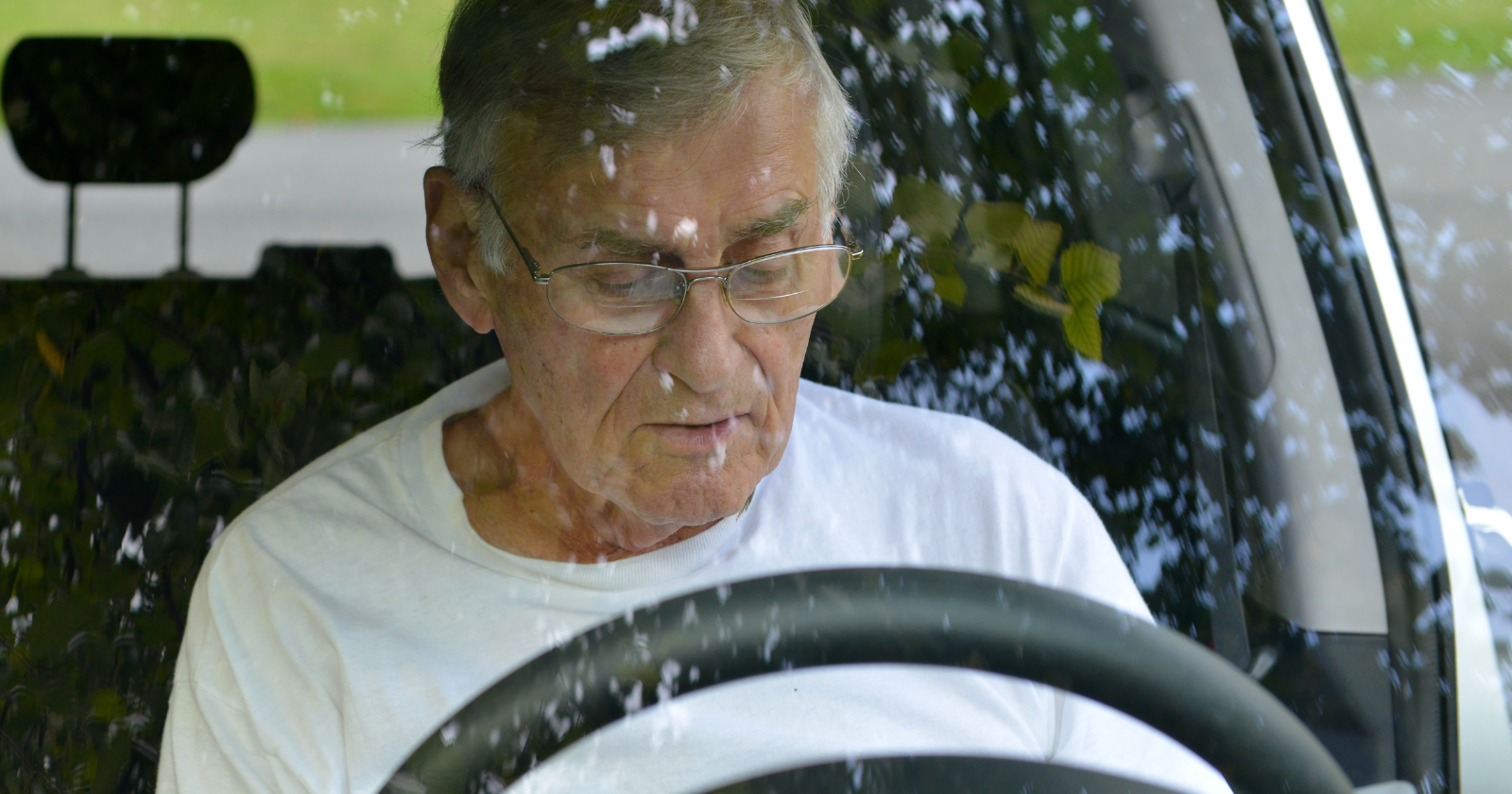 This one is fascinating to me.
The car is stopped. Not parked. Not pulled over.
Just sitting there, engine running, door open, sometimes hazards on, sometimes not.
The driver might be loading groceries.
Or chatting with someone they ran into.
Or reorganizing the trunk like they’re prepping for a cross-country move.
To them, it probably feels harmless. “I’ll just be a second.”
But that second stretches. And stretches.
And now no one can get around them because the car is positioned in just the wrong place.
In restaurants, there’s a concept called bottlenecks.
One small obstruction can slow down the entire operation.
Parking lots are the same.
A single car in the wrong spot turns into a ripple effect of honking, awkward reversing, and people questioning their life choices.
If you need time, pull into a spot. Any spot. Even a bad one.
You can fix a bad parking job.
You can’t fix blocking the lane without moving.
5) Ignoring the invisible right of way
Parking lots don’t have the clearest rules, but they do have a kind of unspoken order.
Cars driving down the main lane usually go first.
Cars backing out get some grace, but not unlimited authority.
Pedestrians should be respected, but not waved through traffic like royalty when it creates confusion.
And yet, you’ll often see someone stop abruptly to wave another car through, even when it makes no sense.
Or barrel through an intersection in the lot with full confidence, assuming everyone else will just figure it out.
Politeness is great.
Predictability is better.
One of the best lessons I learned in hospitality was that guests feel safest when things are clear.
Over-explaining or over-accommodating often made things worse.
The same applies here.
Follow the flow.
Don’t invent your own traffic laws on the fly.
6) Parking with total disregard for lines
We need to talk about the lines.
They’re not suggestions. They’re not abstract art. They exist for a reason.
And yet, somehow, you’ll find cars straddling two spots, angled like they gave up halfway through, or parked so close to one side that opening your door requires a yoga warm-up.
I’ve heard every justification.
“I didn’t want my car scratched.” “The lines are faded.” “I’m just running in quickly.”
We all want to protect our stuff. I get that.
But parking lots are a shared space.
When one person takes extra room, someone else pays for it.
In kitchens, if you took up more counter space than you needed, you got called out.
Not because people were mean, but because space is finite.
Same deal here.
7) Finally, acting shocked when someone is frustrated
Finally, we arrive at the moment where tension boils over.
Someone honks. Not aggressively. Just a quick tap.
Or maybe they throw their hands up.
A universal sign for “What is happening right now?”
And the reaction?
Genuine shock. Sometimes indignation.
A look that says, “How dare you rush me?”
This is the part that really makes people want to scream.
Not the slow driving. Not the awkward parking.
It’s the complete lack of awareness that maybe, just maybe, your actions affected other people.
I don’t think most of this behavior comes from malice.
It comes from being in your own world.
Focused inward.
Unbothered by the ripple effects.
But parking lots are communal.
They force us to confront the fact that we are not alone.
That our timing, our choices, our pace all intersect with someone else’s day.
A little awareness goes a long way.
The bottom line
Parking lots are small, mundane spaces, but they reveal a lot about how we move through the world.
Patience. Awareness. Decisiveness. Respect for shared space.
These aren’t just driving skills. They’re life skills.
I’ve caught myself being the annoying one more times than I’d like to admit.
Stopping too long. Overthinking a spot. Zoning out after a long day.
The difference is noticing it and adjusting.
Next time you’re in a parking lot and feel your shoulders tense up, take a breath.
Maybe laugh a little.
And if you’re the one behind the wheel causing the backup, no judgment.
Just remember, there’s probably someone behind you quietly counting to ten and dreaming of their groceries melting less quickly.
And hey, we’ve all been there.
What’s Your Plant-Powered Archetype?
Ever wonder what your everyday habits say about your deeper purpose—and how they ripple out to impact the planet?
This 90-second quiz reveals the plant-powered role you’re here to play, and the tiny shift that makes it even more powerful.
12 fun questions. Instant results. Surprisingly accurate.