Grocery store checkout lines are a weird mirror. They show us how we handle change, how aware we are of others, and whether we’re moving through life on autopilot or actually paying attention.
I spend more time in grocery stores than I’d like to admit.
Old habit from my food and beverage days.
I still like to wander the aisles, check labels, compare ingredients, and yes, judge produce quality like I’m picking herbs for a tasting menu.
But nothing tests my patience like the checkout line.
You know the moment.
You choose what looks like the fastest lane, only to realize you’ve made a terrible life decision.
The line barely moves.
People behind you start shifting their weight.
Someone sighs loudly.
Someone else checks their phone for the fifth time in ten seconds.
And more often than not, there’s a familiar pattern behind the slowdown.
Before anyone gets defensive, this isn’t about hating on older generations.
It’s about habits.
Habits that made sense once.
Habits that quietly stuck around.
And habits that now, in a world of tap-to-pay and self-checkout, turn a 30-second transaction into a five-minute saga.
Let’s talk about them.
1) They treat checkout like a social event
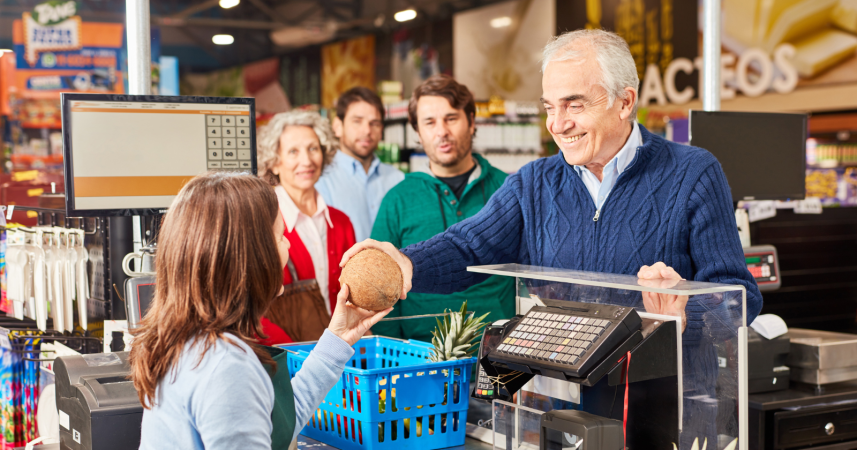
Have you ever noticed how some people reach the cashier and suddenly forget there’s a line behind them?
They ask how the cashier’s day is going.
They comment on the weather.
They laugh about how prices used to be so much lower.
They share a story about their neighbor’s dog.
And look, I’m all for being friendly.
Hospitality is literally in my DNA.
But there’s a difference between politeness and turning the checkout counter into a coffee catch-up.
Checkout is not a dinner party.
It’s a handoff.
In restaurants, we’re trained to read the room.
If the kitchen is slammed, you move faster.
You tighten up your service.
You respect the flow.
Grocery checkout works the same way.
A smile and a thank you? Perfect.
A three-minute conversation while the cashier scans frozen peas? That’s where lines are born.
2) They wait until the very end to find their payment
This one is almost impressive in its consistency.
Everything is scanned.
The total pops up.
The cashier waits.
Only then does the wallet come out.
And not just any wallet. A thick one.
Receipts from 2009.
Loyalty cards from stores that no longer exist.
A brief pause while they decide which card to use.
Another pause while they remember the PIN.
A longer pause while they search for exact change they don’t actually have.
Meanwhile, everyone else is silently screaming.
This is the checkout equivalent of waiting until you’re at the front of the TSA line to take off your shoes.
You’ve had the entire line to prepare.
This is not a surprise event.
In high-end dining, timing is everything.
You don’t ask a table if they want dessert menus after dropping the check.
You anticipate.
Same rule applies here.
3) They insist on paying with checks or exact cash
I know. This one feels obvious.
But it keeps happening.
Checks. Actual checks.
The kind you have to write. Slowly. With commentary.
Sometimes with a pen that doesn’t work on the first try.
Or exact cash, which turns into a mini math class at the register.
“I know I have it somewhere.”
“Wait, that’s too much.”
“Let me see if I have a dime.”
In a world where you can pay for groceries with your phone, your watch, or your face, this feels like using a rotary phone to order delivery.
I once watched someone hold up an entire line while counting coins from a plastic bag.
No exaggeration. A bag.
There’s something admirable about refusing to change.
But there’s also something selfish about ignoring how your choices affect everyone else.
Efficiency is a form of respect.
4) They review the receipt like it’s a legal document
 Transaction complete.
Receipt prints.
Most people grab it and move on.
Others stop. Right there. At the counter. And begin a full audit.
They scan every line item.
They question prices.
They look confused by tax.
They ask why avocados cost what they cost now.
This is not the time.
If something’s wrong, step aside.
Let the line move.
Then circle back.
That’s what returns desks are for.
In kitchens, we call this blocking the pass.
When someone stands where food needs to go, everything slows down.
Same energy.
No one behind you needs to be part of your receipt review process.
5) They argue with technology instead of adapting to it
Self-checkout beeps.
The screen flashes a message.
“Unexpected item in bagging area.”
Panic.
Instead of reading the prompt, they argue with it. Out loud. As if the machine might change its mind.
“I did put it there.”
“This thing never works.”
“I hate these machines.”
I get it. New systems can be frustrating.
But fighting the interface rarely helps.
What makes this worse is refusing assistance.
A worker offers help, and it’s waved off.
Thirty seconds later, they need help anyway.
There’s a mindset shift that matters here.
Technology isn’t personal.
It’s procedural.
Once you accept that, everything moves faster.
6) They use coupons without checking expiration or conditions
Coupons are great.
Expired coupons are not.
Few things stall a line faster than a coupon debate.
“This one should still work.”
“It worked last time.”
“It’s only a few days old.”
The cashier scans. It doesn’t apply.
A supervisor is called. The line grows.
I respect anyone trying to save money. Truly.
But there’s a responsibility that comes with it.
In business, you don’t bring outdated contracts to a negotiation and expect things to go smoothly. Same principle.
Check your coupons before you get in line.
Organize them.
Know the rules.
Otherwise, your savings come at everyone else’s expense.
7) They refuse to bag efficiently or at all
Finally, let’s talk about bagging.
Some people treat bagging like a personal art project.
They rearrange items multiple times.
They insist on doing it themselves, slowly.
They stop the cashier from helping because “they have a system.”
Others refuse bags altogether but don’t prepare for that choice.
Groceries pile up. Things roll. Items fall. More time passes.
Bagging is part of checkout.
Not a separate event.
In professional kitchens, cleanup happens as you go.
You don’t wait until the end of service to organize your station.
The same logic applies here.
If you want to bag your own groceries, awesome.
Just be ready. Move with purpose. Respect the flow.
The bottom line
Grocery store checkout lines are a weird mirror.
They show us how we handle change.
How aware we are of others.
How willing we are to adapt.
Most of these habits made sense once.
They were normal. They were efficient for their time.
But systems evolve.
Expectations shift.
And when we don’t update our behavior, friction follows.
This isn’t about age.
I’ve seen people my age do some of this stuff, too.
It’s about mindset.
Are you operating on autopilot, or are you paying attention to how the world actually works now?
Next time you’re in line, notice what you do.
Notice what others do.
Notice how small choices either keep things moving or bring everything to a halt.
Because living better isn’t always about big habits.
Sometimes, it’s about not being the reason twelve people are stuck behind you holding melting ice cream.
And honestly, that’s a pretty good place to start.