Great food was never about the gadgets. It’s about care, curiosity, and the joy of making something from scratch.
There’s something oddly comforting about a boomer mom’s kitchen.
The hum of a countertop gadget, the smell of freshly brewed coffee, and that quiet belief that this next appliance would finally make life easier.
But not everything that once seemed revolutionary has aged well.
Many of those so-called miracle gadgets turned out to be more trouble than they were worth.
Let’s take a nostalgic walk through seven beloved boomer-era kitchen tools.
They defined a generation of home cooks, but would make most modern chefs quietly cringe.
1) The electric can opener
You probably remember this one. Big, clunky, usually beige or white, and making that loud whirring sound that said, “I’m helping!”
To boomer moms, it was a marvel.
Why strain your wrist when electricity could do it for you?
But in reality, these things were loud, messy, and often splattered whatever was inside the can.
Chefs today prefer a simple manual opener.
It is reliable, easy to clean, and small enough to tuck away. No cords, no counter clutter, no fuss.
In professional kitchens, simplicity wins. The fewer moving parts, the fewer things that can go wrong.
2) The avocado slicer
This one was the millennial upgrade to the egg slicer, and boomers quickly jumped on board.
It had a plastic handle, metal prongs, and the promise of perfectly sliced avocados every single time.
But here’s the truth. Chefs do not need an avocado slicer. They grab a knife, twist, scoop, and move on.
The slicer was marketed as the end of “avocado hand,” but it usually made the job messier. And cleaning it? A nightmare.
Dried avocado might as well be cement.
Like the egg slicer before it, this gadget was all about convenience.
But a good knife and steady hand do the same job with less waste and less frustration.
3) The salad spinner
I’ll be honest. I have a soft spot for this one.
The whoosh of spinning greens, the droplets flying around, and that satisfying stop when the lettuce looks crisp and ready.
But most chefs see it as unnecessary.
In professional kitchens, greens are washed in large bins and dried using towels or commercial machines.
No plastic spinner needed.
At home, though, it became a kind of ritual.
Boomer moms would carefully rinse, spin, and toss, turning salad prep into a performance.
Is it efficient? Not really.
Does it take up half a cabinet? Absolutely.
But there’s something charming about the precision they brought to it.
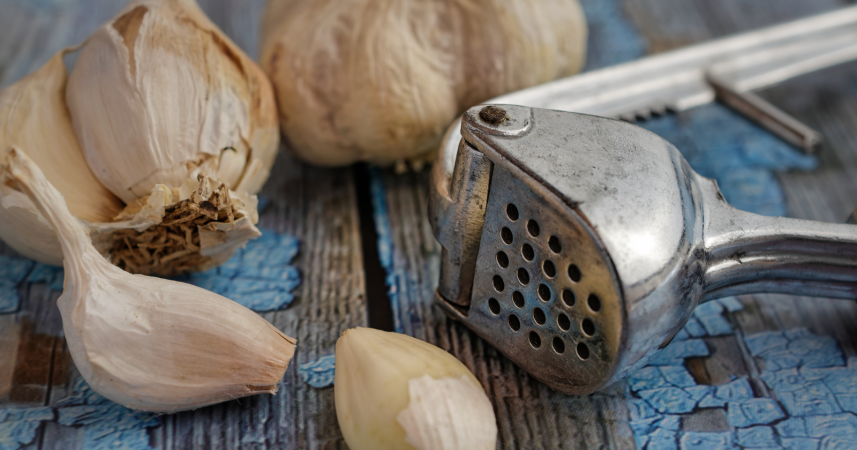
4) The garlic press
Few kitchen tools are as divisive as this one.
Some swear it’s the greatest invention since sliced bread, while most chefs treat it like a culinary crime scene.
Here’s why. Pressing garlic crushes the cells too harshly, releasing compounds that make it taste bitter and overpowering.
When you mince it with a knife, the flavor stays balanced and sweet.
And then there’s the cleanup.
If you’ve ever poked at those tiny holes with a toothpick, you know what pain feels like.
I used to love my garlic press until a chef friend convinced me to ditch it.
Now I chop by hand.
It’s faster, easier, and I actually enjoy it.
Boomer moms loved efficiency, and that made sense.
But sometimes speed just creates a different kind of mess.
5) The electric carving knife
Remember these? They looked like power tools disguised as kitchen gadgets.
Usually saved for big family dinners, they made more noise than progress.
They were meant for slicing roasts or bread, but even for that, chefs roll their eyes.
A sharp serrated knife works better, gives cleaner cuts, and doesn’t need a power outlet.
In professional kitchens, precision matters. Tools are chosen for performance, not for novelty.
Still, there was something endearing about the optimism behind it.
The electric knife represented modernity and innovation.
It was about embracing technology and showing you were ahead of your time.
6) The countertop bread maker
Few appliances capture the boomer kitchen spirit quite like the bread maker.
Add flour, yeast, water, and salt, press a button, and hours later your house smells like a bakery.
It felt like magic. And for a while, it was.
But to a chef, it misses the essence of breadmaking.
Bread is about touch, patience, and timing.
Kneading by hand, watching the dough rise, and feeling it spring to life teaches you something no machine can replicate.
Bread makers make the process easier, but they also take away the craft.
Still, it’s easy to see why boomer moms loved them.
They gave people a way to reconnect with homemade food during a time when convenience was king.
7) The microwave veggie chip maker
This gadget promised healthy snacks in minutes.
Slice some potatoes, sweet potatoes, or kale, lay them on the plastic tray, and microwave until crisp.
At least, that was the idea. In reality, you got a mix of burned edges and soggy centers that tasted like disappointment.
Chefs avoid microwave “cooking” gadgets because real crispiness requires even heat and patience.
You need a pan, an oven, or an air fryer, not a flimsy tray that warps after a few uses.
Still, it came from a good place.
People were trying to make better choices without spending all day in the kitchen.
The results just never lived up to the promise.
The bottom line
Boomer moms weren’t wrong. They were just using what they had.
Their kitchens were filled with gadgets that reflected innovation, optimism, and a genuine love for making food.
Chefs, on the other hand, see cooking as craft.
They value precision over convenience and quality over quantity.
The fewer gadgets, the more focus.
Yet there’s something beautiful about those old appliances.
They remind us that creativity isn’t always sleek or efficient.
Sometimes it hums, clatters, and takes up too much counter space.
So whether you’re slicing garlic by hand or still loyal to your salad spinner, here’s the truth.
Great food isn’t about the tools.
It’s about care, curiosity, and the joy of making something from scratch.
And that’s something both boomer moms and chefs can appreciate.
Just launched: Laughing in the Face of Chaos by Rudá Iandê
Exhausted from trying to hold it all together?
You show up. You smile. You say the right things. But under the surface, something’s tightening. Maybe you don’t want to “stay positive” anymore. Maybe you’re done pretending everything’s fine.
This book is your permission slip to stop performing. To understand chaos at its root and all of your emotional layers.
In Laughing in the Face of Chaos, Brazilian shaman Rudá Iandê brings over 30 years of deep, one-on-one work helping people untangle from the roles they’ve been stuck in—so they can return to something real. He exposes the quiet pressure to be good, be successful, be spiritual—and shows how freedom often lives on the other side of that pressure.
This isn’t a book about becoming your best self. It’s about becoming your real self.