Boomers often hold onto these furniture pieces because they still feel connected to what those items once represented.
If you have a Boomer parent (or you are one), you already know the dance.
There’s the furniture they swear is “still perfectly good,” and then there’s the quiet reality that their kids will look at it later and think, “Where would I even put this?”
This is about how tastes change, homes shrink, and the meaning we attach to objects doesn’t always transfer to the next generation.
Here are seven classic pieces that tend to stick around way past their prime:
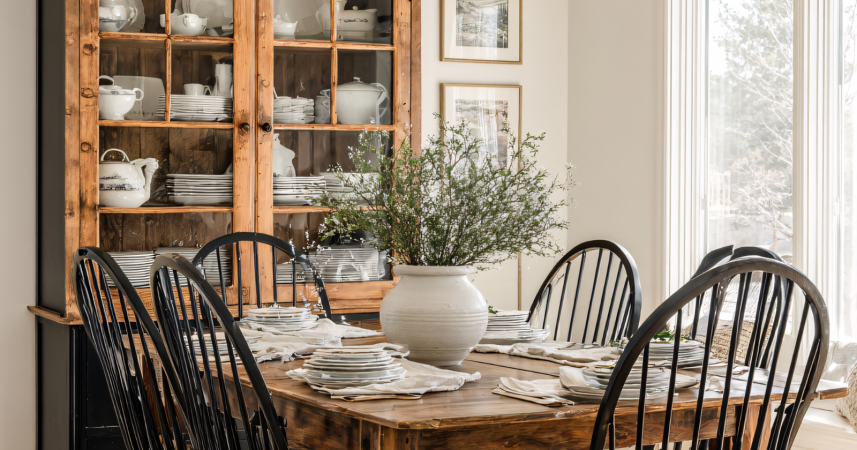
1) Oversized china cabinet
This is the holy grail of “we can’t get rid of that.”
The china cabinet is rarely just storage.
It’s a symbol as it says: We host, we have standards, and we are adults who own matching plates.
Here’s the thing: Most younger households don’t build their lives around formal entertaining anymore.
We do casual dinner parties, takeout nights, mismatched bowls, and if we’re being honest, a lot of meals eaten over the sink.
A china cabinet also has a weird psychological grip because it holds “special occasion” items.
You’re donating the idea that special occasions matter.
The kids donating it later are usually thinking, “This takes up an entire wall and I do not own twelve plates with gold trim.”
2) Formal dining table
You know the one: Heavy, wide, built like it could survive an earthquake, and comes with a leaf that requires two adults and a prayer to insert.
Boomers often keep these because they represent family such as holidays, big gatherings, and a time when everyone actually sat down at the same time.
The next generation, however, tends to live differently: Smaller spaces, busier schedules, more flexible layouts, and a dining table that dominates a room can feel less like “family” and more like “a giant obstacle I bruise my hip on.”
I’ve also noticed something else: A formal dining table can be a grief object in disguise.
Getting rid of it feels like admitting the big gatherings are over, and that’s why it stays.
That’s also why, when kids donate it later, they often do it fast.
It’s self-protection as they’re already drowning in emotions and they don’t want to be trapped by a table that weighs as much as the past.
3) Bulky entertainment center
The massive entertainment center is a time capsule from the era when TVs were deep, heavy, and basically furniture themselves.
Boomers keep these because they were expensive and they were once the centerpiece of the home.
That’s a potent combo: Money plus identity.
Yet modern life is brutally unfriendly to this piece.
Flat screens don’t need a fortress, streaming doesn’t require shelves of DVDs, and most people under 45 would rather mount a TV, hide a soundbar, and keep the floor open.
This is one of those moments where the psychology is simple: We tend to protect purchases that once made us feel successful, even if they’re obsolete now.
Kids donate these immediately because they see a problem: They see wasted space, visual clutter, and a logistical nightmare that requires three friends and a truck.
4) Leather recliner
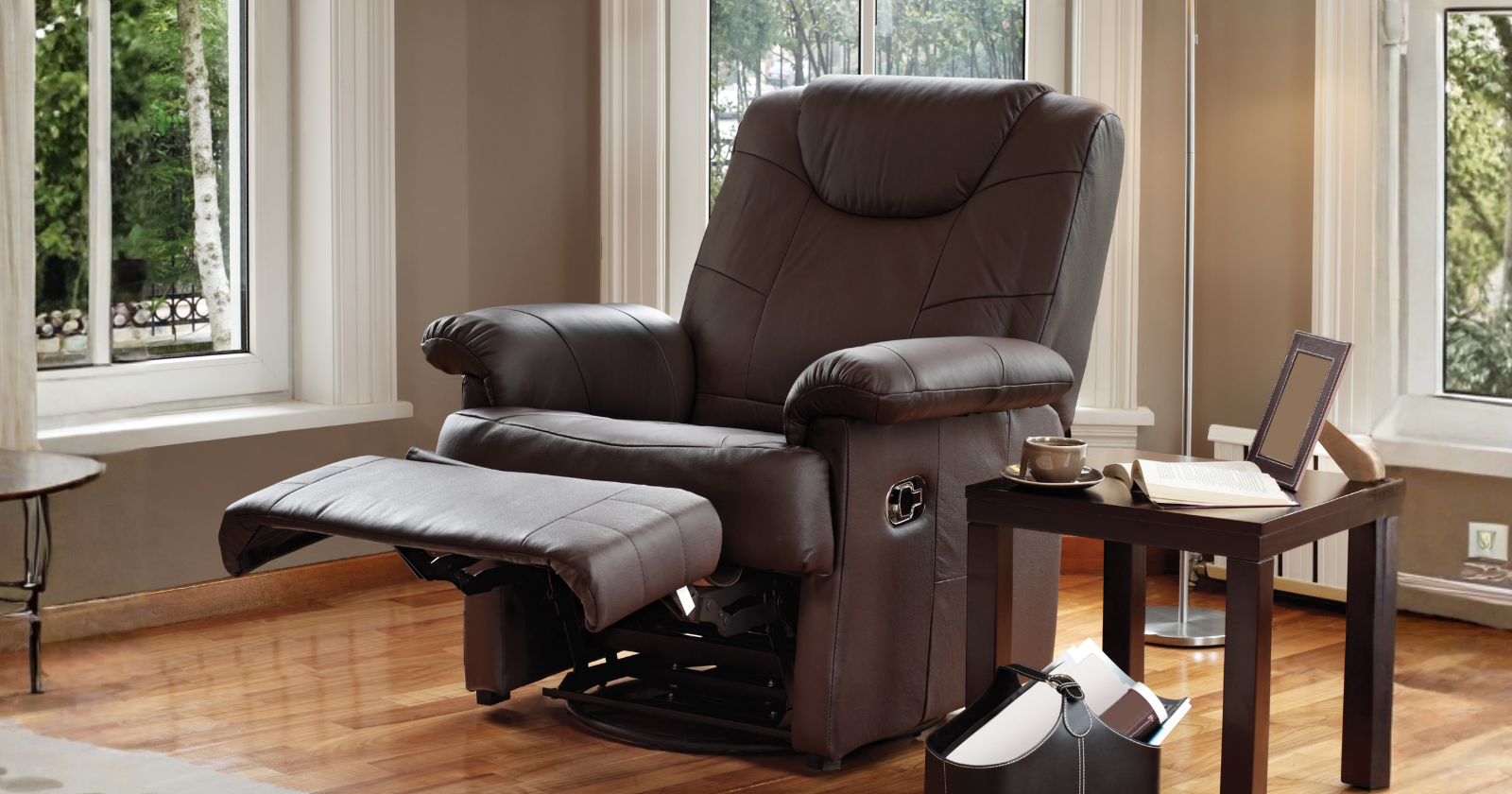
There’s always a recliner; usually in a specific spot and treated like a throne.
This one is tough because it’s tied to comfort and routine.
That chair has seen decades of naps, sports games, newspaper reading, and falling asleep mid-conversation.
In a way, it’s a daily life artifact.
I get it, I once tried to convince a relative to replace an ancient recliner and the look I got made it clear I had committed a minor crime.
Here’s the awkward part, especially for a site like VegOutMag: Leather recliners are often emotionally “protected” even when they’re cracked, stained, or squeaky, because replacing them feels like admitting aging is real.
If the replacement is non-leather, some folks act like you’re asking them to sit on cardboard.
Kids donate these fast because they don’t want the smell, the stains, or the weight of the story.
Also, recliners are surprisingly personal!
Sitting in someone else’s “spot” can feel weird, like wearing their shoes.
5) Waterbed frame
Waterbeds were a whole moment.
If you know, you know.
Boomers who still have a waterbed frame (or the remnants of one) often keep it for one reason: The sunk cost effect.
They paid a lot, they moved it at least once, and they refuse to admit it was a phase.
Also, waterbeds carry a certain pride.
They were once seen as futuristic and cool, so letting go of that frame can feel like letting go of a version of yourself who was adventurous.
The kids donate it because it’s functionally useless now.
Most people don’t want a bed that requires special setup, special sheets, and special patience.
The frame is often too bulky or oddly shaped to repurpose.
This is a classic example of how a “cool purchase” can turn into a long-term burden if we confuse novelty with value.
6) Massive roll-top desk
The roll-top desk is the furniture version of a formal handshake.
It communicates seriousness, work ethic, paperwork, and a world where you had a designated place to sit down and “handle things.”
Boomers keep these because they come from a time when physical organization mattered.
You had files, receipts, manuals, and documents you couldn’t just search in your email.
I’ve mentioned this before but the objects we keep often reflect the version of ourselves we want to remain true to.
A roll-top desk says, I’m the kind of person who stays on top of life.
However, their kids live in the cloud as bills are autopay, forms are digital, and paper is mostly junk mail.
So, the desk becomes a giant wooden container for old cables, random keys, and a stack of manuals for appliances that no longer exist.
Kids donate it because it’s enormous and because it doesn’t match how they actually live.
They don’t need a “command center,” they need a laptop and a decent chair.
7) Matching bedroom set
This one is sneaky because it feels so normal: The matching headboard, dresser, nightstands, maybe an armoire that looks like it belongs in a period drama.
Boomers keep these sets because they were marketed as a milestone purchase.
You bought the full set because it meant you had arrived.
It also created a sense of order; everything matched and everything was “proper.”
Kids often donate these immediately because tastes have shifted hard.
Younger people mix styles on purpose; they thrift, buy modular pieces, and don’t want a bedroom that looks like a showroom from 1997.
Also, matching sets tend to be big and they assume you have space.
A lot of people don’t, or they do but they’d rather use it for something else, like a desk, a reading corner, or just breathing room.
When kids donate the set, it’s because the set comes with a silent expectation: Keep the whole look intact or you’re doing it wrong.
Nobody wants to inherit a rulebook!
The bottom line
Furniture is never just furniture because it’s identity, memory, proof of survival, proof of success, proof that you mattered in a specific era.
Boomers often hold onto these pieces because they still feel connected to what those items once represented.
Their kids donate them because they’re trying to build a home that fits who they are now, not who their parents needed to be then.
If you’re the one staring at a stubborn piece of furniture today, here’s a question worth asking: Is it serving your life, or is it guarding a story you’re afraid to put down?
Sometimes the most self-developed move is admitting you can keep the meaning without keeping the object.