Modern cars may be smarter, but they’ve lost some soul. These 7 old features remind boomers of when driving felt simple, sturdy, and personal.

Add VegOut to your Google News feed. 
If you grew up around boomers, you’ve probably heard at least one rant about how cars used to be built.
And honestly? I get it. I’m young enough to appreciate wireless CarPlay and backup cameras, but old enough to remember when my dad’s car had knobs you could operate without taking your eyes off the road.
Cars today are safer, sleeker, and smarter. But in the race toward touchscreens and software updates, some genuinely great features got left behind.
Let’s dive into the ones boomers still miss, and why a few of them deserve a comeback.
Are you ready to take a drive down memory lane?
1) Manual window cranks
Have you ever tried to open a modern car window during a dead battery situation?
You’re stuck. Completely stuck.
Boomers didn’t have this problem. They had a simple solution: a good old fashioned crank. Twist, twist, and the window went down with no electricity needed.
What I love about this feature is how reliable it was. In a world where everything seems to depend on a chip, there was something refreshing about a mechanism you could repair with a screwdriver.
Sure, power windows are great, until they don’t work.
And as someone who’s had a window get stuck halfway down during a summer thunderstorm, I can confirm that the crank had its charm.
2) Bench seats
If you’ve never sat in a front bench seat, imagine your couch merged with a steering wheel. That is basically it.
These wide, sofa style seats were common in older American cars, and boomers loved them for one big reason: closeness.
I remember my parents telling me about date nights in the car, where one person could slide right next to the driver while cruising down the road.
Today, center consoles take up half the car. Even if you wanted to sit close, you’d need to be a contortionist to make it happen.
There was also a practical side. Bench seats made it easier to load people in. No squeezing around cup holders. No fighting over armrests. Just simple, spacious seating.
Now everything is designed for personal comfort zones and ergonomic bucket seats. Great for posture. Terrible for cuddling.
3) Physical knobs and switches
Here is a question. When did turning on the AC become a test of your touchscreen navigation skills?
Cars used to have knobs you could operate with muscle memory.
Boomers could adjust volume, temperature, or the radio without looking. That meant more attention on the road and fewer accidental detours through menus buried five taps deep.
One of the rules I picked up working in hospitality is this: make the experience intuitive, and people feel taken care of. Make it complex, and people get irritated fast.
Modern cars test us.
There is a reason pilots still use physical switches. Sometimes simplicity is safer.
Boomers know this, and honestly, so do all of us who’ve tried to turn down the music on a touchscreen while bouncing over potholes.
4) Full size spare tires
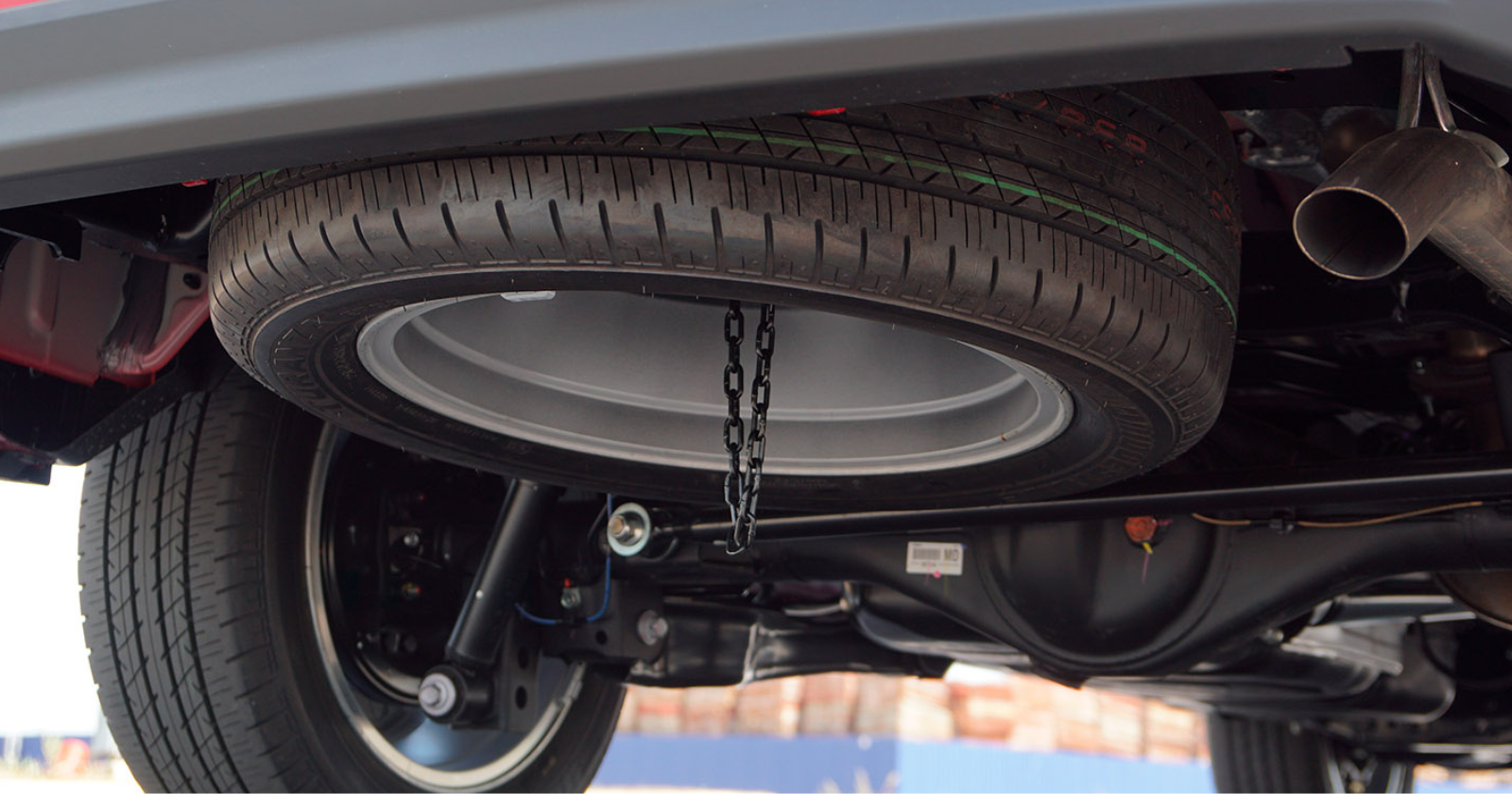
Growing up, my uncle always kept a full size spare in his trunk. He said it was the difference between making it home and waiting an hour on the side of a highway.
Today, a lot of cars come with either a donut spare or no spare at all. Some just include a repair kit or a can of tire sealant. Basically, fingers crossed.
Why did these disappear? Space, cost, weight savings. All the usual reasons manufacturers give.
But talk to someone who spent decades driving long stretches of road, and they will tell you how comforting that full size spare was.
Once on a road trip through Portugal, I hit a shredded piece of truck tire that tore my sidewall. The rental had no spare at all.
I had to wait two hours for roadside assistance, in the sun, with a bag of melting pastries in the backseat. A full size spare would have been a lifesaver.
Boomers had it right. Nothing beats the security of a real tire.
5) Vent windows
These little triangular windows at the front corners of older cars were absolute miracles. Crack one open, and you got the perfect breeze without the roar of a fully open window.
They cooled the car instantly. They did not mess up your hair. And they made smokers extremely happy.
Nowadays, modern aerodynamics and cost cutting wiped them out completely.
There is a term in hospitality that stuck with me: low cost, high impact experiences. Vent windows were exactly that. Tiny feature, massive comfort upgrade.
Modern cars compensate with more powerful air conditioning, but sometimes fresh airflow just hits different.
Boomers definitely miss this one, and honestly, so do some of us who grew up riding around with them.
6) Simple, repairable engines
Pop the hood of a car from the 70s or 80s and you would see the engine. Just the engine.
Lots of space. Lots of visible parts. A world where a weekend warrior could swap a belt, replace a hose, or even rebuild the carburetor if they felt confident enough.
Pop the hood of a modern car, and you will mostly see plastic covers, sensors, and components buried so deep they might as well be in another time zone.
Boomers grew up in an era where cars were mechanical first and electronic second. You could maintain them yourself. You could understand them.
I am not saying today’s vehicles should not be complex. Hybrids and EVs are incredible pieces of engineering.
But there was something empowering about being able to open the hood and fix something without needing a diagnostic tool worth the price of a vacation.
When you remove the ability to understand your own vehicle, you remove part of the connection people used to have with their cars.
7) Glove box maps
Finally, the one that makes every boomer sigh with nostalgia. The foldable paper map.
Before GPS, before smartphones, and before that stern voice telling you to make a U turn, people navigated with physical maps. They highlighted routes, scribbled notes, and kept an entire collection in the glove box.
I get why boomers miss them. Not because they were easy, but because they made trips feel like adventures.
You had a destination, but you also had awareness. You recognized the towns around you, the alternate roads, the terrain.
Maps made the journey tangible.
I remember traveling with a map once in rural Thailand because the cell signal kept disappearing.
It forced me to be fully present, actually paying attention to where I was going instead of blindly following a blue dot. It felt refreshing.
Technology is convenient, but convenience sometimes erases the experience.
And lastly, maps never redirect themselves mid drive because you accidentally brushed your screen.
The bottom line
Cars today are undeniably better in many ways. They are safer, cleaner, more efficient, and packed with tech that would have blown people’s minds a generation ago.
But in that push forward, we lost a few small but meaningful features that gave older cars their personality, charm, and practicality.
Maybe it is nostalgia. Maybe it is the craving for simplicity. Maybe it is the desire to feel more in control instead of being driven by electronics.
Whatever it is, boomers are not wrong for missing these things. Some of them would genuinely improve modern driving.
And who knows. As more people push back against excessive tech in cars, we might see some of these old school ideas return.
Until then, we will keep trying to find the AC controls buried somewhere in the touchscreen.
Let me know which classic car feature you would revive if you could.