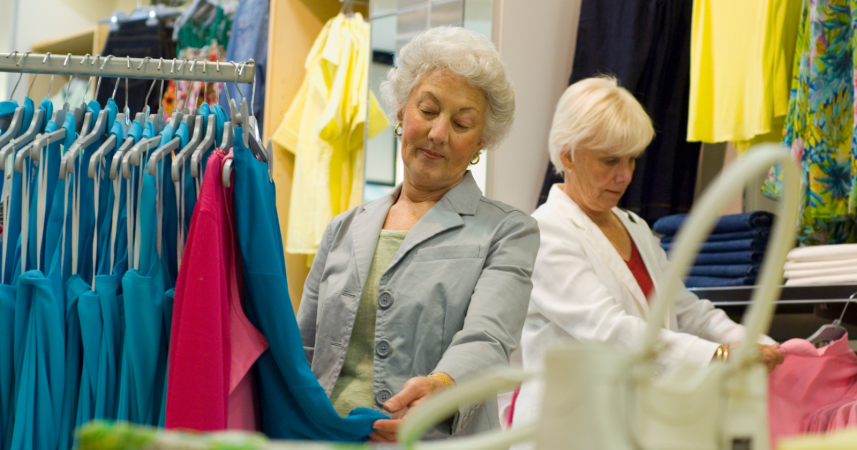
From meticulously examining seams to befriending every sales associate, these time-honored shopping rituals reveal why a simple trip to the mall can take boomers an entire afternoon—and why they wouldn't have it any other way.

Add VegOut to your Google News feed. 
Last week, I watched a twenty-something influencer on Instagram try on seventeen different outfits in under three minutes, each one discarded with a swift swipe. Meanwhile, I spent forty-five minutes in a single dressing room, carefully considering whether a navy blazer would work with the three pairs of pants I already own at home. The generational divide in how we shop for clothes has never been more apparent.
As someone who straddles both worlds, having taught high school for over three decades and now watching my own adult children navigate the retail landscape, I've noticed fascinating differences in how my generation approaches clothing shopping compared to younger folks. Some of these habits might seem quaint or even puzzling to millennials and Gen Z, but they reveal deeper truths about how we view value, quality, and the very act of shopping itself.
1) We actually sit down on those chairs outside the dressing room
Have you ever noticed those lonely chairs scattered outside fitting rooms? Young shoppers breeze past them, but we boomers treat them like essential rest stops. We sit, we contemplate, we might even strike up a conversation with another shopper's patient husband. Shopping isn't a race for us; it's an afternoon activity that includes built-in breaks for reflection and, yes, catching our breath.
2) We check every single care label
While younger shoppers might glance at the price tag and move on, we're the ones holding garments up to the light, scrutinizing care instructions like they're ancient scrolls. "Dry clean only" might as well say "monthly ransom payment required." We calculate the true cost of ownership, factoring in years of cleaning bills. My mother, who was a seamstress, taught me that understanding fabric care was just as important as understanding fabric quality. A bargain that requires special handling isn't really a bargain at all.
3) We bring clothes we already own to match
I've lost count of how many times I've seen someone my age pull a well-worn cardigan or fabric swatch from their purse in the middle of a department store. We're the generation that brings homework to the mall. That perfect shade of coral has to match the pants we bought three years ago, after all. Young shoppers might rely on memory or phone photos, but we prefer the certainty of physical evidence.
4) We ask for the manager about pricing discrepancies
When the rack says 30% off but the tag rings up full price, younger shoppers might shrug it off or quietly pay the difference. Not us. We'll politely but firmly request a price check, wait for the manager, and ensure we get what was advertised. It's not about being difficult; it's about principle. Every dollar counts when you're on a fixed income or remembering those years of stretching a teacher's salary to raise two children alone.
5) We still write checks at checkout
Yes, we're the ones holding up the line with our checkbooks. While the rest of the world has moved on to tap-and-go payments, some of us still like the physical record, the deliberate act of writing out the amount. It makes us pause and consider the purchase one final time. There's something satisfying about that carbon copy tucked safely in our registers at home.
6) We examine construction details nobody else notices
Young shoppers might check if something looks cute on Instagram. We're checking if the seams are properly finished, if the buttons are securely attached, if the hem is straight. We turn garments inside out in the store, examining the craftsmanship like detective work. Growing up when clothes were made to last decades rather than seasons, we can't help but look for quality markers that younger generations might not even know exist.
7) We shop with physical lists and newspaper circulars
While everyone else is scrolling through apps for deals, we're the ones with actual newspaper clippings and handwritten lists. There's something deeply satisfying about crossing off items with a real pen, about circling sales in the Sunday paper with a cup of coffee. Digital might be efficient, but analog shopping lists never run out of battery.
8) We try to befriend the sales associates
Younger shoppers often actively avoid sales associates, preferring to browse undisturbed. But we remember when salespeople actually knew their inventory, when they'd call you about new arrivals that matched your style. We ask about their families, remember their names, and yes, we're the ones who still ask, "Do you work on commission?" because we want to make sure credit goes where it's due.
9) We insist on keeping every receipt and bag
Marie Kondo would have a field day with our receipt collections. While younger folks might immediately trash them or go paperless, we file them away like important documents. That shopping bag? It's not trash; it's future gift wrap or storage solution. We grew up understanding that everything has a second purpose if you're creative enough.
10) We still believe in wearing "good" clothes for special occasions
Perhaps the biggest divide is our concept of "saving" clothes for special occasions. We have church clothes, dinner-out clothes, visiting clothes. Meanwhile, younger generations wear their best pieces to grocery stores and save nothing for later. They might be onto something, actually. After having to give up my beloved high heels due to practical concerns, I've learned that waiting for the "perfect occasion" sometimes means waiting forever.
Final thoughts
These shopping habits might mark us as relics from another era, but they also reflect values that transcend trends: thoughtfulness over speed, quality over quantity, and relationships over transactions. As I've downsized my home and life, I've actually found myself adopting some younger shopping habits too, realizing that experiences matter more than possessions.
Perhaps the best approach combines both generational wisdom: the careful consideration of boomer shopping with the joyful spontaneity of younger consumers. After all, fashion should be fun at any age, whether you're checking seams or chasing trends.