What if the smallest habit you keep says more about your mindset and emotional depth than any personality test ever could?

Add VegOut to your Google News feed. 
I stopped wearing a watch for a few years in my early twenties.
Partly because my phone was always with me, and partly because I thought watches were just accessories for people trying to look “put together.”
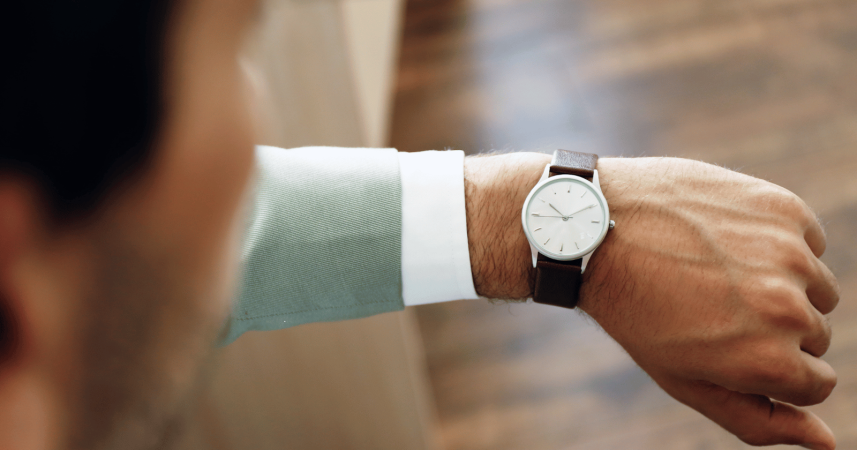
But when I started wearing one again, a simple silver analog piece, something shifted.
I noticed I was more aware of time, calmer during the day, and oddly, more grounded.
I didn’t expect that. I wasn’t trying to be “that person” who checks their wrist dramatically before meetings. But something about the quiet ritual of putting it on each morning made me feel more in control of my day.
Psychology actually supports this. Studies show that people who choose to wear watches, even when phones can do the same job, often share deeper psychological traits tied to discipline, identity, and mindfulness.
Here are seven of those traits, and what they reveal about the kind of person who still chooses a watch in the age of screens.
1. They value time as an extension of self-respect
For watch wearers, time isn’t just something to manage; it’s something to honor.
A 2015 study published in PeerJ found that people who wear wristwatches tend to score higher in conscientiousness, a personality trait associated with reliability, organization, and attention to detail. In short, they take responsibility for their time, which often extends to how they treat others.
When you check your wrist instead of your phone, you’re not just checking the hour. You’re setting a boundary with distraction. Phones tempt us into endless scrolling; watches simply tell us what we need to know and let us get on with life.
That small act communicates something powerful: “I value my time, and yours.”
In my case, wearing a watch helped me notice how often I used to reach for my phone for “just one thing,” only to lose ten minutes. Now, that small shift has created a ripple of calm throughout my day.
Time management, at its core, is an act of self-respect. And people who wear watches tend to understand that instinctively.
2. They appreciate rituals and sensory experiences
There’s something beautiful about daily rituals like brewing coffee, stretching before bed, or lighting a candle after work. These small, almost invisible habits create rhythm and comfort.
Wearing a watch falls into that same category. The feeling of fastening it, the subtle weight on your wrist, the click of the clasp; it’s sensory, intentional, and grounding.
Psychologists call this concept embodied cognition: the idea that our physical actions influence how we think and feel. By engaging your body in a simple ritual like putting on a watch, you reinforce focus and presence.
It’s the same reason journaling, tidying up, or even cooking from scratch feels therapeutic. It’s about participation in the moment.
Watch wearers often appreciate these little pockets of mindfulness that break the blur of modern life. They don’t rush through routines; they find meaning in them.
That’s not to say they’re slow or overly sentimental. They just move through life with awareness.
3. They have a healthy relationship with control
Some might think people who wear watches are obsessed with structure. But in reality, they usually have a balanced sense of control, enough to stay grounded but flexible when life shifts.
Psychologists describe this as having a strong internal locus of control. It means you believe that your actions shape your outcomes, rather than leaving things entirely to chance.
People with this mindset tend to handle stress better, recover faster from setbacks, and maintain steadier motivation.
When I started freelancing full-time, my watch became a kind of silent accountability partner. No notifications, no distractions, just time, staring back at me. It reminded me that I’m responsible for how I spend it.
That’s the thing about control; it’s not about rigidity. It’s about clarity. And people who wear watches tend to value that distinction.
4. They’re nostalgic in a grounded way
Many people who wear watches aren’t just doing it for practicality; they’re doing it for connection, to memory, tradition, or identity.
Nostalgia, according to social psychologist Tim Wildschut, isn’t a weakness. It’s a stabilizing emotion that helps us feel anchored when the world changes too quickly.
Wearing a watch, especially an analog one, can be an act of gentle rebellion against constant updates and upgrades. It’s a way to stay in touch with something timeless.
There’s also a cultural layer here. In Malaysia, where I grew up, many men saw their watches as symbols of adulthood, markers of pride, not vanity. When I moved to Dubai, I noticed that this sentiment carried across nationalities. A good watch wasn’t just jewelry; it was a story.
In that sense, nostalgia isn’t about clinging to the past. It’s about continuity, remembering who you were while moving forward with intention.
5. They notice details others overlook
Psychologically, people who wear watches tend to show higher levels of attentional control, the ability to focus on relevant cues and ignore distractions.
This doesn’t mean they’re perfectionists. It means they notice subtle things: tone, body language, design, timing. Details that others might dismiss.
You can often spot this trait in how they dress, organize, or even listen. They might not comment much, but they notice everything.
When I wear my watch, I naturally slow down. I finish tasks before starting new ones. I feel less scattered, even on busy days.
That might sound like a small benefit, but in a world that glorifies multitasking, being fully present has become a rare form of power.
6. They balance practicality with aesthetics
Watch wearers are practical, yes, but they also have a refined sense of beauty.
They understand that function and form aren’t enemies; they’re partners.
Psychologist Mihaly Csikszentmihalyi, known for his research on flow, once said that beauty and utility combined help people feel “in harmony with their surroundings.” That alignment matters more than most of us realize.
People who wear watches often extend this mindset into other parts of their lives: their homes are intentionally arranged, their schedules structured yet flexible, and their choices guided by both logic and emotion.
They might not have the trendiest gadgets, but what they own has meaning.
In my own life, I’ve noticed that I gravitate toward things that feel both useful and beautiful; a sturdy notebook, a good pan, a classic blazer. A watch fits that same category.
It’s a small but steady reflection of balance. And balance, after all, is one of the hardest things to master.
7. They see time as a story, not a schedule
Perhaps the most unique thing about people who still wear watches is how they view time itself.
For them, time isn’t a race; it’s a narrative.
A scratch on the strap reminds them of a trip. A faded band tells a story of years lived. A gift from a loved one carries emotional weight far beyond its material value.
In psychology, this tendency aligns with narrative identity, the idea that we make sense of our lives through stories, not statistics.
Watch wearers often measure their lives not by how fast things happen, but by how deeply they’re experienced.
That perspective fosters gratitude and emotional intelligence. It helps them stay connected to meaning, not just motion.
And that’s something our phone clocks can never replicate.
Before we finish, there’s one more thing I need to address…
Wearing a watch doesn’t make someone superior or more disciplined. But it does reveal how they relate to time and, by extension, to themselves.
In a culture that glorifies speed, productivity, and constant connection, choosing a watch can be a quiet declaration of independence. It says, “I’ll decide when to look.”
It’s not about rejecting technology. It’s about reclaiming attention.
When we check our phones, we enter someone else’s world. When we check our watches, we stay in our own.
That distinction may seem small, but over time, it shapes everything, how we focus, how we connect, and how we feel.
Final thoughts
Not everyone needs a watch. But those who still wear one in a world of digital distraction tend to live more intentionally.
They respect their time, honor their routines, and carry a quiet awareness that life isn’t measured only in hours, but in how those hours are lived.
They don’t chase time. They walk with it.
And that simple choice, to live by presence instead of pressure, might be one of the most timeless traits of all.