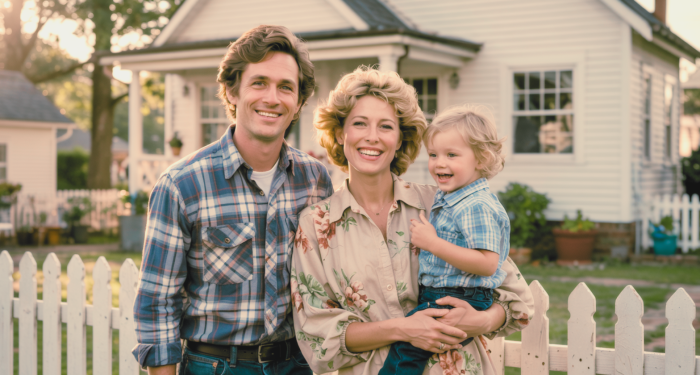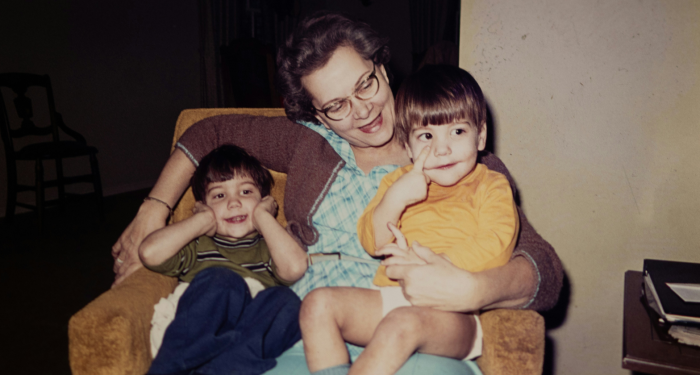
Growing up with zero supervision and physical discipline wasn't character building, it was just surviving childhood without the language to understand what was happening to us.

Add VegOut to your Google News feed. 
My parents were teachers in Boston during the 70s, and Sunday dinners at my grandmother's house were mandatory. I remember sitting at that table, watching my dad's mother rule her kitchen with an iron fist and zero apologies.
If you complained about the roast, you didn't eat. If you left the table without permission, there were consequences. If you talked back, well, let's just say you learned not to do that twice.
Looking back now at 36, I'm still unpacking whether those experiences made me stronger or just really good at suppressing my feelings.
The 70s were a wild time for parenting. It was this weird transitional period where old-school discipline met the hangover from the counterculture movement. Parents were figuring things out in real-time, often with approaches that would make modern child psychologists lose their minds.
Some of us came out resilient. Others are still in therapy.
Here are the parenting styles that defined a generation, for better or worse.
1) The free-range philosophy taken to dangerous extremes
Remember when "go play outside" meant disappearing for eight hours with no way for your parents to contact you?
That was normal.
My brother and I would leave the house at sunrise during summer break and wouldn't come home until the streetlights flickered on. We rode our bikes miles away from our neighborhood. We climbed trees that were definitely too high. We explored construction sites and abandoned buildings. Our parents had absolutely no idea where we were or what we were doing.
The philosophy was simple: kids need independence and they'll learn from their mistakes.
And sure, we learned. We learned which dogs would chase you and which wouldn't. We learned that jumping off the garage roof into a pile of leaves still hurts. We learned to navigate conflicts with other kids without adult intervention because there were no adults around to intervene.
But we also learned what fear felt like when you got genuinely lost and had no phone to call home. We learned to hide injuries because showing up hurt meant you'd probably lose your freedom. Some of my friends learned even harder lessons, the kind that left scars.
The resilience this created was real. We became resourceful, independent, and capable of handling uncertainty. But the trauma was also real for kids who weren't developmentally ready for that much freedom, or who encountered genuinely dangerous situations with no safety net.
2) Corporal punishment as standard discipline
Physical punishment wasn't controversial in the 70s. It was the default.
Spanking, belting, having your mouth washed out with soap. These weren't considered abuse. They were considered consequences. Most parents believed that physical discipline taught respect and boundaries. Schools even had paddling policies in many states.
My parents were teachers who valued education over material wealth, and they were actually on the more lenient side of this spectrum. But I still remember the fear that came with certain looks or tones. The implicit threat was always there.
Here's what's complicated: some kids from this era will tell you the discipline taught them accountability. They'll say it gave them structure and boundaries they needed. They'll argue they "turned out fine."
Others will tell you about the anxiety disorders, the difficulty trusting authority figures, the tendency to flinch when someone raises their voice. They'll talk about how physical punishment taught them that might makes right, and how they had to unlearn that as adults.
The kids who survived this either became incredibly resilient to stress and criticism, or they became adults who struggle with emotional regulation. Sometimes both.
3) The "children should be seen and not heard" mentality
Adult conversations were sacred territory in the 70s.
If adults were talking, you sat quietly. You didn't interrupt. You didn't share your thoughts unless specifically asked, which was rare. Your opinions on adult matters were neither wanted nor valued.
Family decisions were made without your input. Moving to a new city? Changing schools? Getting divorced? You'd find out when it was already happening. The idea that children deserved to understand or have a say in major life changes wasn't really a thing.
I spent a lot of Sunday dinners at my grandmother's table learning to make myself small and quiet. My sister, who went into marketing, tells me now that she learned to read rooms and navigate power dynamics specifically because she had to figure out when it was safe to exist out loud.
Some kids learned valuable lessons about listening, observing, and choosing their moments carefully. These skills served them well in professional settings later. They became excellent at reading subtle social cues and understanding hierarchies.
Other kids learned that their voices didn't matter. They grew into adults who struggle to advocate for themselves or express their needs. They learned that to be loved meant to be silent, and they're still unlearning that pattern decades later.
During my three years in Bangkok, I noticed Thai families had a similar respect for elders, but with more warmth somehow. There was hierarchy, but also genuine affection and inclusion. The silence didn't feel the same.
4) Emotional stoicism as a virtue
Crying was weakness. Complaining was ungrateful. Expressing fear or sadness was being dramatic.
The message was clear: tough it out, get over it, other people have it worse.
This was especially brutal for boys, but girls got it too. You fell and scraped your knee? Walk it off. Someone hurt your feelings? Grow thicker skin. Anxious about something? Stop worrying about things you can't control.
There was no language for emotional processing. No conversations about feelings. Mental health wasn't discussed because it wasn't really recognized. You were either fine or you were crazy, with not much room in between.
What this created was a generation of adults who are exceptionally good at functioning through difficulty. We can compartmentalize, push through pain, and keep going when things get hard. In high-stress situations, we stay calm.
But many of us also have no idea how to actually feel our feelings. We're great in crisis and terrible at intimacy. We can handle a disaster but fall apart when someone asks us to be vulnerable. We learned to survive, but not necessarily to connect.
I learned some of this during my time in the fine-dining world, where staying composed under pressure was everything. But it wasn't until Thailand that I started understanding the cost of never slowing down enough to actually feel anything.
5) Zero supervision during neighborhood play
The 70s version of playdates was just kids roaming the neighborhood in packs like small wolves.
No adult supervision. No structured activities. No helicopter parents watching from the sidelines. You went outside and found other kids, and together you figured out how to entertain yourselves for hours.
This meant incredible creativity and social development. We built forts, invented elaborate games, negotiated rules, resolved conflicts, and learned the natural consequences of our actions. If you were mean, kids didn't want to play with you. If you broke someone's toy, you had to face them directly.
But it also meant bullying went unchecked. Bigger kids could terrorize smaller ones with no intervention. Dangerous dares and peer pressure happened with no adult nearby to step in. Some kids thrived in this Lord of the Flies dynamic. Others were targeted and traumatized.
The resilience came from learning to navigate social dynamics independently and developing real problem-solving skills. The trauma came from being left to handle situations you weren't equipped for, with no support system when things went wrong.
6) Dangerous recreational activities with minimal safety measures
Seatbelts were optional. Bike helmets didn't exist. Car seats were basically just regular seats where you might fall asleep on long trips.
We rode in the back of pickup trucks on the highway. We stood up in the back seat while the car was moving. We played in yards while parents used pesticides. We drank from garden hoses that probably had lead pipes feeding them.
Nobody thought twice about any of this.
The resilience argument here is thin, honestly. We survived despite the lack of safety measures, not because of them. Our immune systems might have benefited from more exposure to dirt and germs, sure. But there's no character-building benefit to brain injuries from bike accidents or going through windshields in minor fenders.
What this mostly created was survivorship bias. The kids who made it through unscathed think it was fine. The kids who didn't make it through, or who lived with preventable injuries, obviously aren't around to argue otherwise.
Some of us learned to assess risk independently and make quick safety judgments. But mostly we just got lucky.
7) Complete lack of mental health awareness or support
If you were struggling mentally or emotionally in the 70s, you basically had three options: suffer in silence, act out and get punished for it, or be visibly dysfunctional enough to get institutionalized.
There was no therapy for kids dealing with divorce, death, trauma, or abuse. No school counselors to check in if you seemed off. No language to describe anxiety or depression. No accommodations for learning differences.
You were either handling it or you weren't, and if you weren't, that was considered a character flaw.
Kids who were naturally resilient or had strong informal support systems made it through. They developed their own coping mechanisms and found ways to process difficult experiences without professional help. Some of those mechanisms were healthy. Many weren't.
Kids who needed real support and didn't get it often carried that damage into adulthood. They struggled with undiagnosed conditions, untreated trauma, and patterns they didn't have the tools to understand or change.
I think about this a lot now, how many people of that generation are still carrying wounds they don't have names for.
8) Minimal academic pressure but also minimal support
School was different then. You showed up, did the work, got your grades. Parents generally weren't involved unless you were failing or causing problems.
No helicopter parenting. No constant communication between teachers and parents. No tutors unless you were genuinely struggling. Homework was your responsibility, and if you forgot it, that was your consequence to face.
This created independence and self-motivation in kids who were naturally inclined that way. You learned to manage your own responsibilities and face your own consequences. You developed internal motivation rather than relying on external pressure.
But it also meant kids who needed help often didn't get it. Learning disabilities went undiagnosed. Gifted kids got bored and acted out. Kids dealing with problems at home had nowhere to turn because nobody was looking closely enough to notice.
The sink-or-swim approach worked great if you could swim. If you couldn't, you often just sank quietly while everyone assumed you were fine.
9) The expectation to "adult" way too early
Latchkey kids were everywhere in the 70s. Elementary school children letting themselves into empty houses after school. Middle schoolers babysitting younger siblings for hours. Teenagers managing entire households while parents worked.
You learned to cook, clean, handle emergencies, and make decisions without adult guidance because there was no adult guidance available. Childcare was expensive and often not an option.
My sister and I weren't latchkey kids because my parents were teachers with similar hours, but my friends were. I remember going to their houses after school and being struck by how much responsibility they carried. Making dinner for themselves and siblings. Getting homework done alone. Dealing with problems without being able to call anyone.
This forced maturity created incredibly capable adults in some cases. People who can handle anything because they've been handling things since they were eight. People with strong executive function and crisis management skills.
But it also created adults who missed out on childhood. People who never learned to ask for help because help was never available. People who struggle to be vulnerable or admit they can't handle something because they've been faking competence since elementary school.
That early independence was resilience for some. For others, it was just parentification with a different name.
The bottom line
Here's the truth: you probably developed both resilience and trauma from 70s parenting. Most of us did.
Some of these approaches taught valuable lessons about independence, problem-solving, and perseverance. They forced us to develop capabilities we might not have otherwise. We learned to handle uncertainty, navigate conflict, and push through difficulty.
But other approaches left scars we're still working to heal. They taught us that emotions were weakness, that our voices didn't matter, that we couldn't trust adults to protect us. They left us with patterns we've spent our adult lives trying to unlearn.
The kids who "turned out fine" often did so despite certain parenting approaches, not because of them. And plenty of us are still figuring out which parts of how we were raised were gifts and which parts were damage.
What matters now isn't defending or condemning how we were raised. What matters is recognizing both what it gave us and what it cost us, and making conscious choices about what we carry forward.
That resilience you developed? That's real and valuable. Use it.
That trauma you're carrying? That's also real and valid. Get help for it.
You can hold both truths at the same time. That's actually what real resilience looks like.