That McChicken you grabbed for a dollar in 2014 now costs three times as much, and it's not just inflation doing the damage.
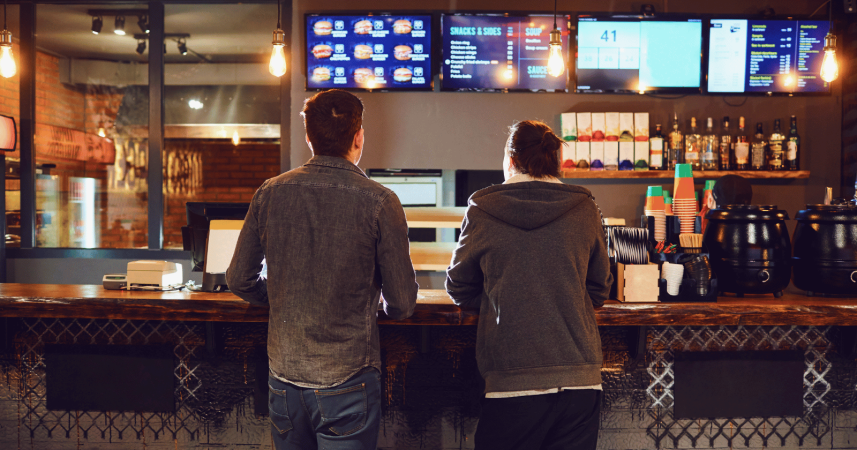
I was standing in line at McDonald's last week when the guy in front of me asked for a Big Mac combo. The cashier said $11.99. The guy just stood there for a second, then walked out without ordering.
I get it.
There's something deeply unsettling about watching fast food become expensive. These were supposed to be the places you could always count on. The backup plan. The thing that was there when your wallet was light and your stomach was empty.
Now? A meal at most fast-food chains costs nearly as much as sitting down at an actual restaurant.
If you remember when these items cost under five bucks, you're probably feeling some type of way about it. Maybe you're angry. Maybe you're just confused about how we got here. Either way, you're not alone.
Research shows that fast-food prices have increased by an average of 60% over the past decade. That's nearly double the actual inflation rate. Some chains have doubled their prices entirely.
Let's look at seven specific items that tell the story of how fast food stopped being affordable.
1) McDonald's McChicken
Remember when the McChicken lived on the dollar menu?
Back in 2014, you could walk into any McDonald's and grab one for a buck. One single dollar. Now that same sandwich will cost you around three bucks at most locations.
That's a 200% increase in just ten years.
I spent my twenties working in fine dining, but I'd be lying if I said I didn't have a soft spot for fast food. After closing a kitchen at 2 AM, sometimes a McChicken was exactly what hit the spot. Simple, predictable, cheap.
These days, that simplicity comes with a much higher price tag. Research shows that McDonald's has doubled its prices on average across the menu since 2014. That's triple the actual inflation rate during the same period.
2) Subway's $5 footlong
This one hurts.
The Subway $5 footlong wasn't just a menu item. It was a cultural moment. A jingle. A promise. A reliable lunch option when you were broke and hungry.
In 2014, a BLT footlong cost around $5.50. Today, that same sandwich will run you about $8.49, depending on location. Some standard footlongs now cost closer to ten bucks.
The days of the $5 footlong are officially over.
During my time managing food programs at boutique hotels, I learned that pricing is always a delicate balance between cost and perceived value. But when you build your entire brand around affordability and then abandon it, customers feel betrayed.
Subway built trust on a promise they couldn't keep forever. The market changed, costs went up, and suddenly that promise became unsustainable.
3) Taco Bell's Beefy 5-Layer Burrito
If you're a Taco Bell regular, you've definitely felt this one.
The Beefy 5-Layer Burrito cost $1.59 in 2014. Today it's $3.69. That's a 132% increase, making it one of the most dramatically inflated fast-food items across any chain.
Overall, Taco Bell raised its prices by an average of 81% over the past decade. The Doritos Locos Taco jumped from $1.39 to $2.59. The Cheesy Gordita Crunch doubled from $2.49 to $4.99.
When you're used to feeding yourself for under five bucks, these increases fundamentally change how often you can afford to eat there. What used to be a cheap, easy dinner option now requires actual budgeting.
I've always believed that food should be accessible. Not everything needs to be a tasting menu with wine pairings. Sometimes people just need to eat.
4) Big Mac combo meal
The Big Mac itself cost 45 cents when McDonald's introduced it in 1967.
By 2014, a Quarter Pounder with Cheese meal was $5.39. Today that same meal averages $11.99 in many locations.
An $18 Big Mac combo went viral recently, sparking so much online outrage that McDonald's CEO had to address affordability on an earnings call. Think about that. The CEO of one of the world's largest fast-food chains had to publicly promise his food wouldn't price out regular people.
During my years in luxury hospitality, I served ultra-wealthy families who thought nothing of dropping thousands on a single meal. But even they appreciated value. Real wealth, I learned, isn't about spending carelessly. It's about knowing what something is actually worth.
A Big Mac combo isn't worth $18. Everyone knows it. That's why people are angry.
5) Wendy's small Frosty
Back in 2014, a small Frosty cost 99 cents.
Today it's $2.09. That's a 111% increase for what amounts to a few ounces of frozen dairy dessert.
The Frosty has been a Wendy's staple since the beginning. It was one of five original menu items when the chain launched. For decades, it represented affordable indulgence. A little treat that didn't require thinking twice about your budget.
Now it costs more than twice what it used to, which might not sound like much until you realize it's outpacing inflation by a massive margin.
Living in Bangkok for three years completely reset my relationship with money and value. I learned to appreciate the Thai concept of "sabai," this sense of ease and contentment that doesn't require constant accumulation. When I returned to the States, the sticker shock was real. Everything felt expensive, even things that should be cheap.
6) Chipotle burrito bowl
In 2014, you could get a burrito bowl at Chipotle for less than $6.75.
Today that same bowl costs $10.50 or more. And if you want guac, that's an extra $2.95 versus the $1.80 it cost a decade ago.
Chipotle's prices have risen 75% on average since 2014. Every single entree option, whether it's a burrito, bowl, or tacos, now costs over ten bucks before you add anything extra.
I've designed seasonal tasting menus where ingredient costs fluctuated constantly. I get it. Avocados are expensive. Supply chains are complicated. Labor costs matter.
But Chipotle built its reputation on being the affordable alternative to sit-down casual dining. When your "fast casual" meal costs the same as a full restaurant experience, people start questioning the value proposition.
7) KFC family bucket
Finally, here's one that really puts it in perspective.
In 1957, Colonel Sanders introduced the Kentucky Fried Chicken Family Bucket for $3.50. It included 15 pieces of chicken, gravy, and six hot rolls.
Adjusted for inflation, that price is roughly equivalent to what KFC charges today for a 16-piece bucket, which is about $30. Except here's the catch: that modern bucket comes without sides. You pay extra for those now.
A 10-piece McNugget meal cost $5.99 in 2014. Today it's $10.99. KFC's mashed potatoes and gravy were $1.79 in 2014. Now they're $4.19, a 134% increase.
These aren't artisanal ingredients. This is industrially produced food, served quickly, with minimal labor per order. Yet prices have increased at rates that far exceed inflation.
My grandmother's Sunday roasts were formative food memories for me. Simple ingredients, prepared with care, meant to bring people together. She would've been horrified at spending eleven dollars on a box of chicken nuggets.
So what's actually happening here?
According to research from FinanceBuzz, fast-food restaurants raised menu prices by an average of 60% between 2014 and 2024.
That's nearly double the national inflation rate, which was 31% during the same period.
McDonald's led the pack with a 100% increase. Popeyes followed at 86%, Taco Bell at 81%, and Chipotle at 75%. Even the more moderate chains like Subway and Starbucks still raised prices by 39%, which is above the inflation rate.
Chains point to rising labor costs and ingredient prices. California's $20 minimum wage for fast-food workers became a particular flashpoint. But here's the thing: fast-food prices have actually increased faster than the average hourly earnings of most fast-food employees.
In other words, the people making the food can afford it less now than they could before.
From my time working in restaurants, I know the margins are tight. I know labor is expensive. But I also know that net income at McDonald's grew 37% from 2022 to 2023, jumping from roughly $6 billion to $8.5 billion.
Someone's profiting from these price increases. It's just not the workers or the customers.
Why this matters beyond nostalgia
Sure, we can laugh about being old enough to remember dollar menu McChickens.
But this isn't really about nostalgia. It's about access.
Fast food was supposed to be the affordable option. The backup plan. The thing you could always count on when money was tight. For families working multiple jobs, for students stretching limited budgets, for anyone trying to feed themselves without breaking the bank.
When fast food stops being affordable, it stops serving its fundamental purpose.
I returned to Austin after my years in Thailand with a completely different perspective on what enough actually means. In Bangkok, I ate incredible street food for a dollar or two. Not because it was cheap, but because the vendors weren't trying to maximize profit on every transaction. They were trying to feed their community.
American fast food started with a similar premise. Quick, affordable meals for regular people. But somewhere along the way, maximizing shareholder value became more important than serving customers.
Now we're in this weird place where fast food costs nearly as much as actual restaurants, but without any of the experience or quality that justifies the price.
The bottom line
If you remember when these items cost under five bucks, you're not just old.
You're someone who's watched an entire category of dining become fundamentally less accessible. You've witnessed what happens when affordability becomes optional instead of essential.
The experts say price increases will likely slow down as consumers push back. We're reaching the limit of what people are willing to pay for a fast-food burger. Value menus are making comebacks because chains realize they've priced out their core customers.
But the damage is done. Trust is broken. The social contract that said fast food would always be cheap and available is gone.
These days when I want a quick meal, I'm just as likely to grab ingredients from a farmers market and make something at home. It takes longer, sure, but at least I know what I'm paying for. And honestly, after spending a decade learning classical technique in professional kitchens, I can make a better burger anyway.
The real question isn't whether you remember when a McChicken cost a dollar.
It's whether affordable, accessible food will still exist for the next generation, or if eating has become just another luxury only some people can afford.
If You Were a Healing Herb, Which Would You Be?
Each herb holds a unique kind of magic — soothing, awakening, grounding, or clarifying.
This 9-question quiz reveals the healing plant that mirrors your energy right now and what it says about your natural rhythm.
✨ Instant results. Deeply insightful.

Adam Kelton
Adam Kelton is a writer and culinary professional with deep experience in luxury food and beverage. He began his career in fine-dining restaurants and boutique hotels, training under seasoned chefs and learning classical European technique, menu development, and service precision. He later managed small kitchen teams, coordinated wine programs, and designed seasonal tasting menus that balanced creativity with consistency.
After more than a decade in hospitality, Adam transitioned into private-chef work and food consulting. His clients have included executives, wellness retreats, and lifestyle brands looking to develop flavor-forward, plant-focused menus. He has also advised on recipe testing, product launches, and brand storytelling for food and beverage startups.
At VegOut, Adam brings this experience to his writing on personal development, entrepreneurship, relationships, and food culture. He connects lessons from the kitchen with principles of growth, discipline, and self-mastery.
Outside of work, Adam enjoys strength training, exploring food scenes around the world, and reading nonfiction about psychology, leadership, and creativity. He believes that excellence in cooking and in life comes from attention to detail, curiosity, and consistent practice.
More Articles by Adam