Walking into some homes feels like entering a spa, while others assault your senses like a clearance sale explosion – and the difference has nothing to do with square footage or budget.
Ever walked into someone's home and instantly felt at ease, like everything just made sense? Then there's the opposite experience – stepping into a space that feels like a tornado hit a furniture store during a clearance sale.
The difference isn't about money. I've been in million-dollar homes that felt like storage units and tiny studios that radiated calm sophistication. After years of working in luxury hospitality and now living in my own restored 1920s bungalow, I've noticed patterns that separate spaces that breathe from ones that suffocate.
Living in Bangkok for three years completely rewired how I think about space. Thai homes taught me that less really can be more when you get the fundamentals right. Now, back in East Austin, I've applied those lessons to create a home that feels intentional rather than accidental.
Want to know what actually makes the difference? Here are eight choices that separate the wheat from the chaff.
1. They choose a focal point instead of competing for attention
Remember walking into a room where everything screamed for attention? The bold artwork, the statement furniture, the accent wall, the patterned rug – all fighting for dominance like contestants on a reality show.
Tasteful spaces pick one hero. Maybe it's a stunning piece of art, or a beautiful vintage credenza, or those floor-to-ceiling windows with a killer view. Everything else plays supporting actor.
In my living room, it's a large abstract painting I picked up in Bangkok. Everything else – neutral sofa, simple coffee table, minimal accessories – lets that piece shine. When guests walk in, their eyes know exactly where to go.
Think about your favorite restaurant. The ones that feel sophisticated usually have one design element that anchors the space. The cluttered ones? They're trying to be a sports bar, wine lounge, and tiki hut all at once.
2. They embrace negative space like it's valuable real estate
What's the first thing people do when they get a new place? Fill every corner. Buy something for every surface. Hang something on every wall.
But empty space isn't wasted space. It's what lets your eyes rest and your mind decompress. In Thailand, I learned this the hard way. My first apartment there, I rushed to fill it with stuff, thinking that would make it feel like home. Instead, it felt cramped and anxious, exactly what I was trying to escape.
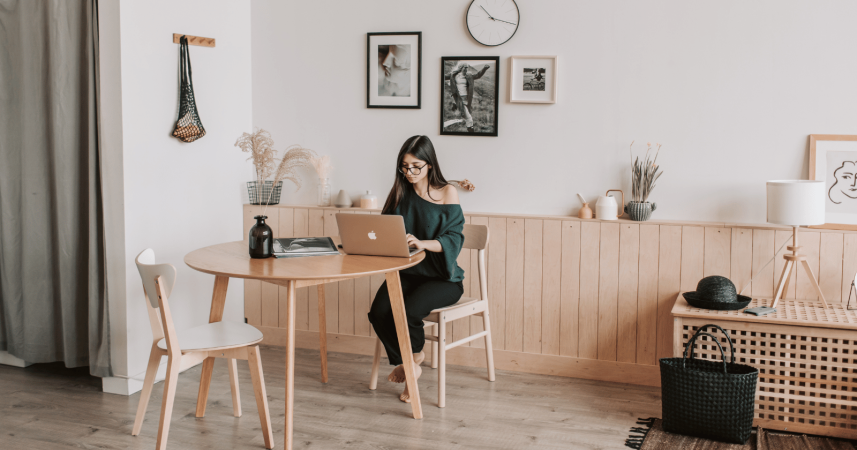
Now? My dining area has a simple wooden table and chairs. No sideboard crammed with decorative bowls. No floating shelves packed with knick-knacks. Just the essentials and plenty of room to breathe.
Books like "The Life-Changing Magic of Tidying Up" got popular for a reason. We're drowning in stuff, and our spaces show it.
3. They invest in quality basics rather than quantity fillers
Here's what I learned from years in luxury hospitality: one perfect espresso beats five mediocre lattes every time.
Same goes for your space. That $30 throw pillow collection from the discount store? It's doing nothing for you. But one quality linen cushion in the perfect shade? Game changer.
When I moved back from Thailand, I arrived with basically nothing. Instead of racing to fill my house, I bought slowly and deliberately. A solid oak dining table that could handle dinner parties. A well-made sofa that wouldn't sag after six months. Good window treatments that actually blocked light and provided privacy.
The cluttered homes I see are usually packed with impulse buys and "good enough" pieces. The tasteful ones? They waited for the right thing.
4. They stick to a consistent color story
Open any design magazine and you'll notice something: the spaces that work have a color thread running through them. Not matchy-matchy, but connected.
Chaotic spaces look like a box of crayons exploded. Teal accent wall in the living room, burgundy in the bedroom, mustard yellow in the kitchen. Each room feels like it belongs in a different house.
My place runs on whites, warm woods, and blacks with the occasional deep green from plants. Boring? Maybe. But it feels cohesive and calm, which is exactly what I want after a long day.
You don't need to paint everything beige. But if your living room is all cool grays and blues, that terracotta orange bedroom is going to feel jarring, not eclectic.
5. They group objects intentionally instead of scattering them
Why does that bookshelf look cluttered even though it's not full? Because everything is spread out evenly, one item per shelf, like a museum display gone wrong.
Tasteful spaces understand the power of groupings. Three vases together on one surface. A collection of books stacked horizontally with one piece of sculpture. Five framed photos clustered on one wall instead of randomly dotted around the room.
This clicked for me when a friend who's an interior designer visited. She spent ten minutes just moving my existing stuff around, grouping things I'd scattered. Same items, completely different impact.
6. They hide the everyday ugly
Your router doesn't need to be a centerpiece. Neither does that tangle of charging cables or the stack of mail.
Cluttered spaces put everything on display. Remote controls scattered on the coffee table, keys and sunglasses on the entry table, workout equipment in the corner of the living room.
In Bangkok, homes often have built-in storage everywhere. Back here, I've had to create it. Baskets for remote controls. A drawer in the entry table for daily pocket dumps. A cabinet that hides the printer and office supplies.
The goal isn't to live in a museum. It's to contain the visual noise so the good stuff can shine.
7. They choose lighting that does more than just illuminate
Overhead fluorescent lights can make a palace look like a DMV office. Yet so many homes rely on that one ceiling fixture to do all the work.
Thoughtful spaces layer their lighting. Table lamps, floor lamps, accent lights. They create pools of warm light rather than flooding everything with harsh brightness.
After hosting enough dinner parties, I finally understood why restaurants obsess over lighting. The right light makes everyone look better, food more appetizing, and conversations flow easier. Now I have dimmers on everything and use lamps way more than overhead lights.
8. They edit regularly instead of only adding
Finally, here's what separates the perpetually tasteful from the gradually cluttered: they're not afraid to remove things.
Most of us only add. New throw pillow here, another piece of wall art there, that cool vintage find from the flea market. But we rarely subtract.
Tasteful spaces get edited. That plant that's half-dead? Gone. The artwork you're tired of looking at? Stored or sold. The decorative object that doesn't spark anything anymore? Donated.
Every few months, I walk through my place pretending I'm a potential buyer. What looks tired? What's just taking up space? What would I not miss if it disappeared? Then I act accordingly.
Final thoughts
Creating a tasteful space isn't about following trends or spending a fortune. It's about being intentional with what you allow in and knowing when to stop.
The difference between cluttered and curated often comes down to restraint. Can you walk past that sale without buying something? Can you leave that wall empty? Can you donate something that's perfectly fine but not quite right?
Your space should support your life, not complicate it. Whether that means creating a calm retreat or an energizing workspace, the key is making choices that serve that goal.
Start with one room. Pick your focal point. Clear the surfaces. Group what remains. Then live with it for a while before adding anything new.
Trust me, your future self will thank you every time you walk through the door.