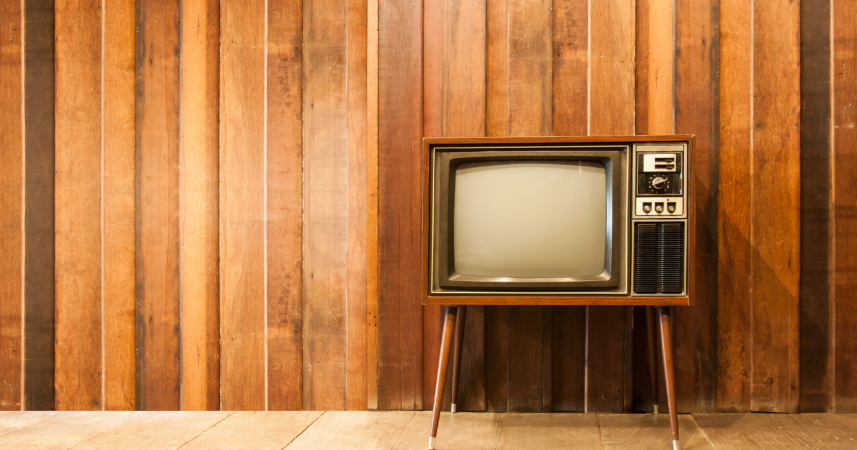
Those old family TV nights weren’t really about the shows—they were about love, laughter, and the moments that stitched generations together.

Add VegOut to your Google News feed. 
There’s something about TV shows from childhood that sticks with you.
Not because they were flawless works of art, but because they were the backdrop of living rooms, family dinners, and weekends that felt slower.
For boomers, television wasn’t a scroll-through-streaming kind of thing. It was ritual. The show came on at a set time, and you sat down with your parents to watch it—or you missed it. No replays. No on-demand.
What’s fascinating is how these viewing experiences shaped an entire generation’s sense of family time. TV became a cultural fireplace, the glowing box everyone gathered around. It wasn’t just about the content—it was about being together, reacting to the same thing at the same moment.
Let’s dive into eight shows that defined those living room moments for boomer kids and their parents.
1. The Ed Sullivan Show
It wasn’t just a variety show—it was the variety show.
Families tuned in every Sunday night to see who Ed would bring on stage. Sometimes it was comedy, sometimes Broadway, and sometimes it was cultural history in the making—like when the Beatles made their U.S. debut in 1964.
Parents loved Sullivan’s calm, stiff demeanor. Kids loved the unpredictability of who might appear next. It was one of those rare shows where the whole household genuinely paid attention.
I’ve talked before about how shared rituals bond people together. This was a perfect example: a mix of music, comedy, and spectacle that gave families something to talk about all week.
2. Bonanza
What did families in the 1960s do after Sunday dinner? They watched Bonanza.
This Western drama, set on the Ponderosa ranch, became one of NBC’s biggest hits. My dad used to say that even if you weren’t into cowboy shows, you still watched Bonanza because everyone else did.
Psychologists would call this “social proof.” People crave shared experiences, and in the pre-digital age, watching the same TV drama as your neighbors was part of belonging.
The show also slipped moral lessons into its storylines. Every episode carried some reflection on justice, fairness, or family duty. Parents appreciated that—it wasn’t just entertainment, it was teaching values in a way kids could absorb without lectures.
3. The Lawrence Welk Show
This one was a generational divider. Kids might have found it corny, but parents adored the bubble machines, big band music, and relentlessly wholesome performances.
The show ran for decades, and in many homes it was background noise on Saturday evenings while parents folded laundry or prepped dinner. For some boomers, the sound of accordion music instantly triggers memories of their parents swaying along in the kitchen.
There’s also a psychological angle here. Researchers note that nostalgia is triggered most powerfully by sensory cues—songs, sounds, and images. The Welk orchestra became that sensory trigger for an entire generation, a kind of sonic stamp of their childhood.
4. I Love Lucy
Even though it started in the 1950s, I Love Lucy reruns became a staple for boomer households in the ‘60s and ‘70s.
Lucille Ball’s antics weren’t just funny—they were groundbreaking. She pushed against the image of the “perfect housewife” by constantly messing up, scheming, and creating chaos. Parents laughed because it felt relatable. Kids laughed because Lucy’s slapstick timing was timeless.
And here’s the thing: psychologists often talk about “benign violation theory”—we laugh when social rules are broken in a safe way. That’s exactly what Lucy did every week. She showed that messing up was okay, even lovable. That’s a message that stuck with kids long after the laugh track ended.
5. Mutual of Omaha’s Wild Kingdom
Before streaming nature documentaries, there was Wild Kingdom.
Every Sunday night, Marlin Perkins and Jim Fowler introduced families to lions, sharks, and every exotic creature kids could dream of. Parents liked that it was “educational,” which made them feel better about letting their kids sit in front of the TV.
I remember catching reruns with my grandparents. Looking back, I realize it wasn’t just about animals—it was about connecting to a world beyond your neighborhood at a time when travel was rare.
6. Gunsmoke
This Western ran for 20 years. Think about that: a single show stretching across two whole decades of family living rooms.
Marshall Matt Dillon keeping law and order in Dodge City wasn’t just entertainment—it was comfort food. The slow pace, the clear sense of right and wrong, and the familiar faces gave parents a sense of stability.
In psychology, there’s something called “narrative transportation”—the way stories pull us into another world. For boomers, Gunsmoke was that kind of escape. It gave parents a moral compass they could nod along to while kids absorbed lessons about courage and justice without realizing it.
7. The Carol Burnett Show
This one still holds up.
Boomer parents and kids laughed together at Carol’s sketches, Harvey Korman breaking character, and Tim Conway improvising until everyone on stage collapsed into giggles.
Comedy shows today feel sharper, faster. The Carol Burnett Show was goofy, warm, and filled with the kind of humor that crossed generations.
As sociologist Peter Berger once noted, “Laughter is a signal that everything is all right in the world.” For families dealing with Cold War anxieties, rising inflation, and cultural change, those laughs were more than entertainment—they were reassurance.
8. Walt Disney’s Wonderful World of Color
This was more than a show—it was a cultural event.
Every Sunday evening, Disney gave families a mix of cartoons, nature films, and original movies. For many boomers, this was their first taste of Disneyland magic without leaving the couch.
Parents trusted Disney. Kids lived for it. And when the show shifted to color in the early ‘60s, it felt futuristic, like stepping into another dimension.
I’ve always been fascinated by how Disney managed to make TV feel aspirational. It wasn’t just a program—it was a portal to optimism, adventure, and possibility. For boomers growing up in a world that could feel uncertain, that was priceless.
Why these shows mattered
It’s easy to think of these as just “old TV shows,” but they were more than that. They were anchors in family life.
Think about it: in an era with only a handful of channels, these programs weren’t just content—they were conversation starters. They gave families common ground at a time when generational divides were growing wider.
There’s also something to be said about the psychological comfort of predictability.
A major 50-year review in the Journal of Family Psychology found that family routines and rituals—including shared nightly activities—offer stability during stressful times and help people feel anchored in uncertainty.
The difference today
Fast forward to now. We live in a world of streaming, infinite choice, and personalized algorithms.
Yes, it’s great to have access to everything at once. But something got lost: the shared family experience. Back then, kids and parents had to compromise on what to watch because there was only one TV in the house. Today, everyone can retreat into their own screen.
I don’t think one is necessarily better than the other—it’s just different. But there’s no denying that those shared boomer TV shows created lasting memories, not because of the shows themselves, but because of the togetherness they inspired.
The bottom line
Television in the boomer era wasn’t just entertainment—it was ritual, community, and memory-making.
When you think about it, those shows were less about the screen and more about the togetherness. Parents and kids sitting side by side, reacting in real time, building shared references that would last for decades.
If you’re a boomer, these shows probably feel like time capsules. If you’re younger, they remind us of something modern life sometimes misses: the joy of watching the same thing at the same time with the people you love.